


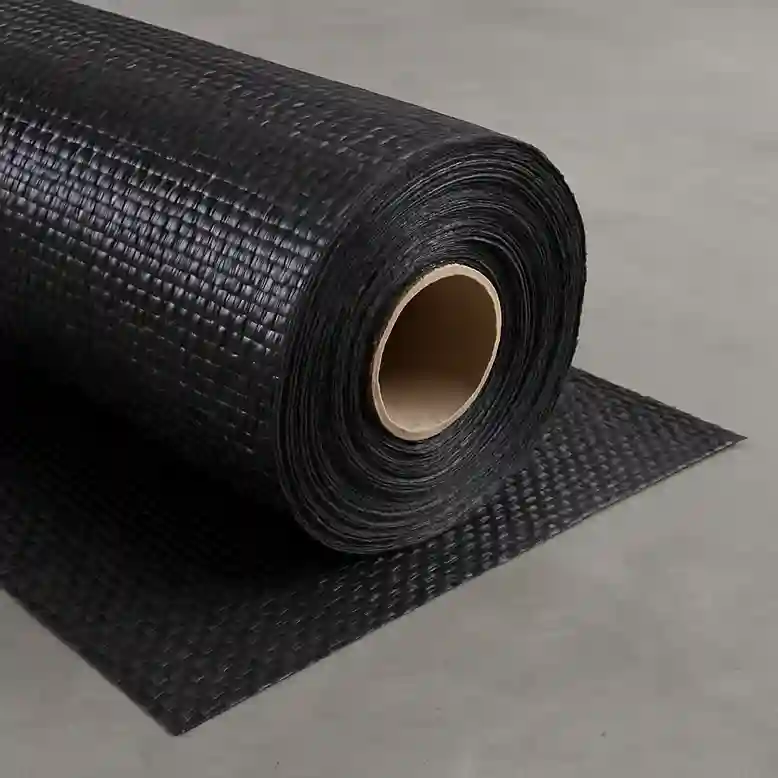
Types of Geotextile – In construction and infrastructure, soil stability, water management and erosion control are common challenges. One of the best solutions to these challenges is the use of geotextile and other geosynthetic products. Geotextile, made from synthetic materials such as polyester and polypropylene, comes in several types with applications that are essential to many civil engineering projects, from soil reinforcement to water management.
Petrane, as a provider of top-quality geosynthetic products in Indonesia, supplies many types of geotextile that can improve the efficiency and quality of your project. In this article, we take a closer look at the different types of geotextile and their applications, which can strengthen construction structures while providing environmentally friendly and cost-efficient solutions.
Types of Geotextile and Their Applications: The Best Geosynthetic Solutions for Your Construction
Geotextile is a geosynthetic material made from synthetic fibers and used in a wide range of construction and civil engineering applications. Geotextile is designed to act as a soil separator, reinforcement, filter and protector in many construction projects. The material is very flexible yet strong, and it can improve soil stability, prevent erosion and improve drainage systems.
Geotextile has very diverse uses and can be adapted to different soil conditions and construction goals. It is very effective at improving the quality of the soil structure and the performance of drainage systems, which makes it very popular in large projects such as toll roads, drainage channels, dams and railways.
Types of Geotextile and Their Applications
Several types of geotextile can be used in infrastructure projects, each with different characteristics and very specific applications. The main types commonly used in construction are non-woven geotextile, woven geotextile and geotextile tube. There are also other geosynthetic products such as geocell, geobag, concrete canvas and geofoam that offer additional solutions for different construction challenges.
Non-Woven Geotextile: Filtration and Soil Separation
Non-woven geotextile is a type of geotextile made from synthetic fibers that are not woven but bonded mechanically or thermally. It has a more open and flexible structure, making it ideal for filtration and separation. It lets water pass through the material freely while soil particles are filtered out, preventing clogging in drainage systems.
Non-woven geotextile is widely used in drainage, erosion control and road repair projects. In these applications, non-woven geotextile serves to filter water and separate soil layers without letting them mix. This is very useful in projects on softer soil, such as reclamation projects or waste management.
Woven Geotextile: Soil Reinforcement and Protection
Woven geotextile is a type of geotextile made by tightly weaving synthetic fibers. Its main advantage is high tensile strength, which allows it to be used in applications that require reinforcement and structural protection. Woven geotextile is often used in large projects involving heavy loads, such as highway construction, railways and bridges.
In these applications, woven geotextile acts as soil reinforcement, helping distribute loads from the surface to deeper soil layers. Woven geotextile is also used to separate different soil layers, preventing weaker soil from mixing with the stronger aggregate layer and keeping the structure stable.
Geotextile Tube: Slope and Coastal Protection
Geotextile tube is a large tube-shaped geotextile filled with materials such as sand, soil or aggregate. Geotextile tubes are widely used for coastal protection and breakwaters, where soil and structural stability must be protected from erosion by large waves and strong currents. They are also used in reclamation projects, embankment construction and slope erosion control.
Because of their flexible shape and their ability to drain water, geotextile tubes are very effective at stabilizing coastal areas or erosion-prone slopes. Geotextile tubes work by spreading the load and holding the fill material firmly, reducing the impact of waves and currents that could damage the structure.
Geocell: Soil Reinforcement and Slope Stabilization
Geocell is a geosynthetic material used for soil reinforcement and slope stabilization. Geocell is a three-dimensional cellular mesh that can be filled with soil or aggregate to create a stronger, more durable structure. Geocell is often used in construction projects on softer or less stable soil.
Geocell works by increasing the bearing capacity of the soil, preventing movement and damage in the soil layers. Geocell applications can be found in toll roads, drainage channels and other infrastructure projects. Geocell can also be used in environmental restoration, such as slope reinforcement and creating stable layers in landslide-prone areas.
Geobag: Erosion Control and Structural Reinforcement
Geobag is a large bag made from geotextile and filled with sand or soil. Geobags are often used for erosion control and structural reinforcement in coastal areas or along rivers. They are very effective at preventing damage caused by sea waves or strong currents.
Geobags are used in projects that need temporary or permanent structures to hold back soil and water. They are often used to build embankments, coastal protection and slope retention. The advantage of geobags is their flexibility: they can be filled on site and conform to field conditions.
Concrete Canvas: An Environmentally Friendly Alternative for Roads
Concrete canvas is a geotextile layer used to reinforce and improve the quality of concrete roads. The material can distribute loads and increase the stability of the soil beneath the road surface. Concrete canvas is often used in the construction of toll roads and highways, providing additional reinforcement for road surfaces that must carry heavy vehicle loads.
Concrete canvas works by improving soil stability and preventing damage caused by continuous pressure from vehicle loads. Its advantage is the ability to speed up construction and improve the long-term durability of the road.
Geofoam: Reducing Loads in Construction
Geofoam is a lightweight yet strong geosynthetic material used to reduce loads on structures and increase soil stability. Geofoam is often used in construction applications that involve load reduction on weak soil or structures, such as building highways in landslide-prone areas or high-rise buildings.
Geofoam offers advantages in reducing structural loads, ease of installation and material availability in large quantities. Geofoam is often used in building retaining walls and for load reduction in earthquake-prone areas or on soft soil.
Why Choose Petrane for Your Geosynthetics?
Petrane is a provider of top-quality geosynthetics in Indonesia, offering products such as non-woven geotextile, woven, tube, geocell, geobag, concrete canvas and geofoam for a wide range of construction applications. We supply high-quality products that have been proven in many large projects in Indonesia. With more than 10 years of experience, our team of experts is ready to provide the best solution for your project needs.
We understand that every project has different needs, so we provide geosynthetic products that can be customized to your specifications and technical requirements. We also offer technical consultation to help you choose the most suitable and efficient material for your project.
Ordering Geosynthetics from Petrane
If you need the best geosynthetics for a construction or infrastructure project, Petrane is the right partner. We supply a wide range of geosynthetic products, including non-woven geotextile, woven, geocell, geobag and many more, which can be matched to your project. With fast, on-time delivery, we make sure your project runs smoothly without delays.
For a quotation or further information about our geosynthetic products, you can contact our team directly via WhatsApp at this link. We are ready to help with consultation and provide the most efficient and environmentally friendly solution. You can also see our complete product range at Petrane.


