


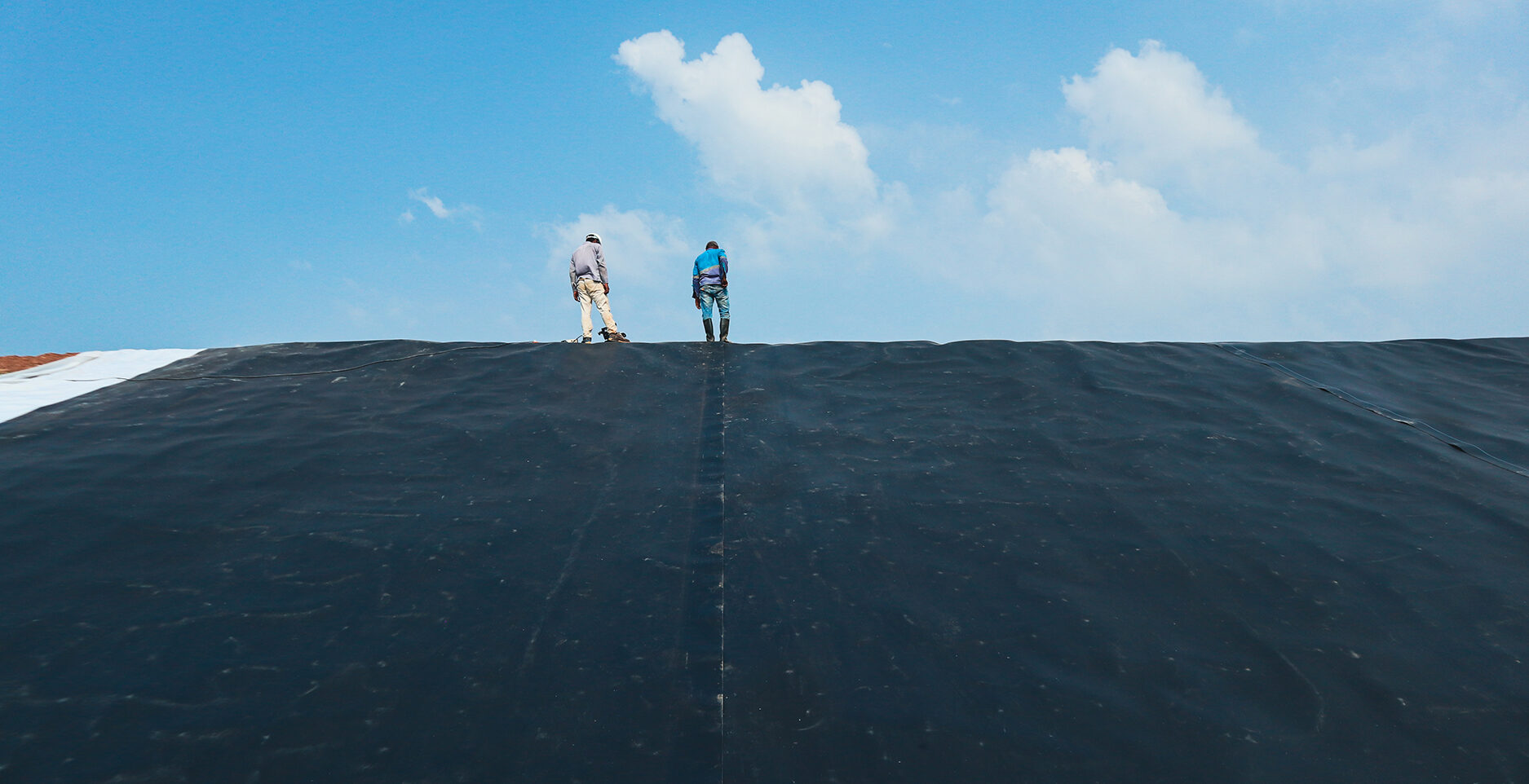

Choosing Geomembrane Thickness for Shrimp Ponds
Have you ever felt confused when choosing geomembrane thickness for a shrimp pond? As a modern pond farmer, you surely know that using geomembrane, especially one made from High-Density Polyethylene (HDPE), has become a mandatory standard for intensive and super-intensive shrimp farming. The goals are very clear: prevent leaks, maintain stable water quality and minimize […]

Advantages of HDPE Geomembrane Ponds vs Plastic Tarpaulin
Hello, pond farmers and aquaculture entrepreneurs! If you are planning to build a new pond or renovate an existing one, you have probably found yourself torn between two options: HDPE Geomembrane or Plastic Tarpaulin. At first glance, the two look similar because both line the ground to stop water from seeping away. But when it […]

Trusted Shrimp Pond Geomembrane Distributor
Hello, Petra friends! How is your shrimp farm doing today? We hope its growth chart keeps trending upward. When we talk about the shrimp farming business, we are not only talking about quality fry or feed. There is one “silent hero” that very often determines the success of your harvests in the long run: Geomembrane. […]

How to Build a Biofloc Pond with HDPE Geomembrane
Hello! Are you looking for a way to increase fish farming yields on limited land? If so, a biofloc system is the answer. However, the secret to biofloc success lies not only in bacteria or feed, but in the pond medium. Using HDPE Geomembrane is the best investment for ensuring your pond is leak-proof and […]

Bigger Profits: Advantages of an HDPE Pond for Aquaculture
Hello, Petra friends! If you work in aquaculture or are planning to start a fish or shrimp farming business, you have surely heard a lot about HDPE geomembrane. It is more than a passing trend; this material is gaining popularity because its performance far exceeds that of conventional cement ponds or ordinary tarpaulins. Why are […]

Advantages of HDPE Landfill Geomembrane
Have you ever imagined what happens to the hundreds of tons of waste that accumulate at a landfill every day? When rain falls on the site, water seeping into the waste pile reacts and produces a highly toxic, foul-smelling liquid called leachate. If this dirty liquid seeps freely into the ground, the groundwater we consume […]