


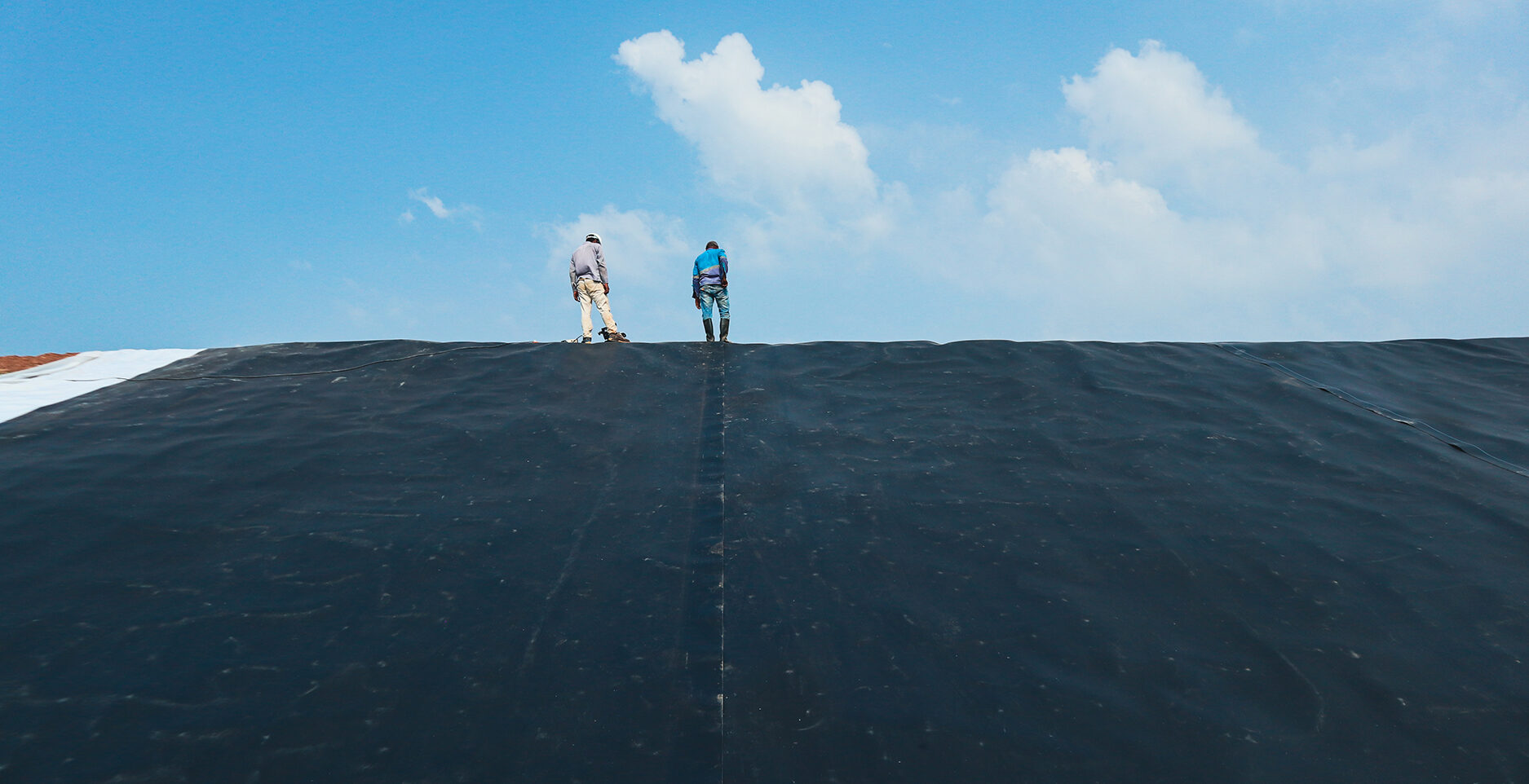

HDPE Pond Liner for Salt, Shrimp and Fish Ponds
HDPE Pond Liner An HDPE pond liner, also known as a geomembrane pond liner, is a material commonly used by aquaculture pond operators in Indonesia. Geomembrane pond liners are generally made of HDPE geomembrane with thicknesses from 0.3 mm to 0.5 mm. HDPE geomembrane is chosen because it has good resistance to weather, sunlight and […]

Part 2: Choosing Geomembrane Thickness for Survivability
When choosing geomembrane thickness, remember that a geomembrane is most vulnerable to tears, punctures and impact while it is stored, transported, handled, installed and backfilled. Such events often happen accidentally because of poor workmanship. Common situations include tools dropped on the geomembrane, vehicles driving over an unprotected liner, strong wind getting under the geomembrane during […]

Concentric and Eccentric Reducer Fittings
Reducers are among the most widely used fittings in the piping industry, and they work exactly as their name suggests. Available as concentric and eccentric reducer fittings, a reducer reduces the flow of water or fluid. Reducing here does not mean controlling the flow like a valve, which opens or closes to make the flow […]

Part 1: How to Determine HDPE Geomembrane Thickness
Ever since polymers were first developed as a construction material, engineers have created product variations that make work easier and can be tailored to project needs. Polyethylene was first discovered in 1933 by Fawcett and Gibson using a high-pressure technique. The high-pressure process works at temperatures above 250 degrees Celsius and pressures between 1000 and […]

Geomembrane Wrinkles: Solutions and Factory Quality
Geomembrane wrinkles are common when installing a geomembrane. Small wrinkles can crack under pressure. If this simple issue is tolerated, it can lead to significant costs from damage to the geomembrane. What causes geomembrane wrinkles? A geomembrane wrinkles because air becomes trapped under it during installation. At first the geomembrane looks flat, but the trapped […]

Geomembrane Design Part 1: How Gas Bubbles Form
Many geomembrane lining systems fail in wastewater treatment ponds and in ponds in the plantation and livestock sectors. Geomembrane gas bubbles that form beneath a lining system are usually caused by a chain of events: the lining system leaks, liquid collects under the geomembrane, methane gas forms, and the trapped gas gradually lifts the geomembrane. […]