


What Is Geogrid? Definition, Types and Functions

What is geogrid? Geogrid is a geosynthetic product made from polyester, polypropylene or polyethylene, produced by bonding a grid structure through extruding, punching, heating, longitudinal stretching and transverse stretching. Geogrid has large apertures and is always used in some form of reinforcement.
It is generally used for subgrade improvement, embankment reinforcement, landslide slope repair, and subgrade reinforcement for toll roads and more.
What Is Geogrid? Definition
Geogrid is a geosynthetic material in the form of a mesh (grid) with square, rectangular or triangular openings (apertures). It is usually made from polymers such as polypropylene (PP), polyester (PET) or high-density polyethylene (HDPE).
Geogrid is produced by stretching, weaving or welding polymer strips. Its main characteristic is very high tensile strength with low elongation. The apertures in the geogrid lock in soil, sand or stone aggregate particles (interlocking mechanism), forming a much stronger composite structure.
Types of Geogrid
Based on the direction of their tensile strength, geogrids fall into three main types:
1. Uniaxial Geogrid
-
Characteristics: Very high tensile strength in one direction only (usually the longitudinal direction).
-
Main Function: Used for structural reinforcement that carries load from one direction, such as retaining walls, steep slope reinforcement (slope stabilization) and embankments.
2. Biaxial Geogrid
-
Characteristics: Balanced tensile strength in two directions (longitudinal and transverse).
-
Main Function: Used for subgrade stabilization in road construction, railways and industrial parking areas.
3. Triaxial Geogrid
-
Characteristics: Triangular apertures with tensile strength distributed evenly in all directions ($360^\circ$).
-
Main Function: The newest generation of geogrid, providing more optimal load distribution beneath road aggregate layers carrying heavy traffic.


Main Functions of Geogrid in Construction
Geogrid plays an important role in many infrastructure projects thanks to its distinctive mechanism:
-
Soil Reinforcement: Increases the shear strength and bearing capacity of soft soil so it can carry heavy loads above it.
-
Aggregate Interlocking: Stone/aggregate that enters the geogrid apertures is mechanically locked in place, preventing lateral movement (lateral confinement).
-
Load Distribution: Spreads concentrated loads (such as vehicle wheels) over a wider area of soil below, reducing direct pressure on the subgrade.
-
Preventing Differential Settlement: Minimises the risk of ground subsidence or waves in the road surface.
Advantages of Using Geogrid
Using geogrid in civil engineering projects brings a range of technical and economic benefits:
| Parameter | Conventional Method | With Geogrid |
| Aggregate Thickness | Requires a thick layer of stone/aggregate | Saves up to 30%–50% of aggregate |
| Soft Soil Excavation | Requires deep excavation of soft soil | Significantly reduces excavation volume |
| Project Cost | High fill material and transport costs | Saves construction and transport costs |
| Road Durability | Prone to early cracking or waviness | Extends the service life of the road structure |
Other Articles
Class A and Class B Geotextile Specifications
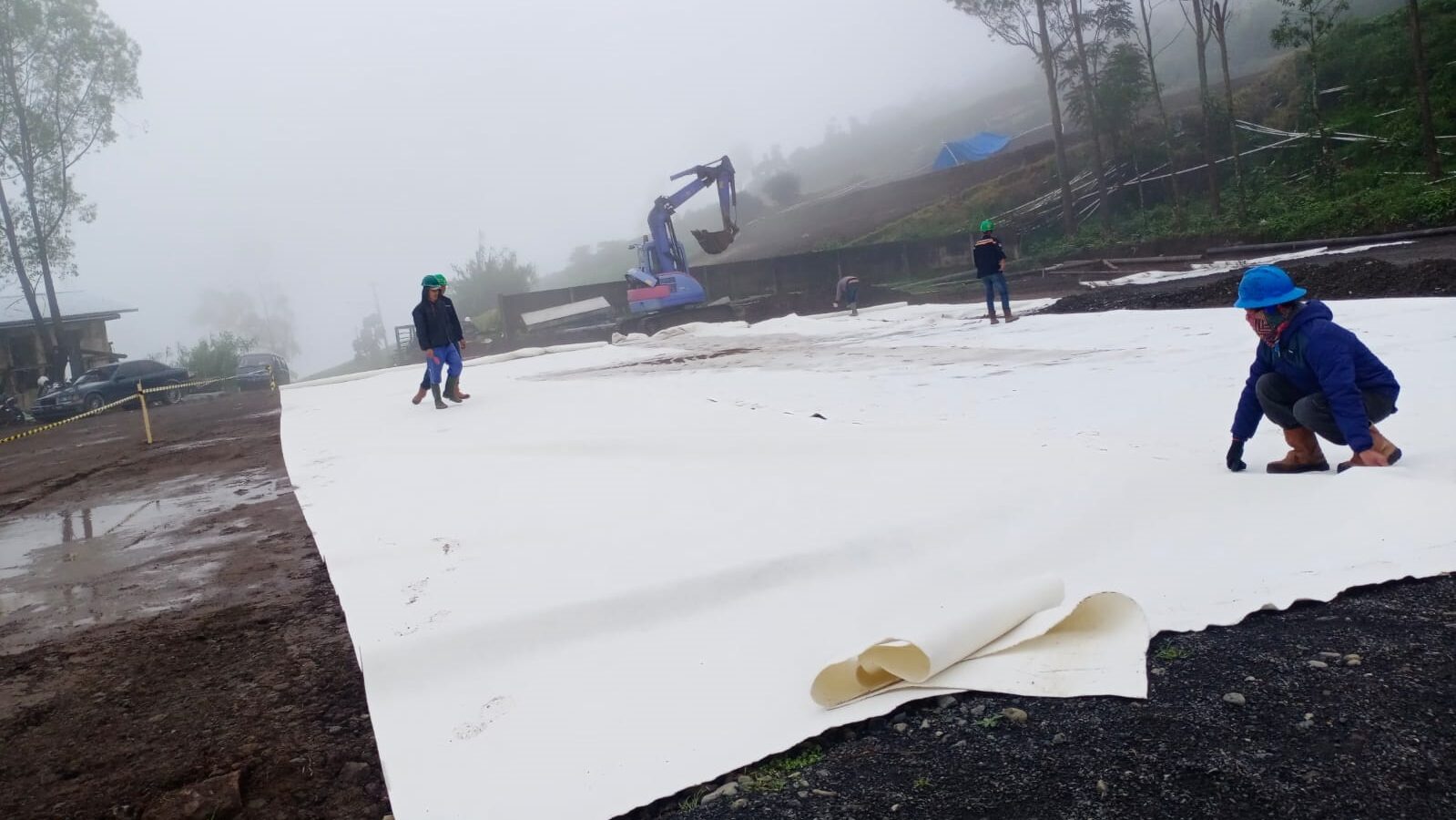
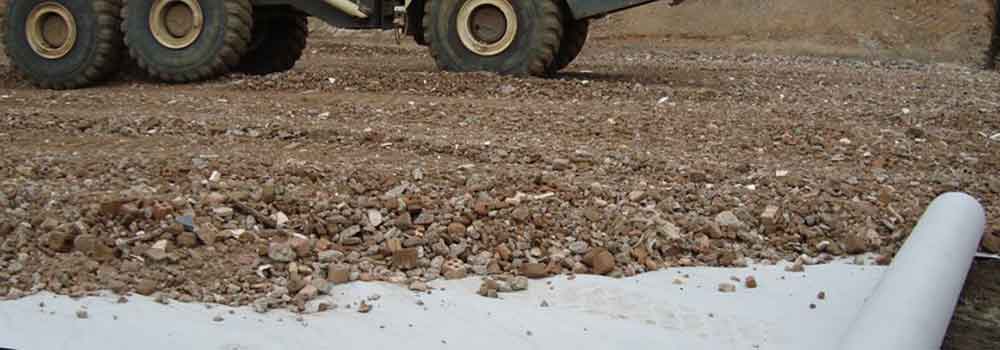
Class A geotextile is used as a separation layer beneath 1 m of aggregate/rock fill, while Class B geotextile is used as a filtration layer placed beneath dikes. Class A and Class B geotextiles can be woven or non-woven, made of UV-resistant polypropylene or polyester. Class A and Class B geotextiles must be protected against […]
What Is HDPE Geomembrane? Types and Applications
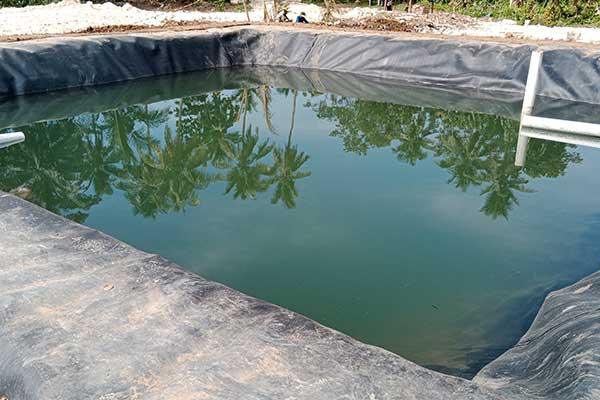
What Is HDPE Geomembrane? HDPE geomembrane is a geosynthetic product made from polyethylene polymer resin. The polyethylene used is high-density, with a density of around 0.94 g /cm3. Geomembrane, also known as HDPE tarpaulin, is impermeable to water and gas. This impermeability is widely used by construction professionals to contain wastewater or raw water as […]