


Geomembrane Benefits for Road Construction

What Is Geomembrane?
Geomembrane is a type of geosynthetic in the form of a thin sheet made from high-grade polyethylene blended with carbon black, antioxidants, anti-ageing and anti-UV additives. The material resists a wide range of chemical liquids, waste and microorganisms, and has low permeability and excellent UV resistance. HDPE geomembrane is also very strong and not easily damaged, which makes geomembrane for road construction a practical choice.
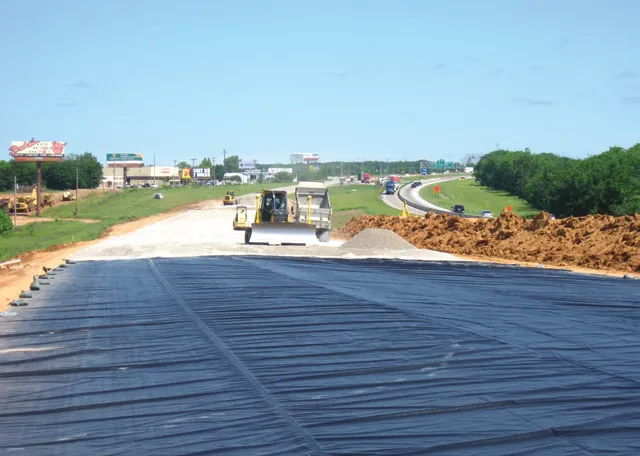
Geomembrane for roads
HDPE Geomembrane
HDPE (High Density Polyethylene) geomembrane comes in thicknesses from 0.5 mm to 2 mm, and some suppliers offer greater thicknesses to order.
The material has several advantages: it is corrosion resistant, heat resistant up to 97 degrees Celsius, resistant to ultraviolet light, and can last up to 15 years.
This type is well suited as a pond liner because it increases production and efficiency and saves money thanks to its long service life of up to 15 years.
Functions of Geomembrane for Road Construction
Geomembrane generally acts as a waterproof layer to separate solids and liquids, whether waste or not, and its impermeability keeps the subgrade beneath it protected and uncontaminated. It is also often used in road construction where the soil subgrade is waterlogged (has springs) or hard to dry out.
Read also
Geomembrane Products and Specifications
In road construction, the material serves as a separator and stabiliser as well as a waterproof layer, so the good fill or pavement layers above it stay protected and are not disturbed by water or soft soil pushing upwards.
Other Articles

Road Construction with Geotube
Engineers already know geotubes for many construction needs, including geotube road construction. Access roads are increasingly important as development grows. Road construction is generally straightforward when the foundation soil and surroundings are suitable. Roads are difficult to build when the area is flooded with water. This is common when access roads must be built in […]
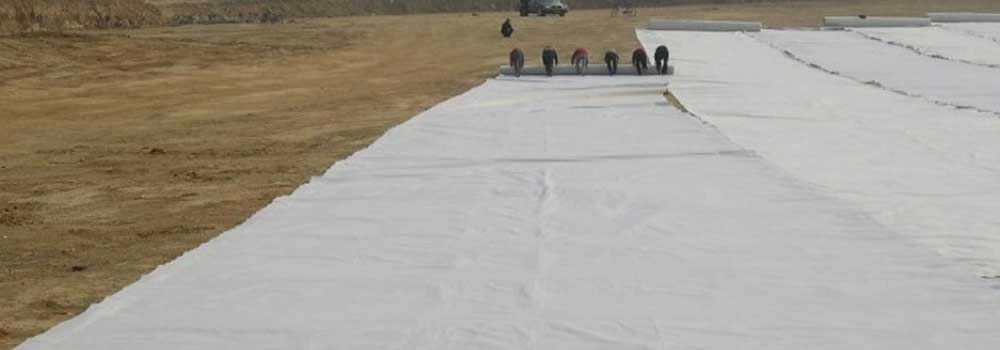
Buy Geotextile at the Best and Most Affordable Price
Buy geotextile at the best and most affordable price from us, a complete and professional distributor and supplier of geosynthetic materials. We sell every kind of geosynthetics you need, such as Geotextile, Geogrid, Geomembrane, Geobag, Geocell and more. For further information, please contact us. Geotextile In geotechnical engineering, geotextile is one of the most frequently […]
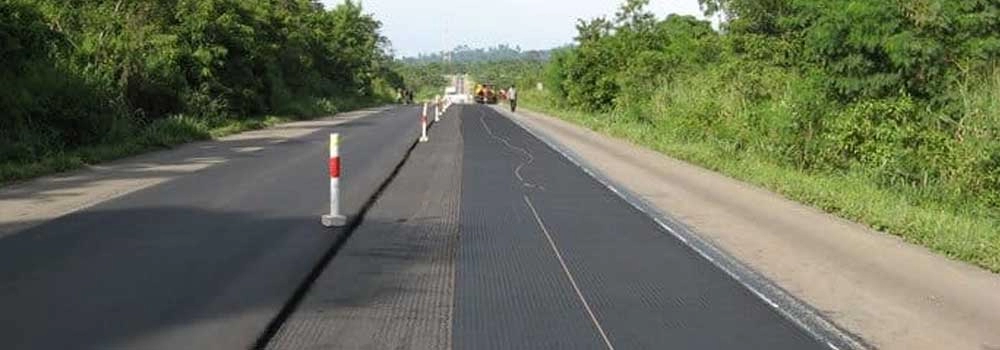
Geosynthetics for Road Construction and Highway Engineering
In general, geosynthetics are man-made materials often used in construction projects such as subgrade reinforcement in road structures. In highway engineering, geosynthetics for road construction can act as a separation layer or as reinforcement to increase embankment stability. In this role, geosynthetics provide reinforcement through several mechanisms: lateral restraint, increasing the bearing capacity of the […]