


Geosynthetics for Road Construction and Highway Engineering
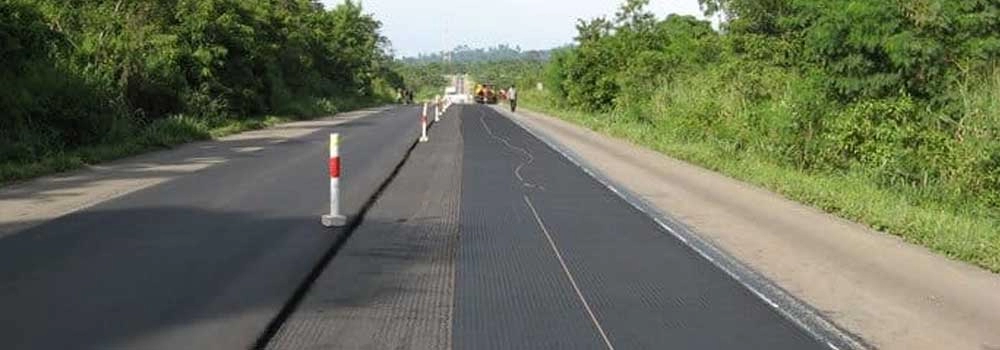
In general, geosynthetics are man-made materials often used in construction projects such as subgrade reinforcement in road structures. In highway engineering, geosynthetics for road construction can act as a separation layer or as reinforcement to increase embankment stability.
In this role, geosynthetics provide reinforcement through several mechanisms: lateral restraint, increasing the bearing capacity of the soil, and increasing the bearing capacity of the road. Read the overview below to learn more.

Using geosynthetics in road development and construction is often the most effective solution because it is considered more cost-efficient. With geosynthetic materials, project costs can be reduced by 10% – 50%.
These savings are achieved during the execution and construction of the road project and through to the maintenance stage. For common subgrade problems, here are the solutions that geosynthetic materials can provide.
Soft Soil (Soft Clay)
This type of soil is usually associated with several problems, such as a high flood water level, low bearing capacity, high compressibility and a relatively long consolidation time. These conditions can be addressed with geosynthetic products as follows:
- Use a separation layer of non-woven geotextile so that the embankment fill and the poor subgrade do not mix due to the pumping effect.
- Use a separation and stabilization layer of woven geotextile, which increases soil bearing capacity through effective stabilization.
- Use geocomposite as a separation and stabilization layer. With high tensile and puncture strength, it effectively increases the bearing capacity of the soil.
- Use geogrid to stabilize gravel fill, together with non-woven geotextile as a separation layer.
- Use geocell to reinforce fill materials such as sand, granular soil or gravel, combined with non-woven geotextile as a separation layer.
Peat Soil
Peat soil has a high organic content, which affects its engineering properties. Peat can be classified into two types: fibrous peat and amorphous (non-fibrous) peat.

Geosynthetics for highway engineering can be applied to peat soil, which generally has several problems: very low bearing capacity, a relatively high groundwater table, long secondary consolidation and decomposition, and overall sliding. Here is how to handle them:
- Use geosynthetic materials such as geocomposite, woven geotextile, a combination of geogrid with non-woven geotextile, or a combination of geocell and woven geotextile to reinforce the embankment.
- Apply preloading techniques using geotextile materials such as woven geotextile, non-woven geotextile and geocomposite.
Swelling Soil (Expansive Soil)
Expansive soil has characteristics that are strongly influenced by water, with considerable shrink-swell behavior. Common problems include long cracks in the road pavement, continuous shrinking and swelling, and lateral stability issues.

The geotechnical solution to these problems is to use geosynthetic materials such as geomembrane, composites, geosynthetic clay liner and knitted PVC geomembrane. The goal is to keep the moisture content balanced and stable.
In short, geosynthetics for highway engineering are the right solution to reduce the cost of road construction and development. With the right geosynthetic material, subgrade bearing capacity can be improved. For the best geosynthetic products, contact https://petrane.co.id/.
Other Articles
How to Choose the Right Geotextile Type
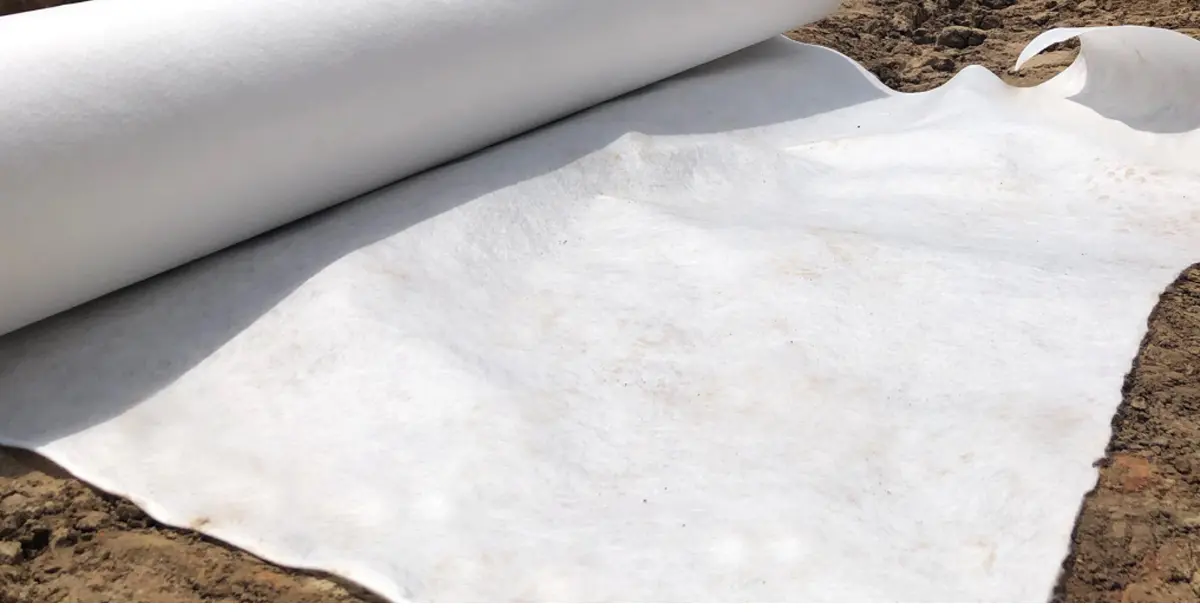
Understanding the types of geotextile is essential for construction and environmental management professionals. In today’s advancing world, using the right material is crucial to achieving optimal results. Geotextile is an innovation in civil engineering that offers many benefits for infrastructure and environmental protection. This article explores the various types of geotextile so readers can better […]

HDPE Pipe: Prices and Sizes
HDPE pipe, also commonly called PE-100 pipe, is a product designed to carry pressurized clean water, and it meets food-grade standards. Available in a wide range of HDPE pipe sizes, most well-known brands on the Indonesian market already manufacture this product in accordance with the SNI (Indonesian National Standard). HDPE pipe is a newer technology […]