


Geogrid-Reinforced Pavement Design
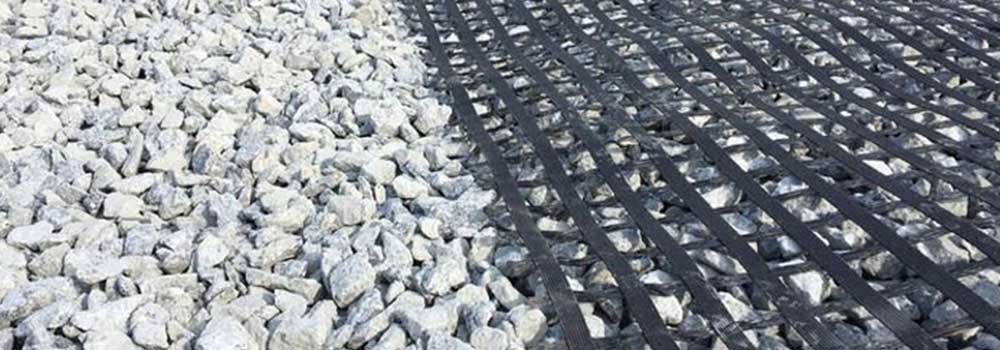
In geogrid reinforced pavement design, Geogrid in road construction with an aggregate surface can support two pavement applications: mechanical subgrade stabilization and aggregate base reinforcement. The application is determined beforehand by the subgrade strength, and the type of geosynthetic recommended for building pavements over very soft subgrade conditions usually serves to stabilize it mechanically.


The geosynthetic application on aggregate-surfaced roads is based on subgrade conditions. Geosynthetics are used for the subgrade. As the design subgrade strength increases, the main geosynthetic application transitions from mechanical subgrade stabilization to base reinforcement.
The first step in designing an effective reinforced pavement system is to determine the subgrade properties, including grain size distribution, Atterberg limits, and shear strength or bearing capacity. Shear strength can be measured directly using a vane shear device or indirectly using bearing capacity correlations from California Bearing Ratio (CBR) or Dynamic Cone Penetrometer (DCP) tests. Subgrade strength is defined as the 75th percentile strength of the top 18 inches of the subgrade. The 75th percentile strength is the value at which 75 percent of the recorded soil strength readings are higher than this value.
Other Articles

Types of Geogrid: Uniaxial, Biaxial and Triaxial
Here are the types of geogrid and their functions. Several types of geogrid are available on the market, but four are commonly used: uniaxial geogrid, biaxial geogrid, triaxial geogrid and polyester geogrid. Types of Geogrid Uniaxial Geogrid Uniaxial geogrid has long, elongated apertures and is manufactured as an integral structure. It can be made from […]

Geotextile Road Reinforcement: Construction Process
Geotextile is a material that is already widely used for soil reinforcement work, as cited from the site on geotextile, and it could even be called mandatory for geotextile road reinforcement. A road construction worker must therefore understand how to install geotextile properly. For this installation, the Department of Public Works has issued a document […]

Woven and Non-Woven Fabric Functions
Woven and non-woven fabrics are widely used in various industries. Both are made from the same base material, polyester, but they have different characteristics. To understand non-woven fabric functions and woven fabric applications, first consider how the two types differ. In appearance, non-woven fabric has non-interlaced fibers and is usually sold in white. This type […]