


Geofoam Types, Prices and Selection Guide

What Is Geofoam?
Geofoam is a geosynthetic product made from polystyrene (PS) polymer. Geofoam comes in 2 kinds: Expanded Polystyrene (EPS) and Extruded Polystyrene (XPS). In this geofoam selection guide, we explain the differences between the 2 types and how to choose the right one. Before looking at each type, it helps to understand the difference between the expanded and extruded processes used to make geofoam.
EPS Geofoam
The expanded process is generally applied to Polystyrene plastic beads, and the end result is a styrofoam product. The beads are first expanded with steam to produce pre-puff beads. The partially expanded beads are then filled into a mold and steamed again until they are fully expanded.

XPS Geofoam
Extrusion (extruded) is a process used for many types of plastic to produce fairly complex shapes. The beads are pressed and melted through a die to form a continuous material that follows the shape of the die in the extrusion machine.

Differences Between EPS and XPS
Here are the differences between Expanded Polystyrene (EPS) and Extruded Polystyrene (XPS) geofoam.
Geofoam under the microscope
EPS and XPS look different. EPS is made from expanded plastic beads that stick to one another, which leaves voids that are not filled by the beads. XPS, on the other hand, is made from plastic pressed and melted through a die, which creates a uniform, dense structure (with no voids).

EPS and XPS Geofoam Prices
EPS is relatively cheaper than XPS, with EPS prices 10% to 30% lower than XPS. This price difference is in line with the higher strength of XPS compared with EPS. For the latest prices and the geofoam sizes you need, please click the link below.
Read Also: Non-Woven Geotextile
Compressive Strength
XPS has relatively higher compressive strength than EPS, around 10% to 30% higher. The difference in density of EPS naturally affects its compressive strength.
Use in Contact with Soil
Both EPS and XPS perform well in contact with soil and when used as a foundation in construction.
Durability
EPS is not resistant to moisture: it has voids that can absorb liquid, which can reduce its thermal performance. XPS is moisture resistant because it has no voids, so it can be considered a semi-impermeable material. EPS is more resistant to insects than XPS.
Life Span
EPS has a lifespan of ≥ 100 years, and XPS has a lifespan of ≥ 50 years. Of course, the actual lifespan depends on site conditions and use.

PT. Petra Nusa Elshada supplies geofoam made from EPS, with densities from 12 kg/m3 to 46 kg/m3. The geofoam products available comply with ASTM standards.
Geofoam Price
The geofoam price depends on its size. To determine the right geofoam for your project and get the latest geofoam prices from us, please contact us via the following link:
Other Articles
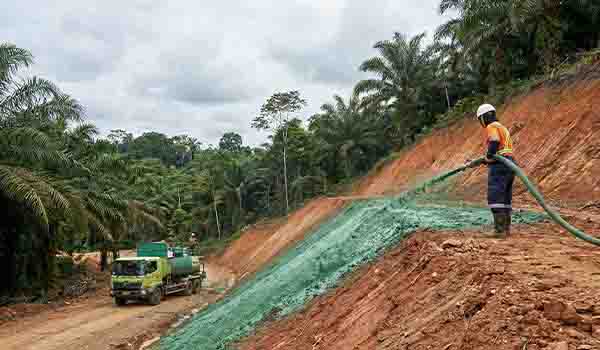
What Is Hydroseeding? A Fast Green Fix for Erosion
Hello, Petra friends! Have you ever seen a hillside or highway embankment that was once barren suddenly turn into a neat carpet of green grass in a short time? Most likely, that wasn’t the result of planting grass one by one or manually laying sod (turf). It was the result of a technology called Hydroseeding. […]

Types of Geomembrane You Should Know
Geomembrane Geomembrane looks like an ordinary plastic sheet, but it is actually quite different. It works as a waterproof layer that does not leak easily and resists acidic liquids, and geomembrane is available in thicknesses from thin to very thick. Below we look at the types of geomembrane you should know. Geomembrane has been widely […]

Geotextile Distributor and Supplier
Non-Woven Geotextile As a geotextile distributor, we supply this non-woven type, which resembles a fabric carpet and is generally sold in white. Our local product is made from high-quality 100% polyester (PET) fibers. It is produced in a continuous process, in which the fibers remain unbroken throughout manufacturing, resulting in geotextile of good quality that […]