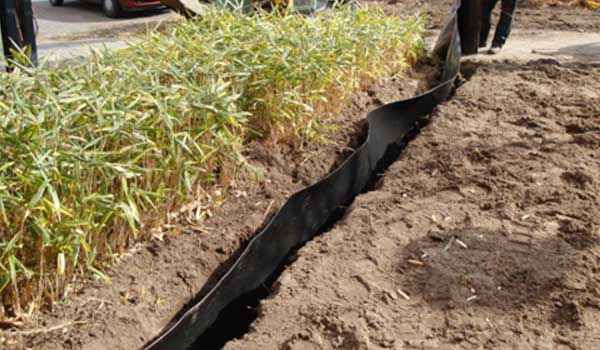
Woven Geotextile: Definition and Functions

To understand woven geotextile functions, first note that woven geotextile is a type of material classified as geotextile. A geotextile itself is a permeable woven product (particles can pass through it) commonly used in soil applications.
Geotextile materials can reinforce, protect, filter and separate. Most geotextiles currently sold on the market are made of polypropylene or polyester. Woven geotextile is one type. Another type is non-woven or needle-punched geotextile, which has a flannel-like appearance.

Geotextile is a relatively durable material that can also reduce the risk of landslides or soil damage. By classification, geotextile belongs to the geosynthetics group and can benefit geotechnical or environmental engineering structures.
The word woven literally refers to weaving. In technical terms, however, woven geotextile is made by interlacing two or more yarns at right angles. Woven materials are generally made of natural fibers or a blend of natural and synthetic fibers, but this woven geotextile is made only of synthetic fibers (polypropylene or polyester).
What Is Geotextile?
Geotextile is a permeable geosynthetic material made from synthetic fibers using needle-punching or weaving methods. Geotextile is one of the geosynthetic products widely sold on the market.
This product is commonly called geotextile because its general use relates to “geo,” which literally means earth or soil, while the word “textile” means a woven product. In literal terms, therefore, geotextile is a woven product or material commonly used with soil.
The finished form of geotextile is a fabric sheet. Geotextile products generally measure about 4 to 6 meters wide and approximately 50 to 100 meters long. Geotextile is divided into two main groups: woven and non-woven geotextile.
Geotextile applications can use several design methods or combinations of methods in geotextile design. In practice, however, the final geotextile design is often based on three considerations: cost and raw-material availability, specifications and function.
Woven Geotextile
Woven geotextile is a geotextile material manufactured through a traditional weaving process. Each woven yarn forms part of a large, uniform sheet. The yarn used to make woven geotextile ranges from fibrillated yarn to monofilament. Some woven geotextiles are also made from slit films.

The uniform woven structure provides much higher tensile strength. This makes woven geotextile ideal for projects with heavy loads, such as road construction. However, this geotextile type has a less porous, tightly woven surface, tends to be impermeable and is unsuitable for drainage projects. Using woven geotextile with very few pores can clog a channel because water cannot pass through it easily.
Woven Geotextile Functions
Because woven geotextile is described as having no pores, this property makes it ideal for erosion-control projects. In some types of erosion-control project, water is directed across or over the soil surface to stop it from flowing into the soil layer below. Woven geotextile has ideal characteristics that include high resistance to corrosion and a relatively long service life.
Woven geotextile is also considered a material with high tensile strength. It is therefore highly suitable for road construction, parking areas and airport runways. The material resists UV degradation and can be used for long-term applications.
This material can function as a containment barrier for non-woven material when liquid asphalt or rendering and a polymer blend are added.
Because liquid asphalt has been added, the material becomes relatively impermeable in both directions, whether flow is in-plane or cross-plane. As a barrier, also called a woven geotextile membrane, it is placed on an existing pavement surface.
Other Articles

Geosynthetics in Oil and Gas Areas
The oil and gas sector operates many different kinds of areas, such as exploitation, drilling, storage and treatment areas. These areas can produce high levels of contamination that require special treatment and protection, to prevent contamination (pollution) that could affect the soil and water. Geosynthetics for oil and gas are the right solution to this […]