


Soft Soil Improvement Methods Using Geosynthetics
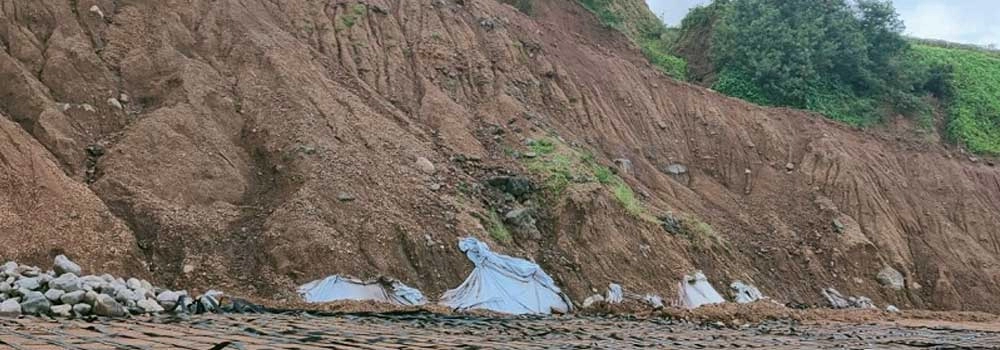
The growing construction industry needs adequate supporting technology. That is why many technological innovations have been created to meet increasingly complex construction needs. One of them relates to soft soil improvement.

As is well known, land with good-quality soil is essential to support the pace of construction. Soil is what buildings stand on, so its bearing capacity must meet the required standards. Read the discussion below for more details.
Definition of Soft Soil
One problem that often arises in construction is soft soil with low bearing capacity. This can cause losses such as high construction costs and potential building damage due to the low bearing capacity.
Read Also: Geocell for Road Construction
In general, soft soil has the following characteristics:
- Low shear strength, which decreases further as the moisture content increases.
- Visually, the soil can be penetrated by a finger to a depth of at least 2.5 cm.
- Shear strength decreases when the soil structure is disturbed.
- When wet, the soil tends to compress easily and behaves plastically.
- High compressibility.
- Low permeability.
Soft Soil Improvement Methods (Ground Improvement)
Soil improvement or stabilization is a method used to improve soil properties so that the soil has a high bearing capacity. The goals of soil improvement include:
- Increasing soil bearing capacity to reach the required quality standard.
- Preventing the risk of building settlement.
- Avoiding excessively deep foundations.
- Saving construction costs.
- Avoiding the need to replace large volumes of soil.
Before any ground improvement, an initial evaluation is needed to determine the soil characteristics and the groundwater depth in the area. Soil conditions that require improvement include:
- Problematic soils such as expansive soil, clay, soils with organic content and landslide-prone soils.
- Soils with liquefaction potential.
- Soils with low bearing capacity or high compressibility.
In general, there are two ground improvement approaches: compacting the soil and removing water to increase its density, and injecting stabilizing materials to consolidate the soil.
In more detail, the methods available for soft soil improvement are:
- Removal and excavation
- Removal and replacement
- Preloading
- Lightweight fill
- Self-supporting fill
- Grouting or cement injection
- Soil reinforcement
- Vibro-compaction
- Compaction by displacement
- Dynamic consolidation
The Soft Soil Improvement Process with Geosynthetics
One popular method for improving soil structure to achieve high bearing capacity is the use of geosynthetics. As is well known, geosynthetics are synthetic materials specially designed for construction needs such as subgrade improvement.

There are many types of geosynthetics, each with functions that can be used according to project needs. They include geotextile, geomembrane, geogrid, geomat, geocell, geonet, geopipe, geobag and more.
Read Also: How to Deal with Expansive Soil
One soil improvement process involves adding geotextile to road construction. The material provides filtration, separation and stabilization, so that soil bearing capacity increases and the road does not crack, sink or become uneven easily.
Soft soil improvement is a way to increase soil bearing capacity to meet the required quality standard. It can be done with geosynthetic materials that are proven effective for reinforcement. You can get these products at https://petrane.co.id/.
Other Articles
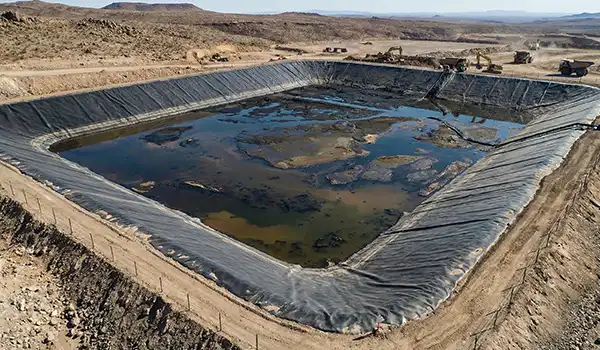
Why Geomembrane Withstands Hazardous Mining Waste
Have you ever wondered how mining companies manage their toxic waste so it doesn’t damage the surrounding environment, Petra friends? Mining produces high-value materials, but behind them comes something else: hazardous and toxic (B3) waste. This is where a hero called geomembrane comes into action. This lining material is like a shield protecting the earth […]

How to Connect a Geomembrane to a Pipe
Question: How do you connect a geomembrane to a pipe?Answer: ASTM D6478 provides guidance on how to connect geomembrane to pipe. “Pipe boots are fabricated from geomembrane, and the pipe boots are then joined to the geomembrane by extrusion welding.” The geomembrane is then connected to the pipe using a clamp and rubber gasket. Below […]

Embankment Reinforcement with Woven Geotextile
Woven Geotextile can serve as reinforcement, a separator or drainage, and woven geotextile reinforcement is key for embankments. If an embankment sits on soft soil, excessive deformation causes it to bend downward. This deformation damages the structure above it. Basically, an embankment behaves like a loaded beam: if it bends too sharply, cracks form at […]