


Expansive Soil Treatment Methods

Expansive soil treatment is needed because expansive soil has a high potential to swell and shrink. This behavior generally results from changes in water content that alter the soil volume.
Infrastructure built on expansive soil often suffers damage from ground movement. This movement occurs when changes in soil water content during the dry and rainy seasons cause the soil volume to expand.


Construction Treatment Concepts on Expansive Soil
1. Expansive Soil Replacement
- Replace soil classified as expansive down to a specified depth. This option becomes ineffective if the water table fluctuates considerably.
- The replacement material must be selected, non-expansive fill so it does not create swelling and shrinkage problems beneath the infrastructure.
- The expansive soil must be replaced to a depth of at least 1 m.
2. Water Management
- The main cause of swelling and shrinkage in expansive soil is a change in soil water content. To prevent excessive changes caused by surface-water infiltration, drainage must be provided so water does not seep beneath the road structure.
- Non-woven geotextile, Geo-pipe and geomembrane can be used to create an effective drainage system.
3. Membrane (Covering)
- Geomembrane is a waterproof material. A geomembrane prevents surface water from seeping beneath the road structure.
- Geomembrane installation is the most effective option for addressing expansive soil problems.
4. Loading
- The vertical load applied by fill above expansive soil reduces soil expansion.
- The loading method can only be used for expansive soil with low to moderate swelling activity.

Geomembrane
Product specifications and details


Other Articles
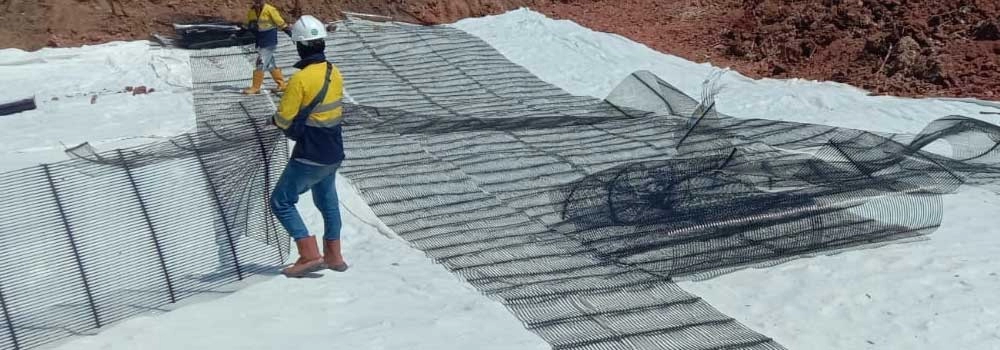
Geogrid Selection: Key Factors to Consider
Geogrid selection involves several factors, each contributing to project success. The following are key considerations: Reinforcement and Stabilization Geogrid provides effective reinforcement and stabilization. Consider the project loads, whether for soil reinforcement, slope stabilization or retaining walls. Selecting a geogrid with high tensile strength and adequate stiffness is essential for long-term stability and durability. Material […]
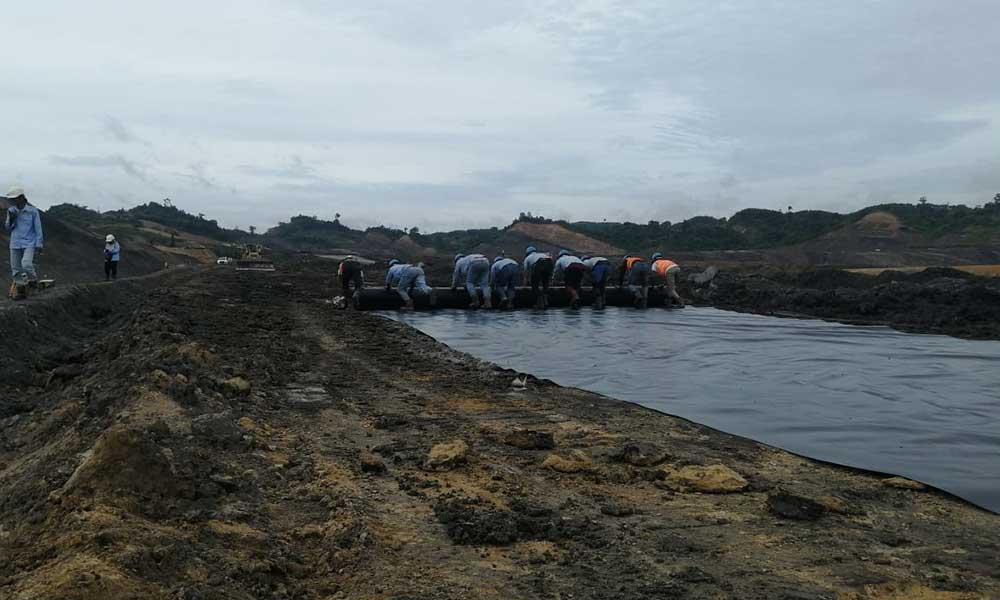
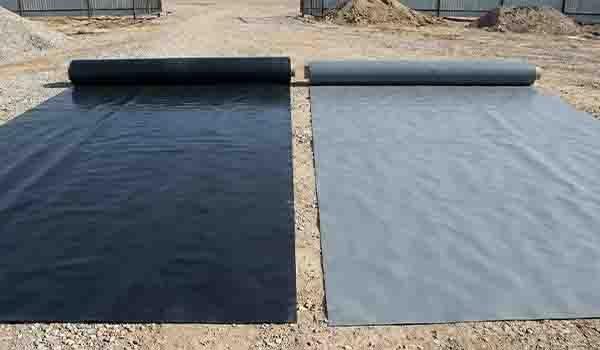
HDPE vs PVC Geomembrane: Which Liner Is Best for Mining?
Hello, Petra friends and mining industry professionals! If you are handling a large-scale project, you are surely familiar with geomembrane. This lining material is key to maintaining environmental safety around mine operations. However, two types of geomembrane on the market often confuse engineers and project managers: HDPE (High-Density Polyethylene) and PVC (Polyvinyl Chloride). So if […]