


Salt Pond Management: Methods and Best Practices

Salt ponds are a promising business that supports industrial demand and empowers coastal communities. Good salt pond management matters because salt ponds are not only a source of the main raw material for the salt industry.
What Is a Salt Pond?

Salt pond
A salt pond is a series of ponds built specifically on the coast to produce salt using natural methods. The system uses seawater evaporation, assisted by certain techniques, to produce high-quality salt. A salt pond is more than just a place to hold water.
Definition and Origins of Salt Ponds
In general, a salt pond is a system of ponds designed to encourage seawater evaporation so that salt can settle and be collected. The system grew out of traditional coastal practices passed down through generations in many parts of Indonesia. As technology has developed and demand from the salt industry has grown, the salt pond concept has also evolved to produce salt that is competitive on the global market.
In practice, salt ponds are often combined with ecological methods and modern technology to reduce negative impacts on the environment.
Why salt ponds matter
Understanding the role and benefits of salt ponds is a first step toward making the most of Indonesia’s marine resources. Beyond producing salt, salt ponds can protect the coastline from erosion while boosting tourism and diversifying the local economy. Salt farmers need to adopt the latest technology and innovations to keep production efficient and environmentally friendly.
Sustainable salt pond development will also help Indonesia meet domestic demand while strengthening the position of the national salt industry on the global market. This will create many job opportunities and strengthen coastal economic resilience while protecting marine ecosystems at the same time.
Technology and Production Methods in Salt Pond Management

Salt pond management methods
It is important to understand how salt is produced in salt ponds, including the modern and traditional technologies and methods involved. Using the right technology delivers maximum results while protecting the coastal environment.
Now that we know what salt ponds are and why they matter, let’s look at the innovative technologies and advanced, eco-friendly management processes involved. This approach creates synergy between tradition and innovation to produce high-quality salt.
Automated and Digital Technology in Salt Pond Management
One important innovation in salt pond management is the use of automated and digital technology based on IoT (Internet of Things). This technology makes it possible to monitor evaporation, salinity, temperature, and water quality in real time through a smartphone or computer. This digital approach helps salt farmers make fast, accurate decisions, which improves production efficiency.
Besides better management, sensors and automated monitoring systems also reduce the risk of environmental damage from unsuitable technology. The data collected can be used to adjust the process during both the dry and rainy seasons, so salt production stays optimal without sacrificing the surrounding ecosystem.
Traditional and Modern Salt-Making Methods
Although modern technology plays a big role in efficiency, traditional systems remain relevant and should not be ignored. Traditional methods passed down through generations have advantages in the authenticity and flavor of the salt produced. Traditional salt farmers usually use small ponds and let evaporation happen naturally with sun and wind.
Modern methods, on the other hand, integrate technologies such as controlled irrigation systems, natural additives, and faster, standardized drying techniques. This combined approach speeds up the process, improves salt quality, and ensures the sustainability of salt pond businesses in Indonesia.
Advantages of Using Technology in Salt Pond Management
Applying technology to salt pond management can significantly improve both the quality and quantity of production. At the same time, it supports environmental conservation and makes the business more efficient, so it can compete on the international market.
Automation not only reduces direct manual labor, but also minimizes human error in managing water and salt. This technology is in line with national and international policies on natural resource and environmental management.
Building Salt Pond Basins

Building salt pond basins
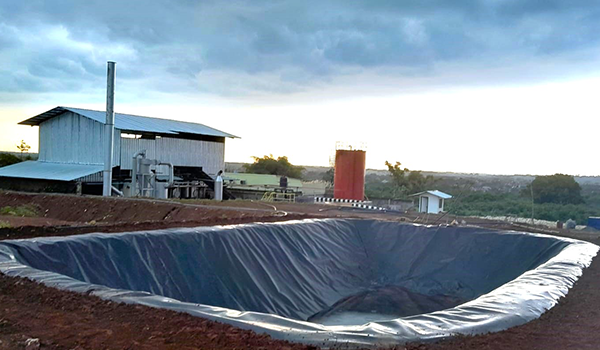
In aquaculture and coastal production, building effective and eco-friendly salt pond basins is a top priority. One innovation that is growing and widely appreciated is the use of geomembrane as the base and wall lining of the ponds. Salt ponds with geomembrane offer many advantages, from cost efficiency and corrosion resistance to easy maintenance and management.
Using geomembrane not only increases salt pond productivity significantly, but also minimizes environmental impact and extends the life of the ponds.
What Geomembrane Is and What It Does in Salt Ponds

Geomembrane in a salt pond
Choosing the base material is essential for building an effective salt pond. Geomembrane is a plastic material used as a soil or water barrier, and it is used to build the walls and floor of the pond. In addition, salt ponds with geomembrane can withstand water pressure, prevent salt from seeping into the ground, and protect the area around the ponds from contamination.
By understanding what geomembrane is and what it does, salt farmers can see how much this material contributes to successful salt production. Geomembrane also makes pond construction easier, speeds up the work, and delivers a neater, longer-lasting result.
Advantages of Geomembrane for Salt Ponds
Faster Salt Crystallization
Because black geomembrane absorbs heat easily, it is ideal as a salt pond liner to speed up the crystallization of seawater and allow faster harvests.
Protection from Contamination
The high durability of geomembrane, made from high-density polyethylene (HDPE), keeps the pond soil from mixing into the seawater, producing quality salt free from soil contamination.
Higher Production
Salt readily absorbs and binds with soil particles, so using geomembrane as a salt pond liner is considered very effective because it makes harvesting salt easier and faster.
Make sure you use high-quality geomembrane products from Petra Nusa Elshada so your salt pond construction delivers good results. Petra Nusa Elshada offers a wide range of high-quality geosynthetic materials at competitive prices. Contact Petra Nusa Elshada today for consultation and orders.
Challenges and Opportunities in Salt Pond Development
The development of salt ponds faces various challenges and opportunities that need to be addressed and used to the fullest. Understanding the challenges helps in formulating effective strategies that support the economic, social, and environmental sustainability of this business.
Through in-depth analysis, let’s explore the factors that affect successful salt pond development, including regulation, technology, community participation, and the market.
Infrastructure and Regulatory Challenges
One of the main obstacles to salt pond development is uneven supporting infrastructure and a lack of clear regulations. Many coastal areas still lack adequate irrigation systems, road access, and salt storage and processing facilities. These conditions hamper production and the distribution of salt to domestic and international markets.
In addition, inconsistent government regulations and policies often hold back salt farmers and salt pond businesses. Overlapping regulations, rules that are hard to understand, and complicated licensing processes create major barriers. Overcoming this requires harmonizing policies at central and regional levels, as well as building the capacity of salt farmers so they can meet national and international standards.
Opportunities for Added Value and Exports
As the global market grows and demand for high-quality salt increases, big opportunities are opening up for the national salt pond industry. Indonesia has great potential to produce industrial, food-grade, and pharmaceutical salt that meets international standards. With technological innovation and quality improvements, salt farmers can increase the added value of their products while opening up wider export markets.
In addition, developing integrated salt industrial zones can create new economic centers that generate jobs and strengthen coastal community economies. This potential is supported by Indonesia’s natural resources and geography, which strongly favor sustainable salt pond businesses.
A Balanced Ecosystem
Salt pond development must go hand in hand with efforts to conserve the environment and coastal ecosystems. Many challenges come from environmentally unfriendly practices such as over-evaporation, chemical use, and poor waste management. These can damage the marine ecosystems that are the main source of the nation’s salt.
By applying the principle of a balanced marine ecosystem, activities such as mangrove conservation, eco-friendly technology, and good waste management can reduce negative environmental impacts, so salt businesses can endure without sacrificing coastal ecosystems.
FAQs About Salt Ponds
What is a salt pond and how does it work?
A salt pond is a system of ponds used to produce salt through natural or modern seawater evaporation. The process involves holding seawater in ponds and letting it evaporate naturally or with assistance to crystallize the salt, which is then collected and processed further for industrial use or consumption.
How can modern technology increase salt pond production?
Modern technologies such as IoT-based automated systems and sensors can monitor water quality, temperature, and evaporation rates in real time. Applying these technologies improves production efficiency and salt quality while reducing environmental impact, making salt pond businesses more sustainable and competitive on the global market.
What are the main challenges in salt pond development?
The main challenges include inadequate infrastructure, regulations that are not yet fully supportive, and environmental problems from unsustainable practices. Unintegrated management and a lack of technological innovation are also major obstacles.
How can a salt pond business remain sustainable?
The business can stay sustainable through eco-friendly technology, conservation of coastal ecosystems such as mangroves, and good waste management. Applying blue economy principles and supportive government policies is also essential.
What are the main benefits of salt pond development for coastal communities?
The main benefits include higher community income, new jobs, and the preservation of local culture and wisdom. Salt pond development also helps increase regional economic independence and strengthen national food security.
Conclusion
The development of salt ponds plays an important role in increasing national salt productivity while protecting the coastal environment. By applying technological innovation, improving regulations, and adopting sustainability principles, salt pond management can become a driving force for a sustainable economy based on Indonesia’s marine resources.
Beyond the economic benefits, successful salt pond management also has a positive impact on coastal ecosystem conservation, strengthens food security, and creates new opportunities for coastal communities. Through collaboration among government, the private sector, and communities, salt pond development in Indonesia can improve further and deliver broad benefits to coastal communities.
Other Articles

Drainage Cell: Benefits, Functions and Applications
Drainage Cell: Benefits, Functions and Applications in Modern Drainage Systems In modern urban development, effective and sustainable drainage systems are essential. One technology that has emerged as an innovative solution is the drainage cell. This article takes a closer look at the drainage cell, including its benefits, functions and applications in modern drainage systems. Let’s […]

Geotextile or Geogrid: Which Should You Choose?
Many road construction projects already use geotextile. Technological developments have also produced many other types of geosynthetics with advantages over geotextile, one of which is geogrid. Many questions arise when we face the choice: geotextile or geogrid? Geogrid? There is now a newer geosynthetic innovation designed to cover the shortcomings of Geotextile, especially in terms […]