5 Main Soil Types in Indonesia
Hello, Petra friends! Have you ever noticed why soil color in one region can differ greatly from another? Or why some roads deteriorate and become uneven quickly despite being newly paved? The answer often lies beneath our feet: the soil.
If you work in construction, civil engineering, or even agriculture, understanding soil characteristics is a “must.” As an archipelago on theRing of Fire, Indonesia has an extraordinarily rich variety of soils. Soil properties determine which construction method you should use, which geosynthetic materials are needed, and even which plants grow well there.
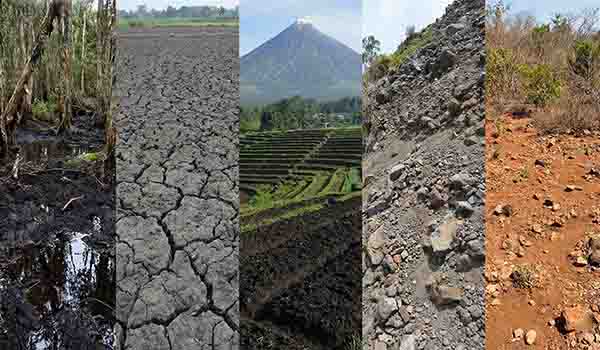
In this article, the Petra Nusa Elshada team will examine the five most common soil types found in Indonesia: Organosol, Grumosol, Andosol, Litosol, and Mediterranean soil. Let us look at the details!
1. Organosol: The Wet Peat Soil
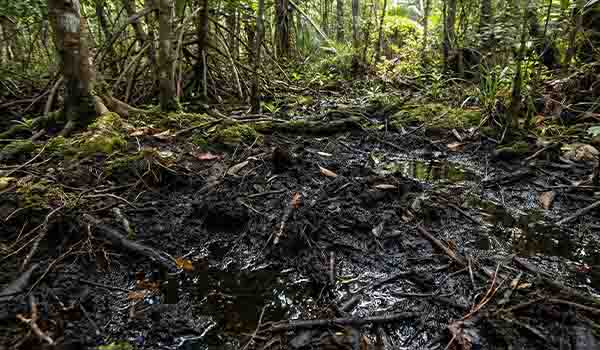
Organosol, more commonly known as Peat Soil, is a unique soil type. Unlike other mineral soils, Organosol forms from organic materials, such as plant and animal remains, that have not fully decomposed because the environment is constantly waterlogged or swampy.
Physical and Chemical Characteristics
If you hold this soil, it feels soft and wet. Its color tends to be deep black or dark brown.
- High Water Content: This soil has an exceptionally high water-retention capacity.
- Acidity (pH): Highly acidic (pH can fall below 4.0).
- Low Bearing Capacity: This is the main challenge in civil engineering. Peat is extremely soft soil.
Distribution
You will find much Organosol in tidal areas or large swamps, such as:
- The east coast of Sumatra (Riau, Jambi, South Sumatra).
- Much of Kalimantan (Central, West, and South Kalimantan).
- Southern Papua.
Construction Challenges
Building on Organosol is a “nightmare” if not handled correctly. Because it is soft and highly compressible (consolidation), buildings or roads above it are prone to subsidence.
Solution: In modern practice, using geosynthetic materials such as Geotextile (both Woven and Non-Woven) is crucial for separation and reinforcement so fill material does not mix with peat sludge.
2. Grumosol: The “Moody” Clay
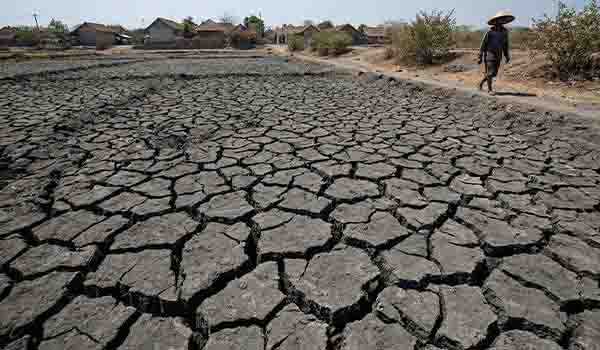
The second soil type is Grumosol. It forms from weathered limestone and volcanic tuff. It is also called Margalite. If Organosol is associated with swamps, Grumosol is associated with dry lowlands.
Physical and Chemical Characteristics
This soil has very high swelling and shrinkage (shrink-swell) properties. That is why I call it “Moody.”
- When Wet: The soil becomes extremely sticky, clayey, and swollen. It is very difficult to work.
- When Dry: The soil shrinks drastically until it fractures or cracks (cracking).
- Color: Gray to black.
- Texture: Heavy clay.
Distribution
Grumosol occurs in regions with relatively low rainfall or long dry seasons, such as:
- Central Java (Demak, Grobogan, Blora).
- East Java (Ngawi, Madiun).
- East Nusa Tenggara.
Construction Challenges
If you work on road or building-foundation projects, Grumosol is a major enemy. Its swelling and shrinkage can crack building foundations or make roads severely uneven.
Solution: Soil stabilization is required. Engineers often use Geogrid to lock aggregate over this unstablesubgrade, or perform soil replacement before construction begins.
3. Andosol: Fertile Thanks to Volcanoes
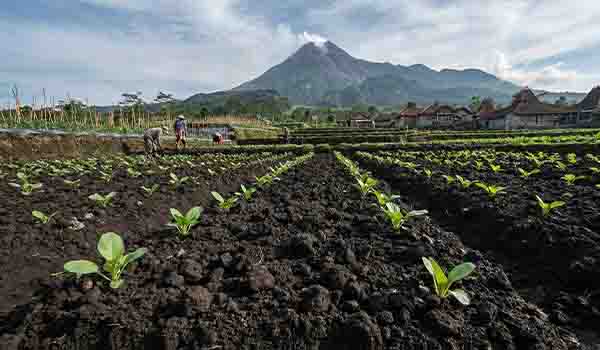
Indonesia is blessed with many volcanoes, and the result is Andosol. This soil forms from weathered volcanic ash. If you see highly fertile farmland on a mountain slope, it is most likely Andosol.
Physical and Chemical Characteristics
- Color: Dark brown to deep black.
- Texture: Crumbly and loose, feeling slippery or oily when squeezed.
- Fertility: Very high because it is rich in minerals and nutrients.
- Drainage: Generally well drained with good water-absorption capacity.
Distribution
As its origin suggests, this soil occurs around volcanic regions:
- Java (Lembang, Garut, Wonosobo, Malang).
- Bali.
- Sumatra (around the Bukit Barisan range).
- North Sulawesi.
Uses
Andosol is prized for agriculture. Vegetables, tea, coffee, and flowers grow very well here. For construction, this soil is fairly stable compared with Peat or Grumosol, but its density still requires attention because young volcanic soil can be loose .
Construction Challenges
Andosol is often considered “problematic” for construction because its very high water content results in very high water absorption.
Solution: Using Woven Geotextile is required on soft, water-saturated Andosol because the greatest challenge is intermixing. Without geotextile, construction materials such as crushed stone or sand would be swallowed by the native soil because Andosol can turn into slurry under load.
4. Litosol: The Rocky Soil
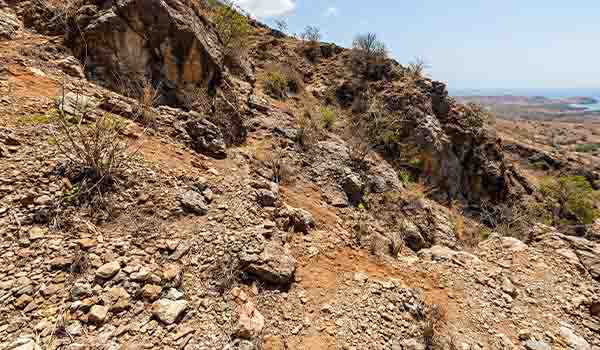
As its name suggests, from “Litos,” meaning stone, Litosol forms from incompletely weathered igneous and sedimentary rocks. It is effectively a “young” soil, so its soil layer (solum) is very shallow.
Physical and Chemical Characteristics
- Texture: Coarse, gravelly, and rocky.
- Depth: Very shallow; the parent rock (bedrock) is often visible less than 50 cm below the surface.
- Fertility: Low because of its limited nutrients.
Distribution
It is usually found on steep slopes or high mountains where erosion is so strong that the soil has no opportunity to thicken.
- Java (southern limestone mountains).
- Nusa Tenggara.
- Parts of Sulawesi.
Construction Challenges
Because it lies on steep slopes and has a loose structure, Litosol is highly prone to landslides.
Solution: To prevent erosion on this soil type, Geomat or Cocomesh (coconut-coir netting) is strongly recommended to hold the soil surface so vegetation can grow and bind the soil.
5. Mediterranean Soil: Red Limestone Soil
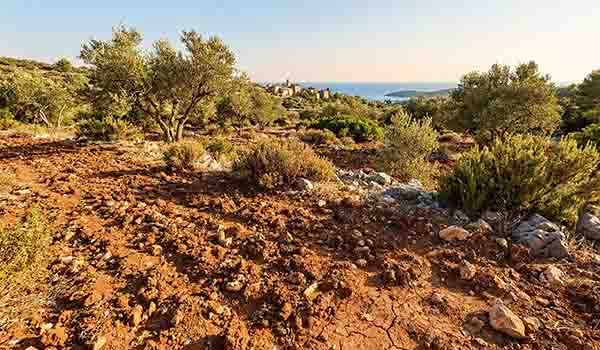
Mediterranean soil is also called Terra Rossa. It forms from weathered limestone (karst) and sedimentary rocks. Do not confuse it with Latosol (ordinary red soil), although their colors are similar.
Physical and Chemical Characteristics
- Color: Red to brownish.
- Texture: Clayey and fairly heavy.
- Composition: Contains abundant iron and aluminum, with a slightly acidic to neutral pH.
- Hardness: Can become very hard when dry.
Distribution
This soil is associated with limestone mountains:
- Gunung Kidul (Yogyakarta).
- Pacitan (East Java).
- Parts of Central Java.
- Nusa Tenggara.
Uses
This soil is not as fertile as Andosol, but it is highly suitable for perennial crops such as teak, secondary food crops, or tobacco. For construction, Mediterranean soil generally has fairly good bearing capacity, provided its drainage is properly managed so it does not turn to slurry during heavy rain.
Construction Challenges
This soil is highly expansive, becoming very soft when wet and very hard when dry. Because of its dense texture, water struggles to infiltrate downward, so ponding often occurs and weakens foundation structures.
Solution: For best results, Geogrid is usually combined with Non-Woven Geotextile beneath it to maintain good drainage without allowing clay to migrate into the upper layer.
Why Is Knowing the Soil Type Important?
For you, Petra friends, whether you work as a contractor, design consultant, or project owner, being “blind” to soil type is a fatal mistake.
- Cost Efficiency: Knowing that you are working on Grumosol means you can anticipate soil-improvement (soil improvement) costs from the outset rather than being surprised during the project.
- Long-Term Safety: A building on Organosol without an appropriate foundation, such as a pile slab system or geotextile reinforcement, risks collapsing or tilting within years.
Choosing the Right Material: At Petra Nusa Elshada, we often receive consultations about suitable materials. For soft soil such as Organosol, Woven Geotextile is the key. For erosion protection on Litosol, Geomat is the answer.
Conclusion
Indonesia has an extraordinary wealth of soil types, from challenging Organosol in Sumatra and Kalimantan and unstable Grumosol in Central Java to fertile Andosol in the mountains.
Each soil type brings its own challenges and potential. Our task is to understand these characteristics so we can use them wisely, for food security as well as robust infrastructure.
Need a Consultation for Your Requirements?
So, what soil type is at your project site? If you have difficulty handling soft soil or slope-stability problems, feel free to talk with our team of experts.
We supply a wide range of high-quality geosynthetics ready for delivery throughout Indonesia. Let us discuss your project needs today!
View Our Catalog: Catalog
Chat on WhatsApp Now: WhatsApp
Remember Geosynthetics, Remember Petra!
Other Articles

Geobag Installation Standards and Procedure
Geobags, also called high-strength geotextile bags, are filled with sand, are available in many sizes, and are used on riverbanks, for coastal protection and for offshore breakwaters. This article covers geobag installation standards. Geobags, also known as Geotextile Sand Containers (GSC), are a low-cost, soft and reversible solution for coastal protection structures and for strengthening […]