


Perforated HDPE Pipe: The Best Way to Build Drainage
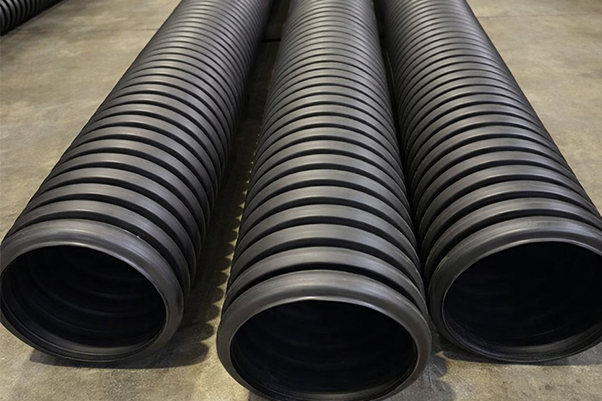
In modern construction and infrastructure, water management is one of the most critical aspects. Uncontrolled water can cause flooding, soil erosion, foundation damage, and a shorter service life for buildings. One technology that is becoming increasingly popular is perforated HDPE pipe (High-Density Polyethylene). This pipe is specially designed with small holes (perforations) that let water enter or leave in a controlled way, making it highly effective for subsurface drainage, irrigation, and environmental applications.
This article takes an in-depth look at perforated HDPE pipe: its definition, characteristics, how it works, applications, advantages over other materials, and the challenges and future prospects of its use.
What Is a Perforated HDPE Pipe?
A perforated HDPE pipe is made of high-density polyethylene and has small holes along its wall. These holes serve as entry or exit points for water, so the pipe works as both a drainage channel and a filtration medium.
Main characteristics of perforated HDPE pipe:
- HDPE material: corrosion resistant, lightweight, flexible, and long-lasting.
- Perforations: usually 1–3 mm in diameter, arranged in a set pattern to ensure an even flow distribution.
- High flexibility: can be laid to follow the ground contour without cracking easily.
- Lightweight: makes transport and on-site installation easier.
How a Perforated HDPE Pipe Works
The working principle of a perforated HDPE pipe is simple yet effective:
- Groundwater or rainwater enters through the perforations.
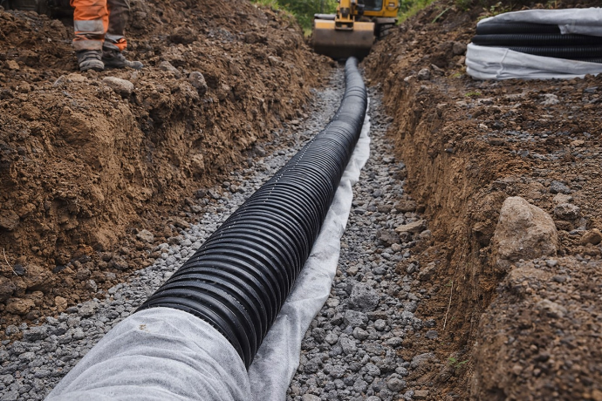
- A geotextile filter (optional) can be wrapped around the pipe to keep soil particles out.
- Water is carried through the pipe to an outlet drain or an infiltration well.
- Even distribution: the perforations ensure water does not concentrate at a single point, reducing the risk of ponding.
With this system, perforated HDPE pipe controls excess water while keeping the soil and the structures above it stable.
Applications of Perforated HDPE Pipe
Perforated HDPE pipe has a wide range of applications in construction, agriculture, and environmental projects:
- Highway drainage systems: prevent water from collecting beneath the asphalt layer.
- Basements and building foundations: reduce hydrostatic pressure on walls.
- Sports fields: keep the surface dry and safe to use.
- Agriculture and irrigation: regulate soil moisture evenly.
- Landfills and environmental projects: convey leachate so it does not contaminate the soil.
- City parks and landscaping: preserve aesthetics with a hidden drainage system.
Advantages of Perforated HDPE Pipe Over Other Materials
Before HDPE became popular, drainage systems often used PVC pipe, concrete pipe, or gravel. Perforated HDPE pipe, however, has significant advantages:
| Aspect | Perforated HDPE Pipe | PVC/Concrete Pipe | Gravel Media |
| Weight | Light, easy to install | Heavy, needs heavy equipment | Very heavy |
| Flexibility | High, follows the ground contour | Low, cracks easily | Not flexible |
| Service life | Long, corrosion resistant | Medium, can become brittle | Can clog |
| Flow efficiency | High, distributed perforations | Medium | Medium |
| Transport cost | Low | High | High |
| Installation | Fast, practical | Slow | Slow |
The table makes it clear that perforated HDPE pipe performs better in terms of efficiency, cost, and practicality.
Challenges in Using Perforated HDPE Pipe
Despite its many advantages, perforated HDPE pipe still comes with challenges:
- Perforation quality: holes must be precise so they do not clog easily.
- Geotextile wrapping: needed to prevent soil particles from entering.
- Higher initial price: compared with PVC pipe, although more economical in the long run.
- Installation skills: requires workers who understand modern drainage techniques.
Positive Impact on Construction and the Environment
Using perforated HDPE pipe brings significant benefits:
- Reduces local flooding through subsurface drainage.
- Extends building life by reducing water pressure on foundations.
- Land efficiency, since it does not need as much space as gravel.
- Sustainability: reduces the extraction of natural materials and is more environmentally friendly.
Case Study: Football Field Drainage
Imagine a football field in Jakarta. Without good drainage, heavy rain can flood the field and make it unusable. With perforated HDPE pipe:
- Rainwater enters through the perforations.
- It is carried to an outlet drain at the edge of the field.
- The playing surface stays dry and safe for matches.
As a result, the field can be used all year round regardless of the weather.
Prospects for Use in Indonesia
As a tropical country with high rainfall, Indonesia has a great need for modern drainage systems. Perforated HDPE pipe has the potential to become the main solution for:
- Urban projects: highways, high-rise buildings, city parks.
- Modern agriculture: maintaining soil moisture efficiently.
- Green infrastructure: roof gardens, urban landscapes, and eco-friendly projects.
With regulatory support and growing awareness of the importance of water management, perforated HDPE pipe could become the new standard for sustainable construction in Indonesia.
Conclusion
Perforated HDPE pipe is a modern drainage technology that offers advantages in flexibility, efficiency, and long service life. It is suitable for construction, agricultural, and environmental projects. Compared with traditional materials, this pipe is more practical, economical, and environmentally friendly.
In an era of sustainable development, perforated HDPE pipe is not just an alternative but a primary solution to water management challenges. Applied correctly, it keeps infrastructure sturdy, the environment healthier, and communities better protected from flooding and soil damage.
Other Articles

Geomembrane Maintenance Tips for a Longer Service Life
Have you ever wondered how to ensure your project investment lasts? If your project involves a pond, waste management or water storage, you are most likely using a geomembrane liner. This watertight lining material is known for being extremely tough, flexible and resistant to various extreme weather conditions in the field. However, no matter how […]

Improve Soil CBR with Geotextile and Geogrid
Civil engineering and construction practitioners continually seek innovations to improve the performance and sustainability of infrastructure projects. One breakthrough is the use of geotextile and geogrid, which have been shown to improve soil CBR. By preventing aggregate movement (confinement), geosynthetic materials help create a firm subgrade and are therefore known for improving soil CBR. Understanding […]

HDPE Spiral Pipe: A Modern Drainage Solution
Hello, Petra friends! Are you planning an infrastructure project, repairing a housing drainage channel, or perhaps puzzling over a culvert solution for a hard-to-reach plantation area? If so, you are most likely still stuck with the classic option: reinforced concrete pipe (RCP). Yet in today’s era of modern construction, there is a material that is […]