


HDPE Spiral Pipe: A Modern Drainage Solution
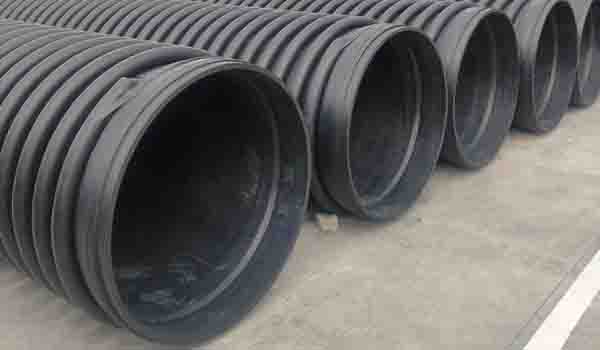
Hello, Petra friends! Are you planning an infrastructure project, repairing a housing drainage channel, or perhaps puzzling over a culvert solution for a hard-to-reach plantation area? If so, you are most likely still stuck with the classic option: reinforced concrete pipe (RCP). Yet in today’s era of modern construction, there is a material that is slowly but surely displacing concrete’s dominance thanks to its efficiency and durability. Yes, let’s get to know the HDPE Spiral Pipe.
You may have seen large black pipes with a corrugated texture on the outside when passing toll road projects or mining areas. These are often called Spiral HDPE Pipe or Corrugated HDPE Pipe.
In this article, we will explain in full what an HDPE Spiral Pipe is, why modern contractors are switching to this material, and how its specifications can save your project budget in the long run. Read on to the end!
What Exactly Is an HDPE Spiral Pipe?
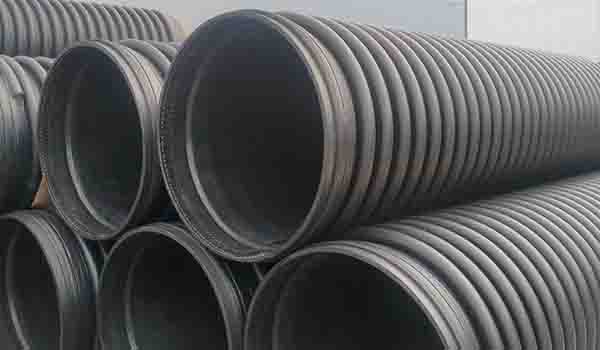
Simply put, an HDPE Spiral Pipe is a type of pipe made from High Density Polyethylene (HDPE). Unlike ordinary (solid wall) HDPE pipe, whose wall is flat and thick, spiral pipe has a unique wall design called a structured wall.
If you look closely, the outer wall has a corrugated or spiral profile. This design isn’t just for looks. The spiral profile works like “ribs” that provide outstanding structural strength (Ring Stiffness) to carry the load of soil and vehicles above it, while keeping the pipe lightweight.
Meanwhile, the inside of the pipe (inner layer) is made very smooth and even. The purpose is clear: so that water, wastewater or other fluids can flow smoothly without significant friction.
So you could say the HDPE Spiral Pipe is a smart combination: Strong on the outside (load-bearing), Smooth on the inside (free-flowing), and Light when lifted.
Why Switch to HDPE Spiral Pipe?
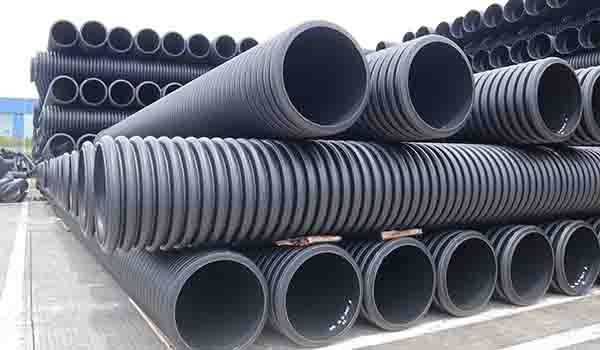
You may be wondering, “If concrete has been used for decades, why switch to HDPE plastic?” Good question. Although concrete is strong, it has fatal weaknesses: it is heavy, rigid and prone to corrosion in acidic environments.
Here are 5 main reasons why the HDPE Spiral Pipe is the best upgrade for your project:
1. Lightweight & Fast Installation
This is a game changer for contractors. A concrete pipe 1 meter in diameter can weigh several tons, requiring a large crane and special heavy trucks for transport. By contrast, an HDPE Spiral Pipe of the same diameter is 90-95% lighter!
You can even move medium-sized pipes by hand or with a small excavator. This is a major advantage if your project is in a remote area (such as an oil palm plantation in Kalimantan or Sumatra) where access for heavy equipment is very difficult and expensive. Logistics become cheaper and installation becomes much faster.
2. Corrosion & Chemical Resistance (Rust-Proof)
Indonesia has many types of soil, from ordinary soil to highly acidic peat. Concrete or steel pipes often “lose” in acidic environments; the steel rusts and the concrete corrodes (spalling).
HDPE is an inert material, meaning it does not react chemically. Whether it is buried in acidic peat, carries harsh factory effluent or is installed near the sea with high salinity, the HDPE Spiral Pipe will not rust or rot. This makes it a very safe long-term investment.
3. High Flexibility (Break-Resistant)
Soil is dynamic. It can move, settle or shift because of earthquakes. Concrete pipe is rigid; if the ground beneath it moves even slightly, the pipe can crack or its joints can break.
The HDPE Spiral Pipe is flexible. When the ground moves, the pipe bends along with it without breaking. This elasticity is crucial in Indonesia, which is earthquake-prone and has many areas of unstable soil.
4. Smoother Water Flow
Remember the smooth inner wall? In technical terms, HDPE has a very low roughness coefficient (Manning’s n) compared with concrete. This means water flows faster inside HDPE pipe.
The benefit for you? The risk of blockages from silt or debris is lower because dirt is pushed straight along by the smooth flow (self-cleaning). You may also be able to use a slightly smaller pipe diameter for the same flow rate than with concrete, which means further cost savings.
5. Service Life of Up to 50 Years
With its resistance to corrosion, abrasion and cracking, the HDPE Spiral Pipe is designed to last a very long time. Industry standards state that the lifetime of this pipe can exceed 50 years with proper installation. Imagine how much maintenance cost you can save by not having to replace collapsed culverts every few years.
HDPE Spiral Pipe Applications in Various Sectors
The versatility of this pipe makes it suitable for many types of projects. We see its use growing across various sectors, such as:
- Urban & Highway Drainage Systems:
As stormwater channels to prevent flooding on toll roads, highways and upscale housing estates. Its ability to carry traffic loads (at the right burial depth) makes it ideal for public infrastructure. - Plantation Culverts:
This is the star of the oil palm and industrial plantation forest (HTI) sectors. Replacing wooden bridges or concrete culverts that are hard to mobilize deep into the forest with HDPE Spiral Pipe is a brilliant logistics solution. - Mining Sector:
Acid mine drainage is highly corrosive and can destroy ordinary pipes within months. HDPE withstands these extreme conditions, making it the first choice for mine dewatering or drainage systems. - Industrial Estates:
Factories discharging liquid waste need pipes that don’t leak and resist chemicals. The tight (watertight) jointing system of HDPE Spiral Pipe prevents waste from contaminating the surrounding soil.
Quick Comparison: Concrete vs HDPE Spiral
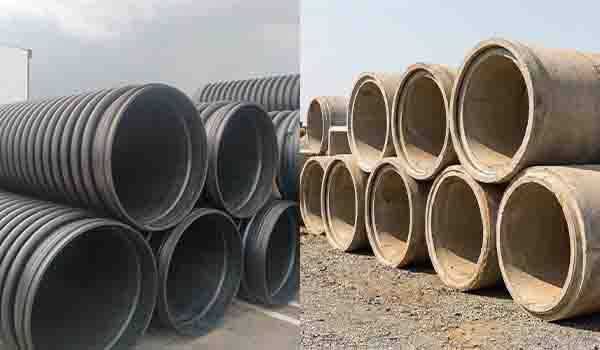
To make it easier to picture, take a look at this simple comparison:
| Feature | Concrete Pipe (RCP) | HDPE Spiral Pipe |
| Weight | Very Heavy | Very Light |
| Transport | Requires large trucks | Possible with small trucks |
| Installation | Requires a Large Crane | Small Equipment / Manual |
| Joints | Many (short lengths) | Few (up to 6m per length) |
| Chemical Resistance | Prone to Corrosion/Acid | Chemical & Acid Resistant |
| Flexibility | Rigid (Cracks Easily) | Flexible (Earthquake Resistant) |
| Service Life | 10-20 Years (in aggressive soil) | > 50 Years |
Tips for Choosing & Installing HDPE Spiral Pipe
Before you decide to buy, there are several technical points to consider so you make the right choice:
- Check the Ring Stiffness (SN):
HDPE Spiral Pipe is usually categorized by ring stiffness, for example SN 4, SN 8 or SN 12.5. The higher the number, the better the pipe withstands compressive loads from above.
- SN 4: Usually sufficient for parks or light loads.
- SN 8: The common standard for channels under roads or areas with vehicle traffic.
- SN 10/12.5: For very heavy loads or extreme burial depths.
Tip: Consult our technical team to determine the right SN so the pipe doesn’t flatten when backfilled.
- Jointing Methods:
There are several ways to join this pipe; the most common are Socket & Spigot with a rubber ring seal, or Electrofusion Tape for a fully fused joint. Make sure your installation team knows how, so the joints don’t leak. - The Backfilling Process:
The strength of a flexible pipe like HDPE depends heavily on the compaction of the surrounding soil. Make sure the backfill is well compacted on the left and right sides of the pipe (haunching) so the pipe gets optimal structural support from the surrounding soil. Don’t just dump soil on it!
A Smart Investment for the Future
Switching to HDPE Spiral Pipe isn’t just following a trend, but a strategic decision for project efficiency and sustainability. Although the material price per length may look different from conventional concrete, when you calculate the total cost (material + heavy equipment rental + labor + speed + maintenance), the HDPE Spiral Pipe almost always wins on cost efficiency.
You get drainage infrastructure that is durable, rust-free and free of complicated maintenance for decades to come. So for your next drainage project, will you still struggle with heavy concrete, or switch to a more practical modern solution?
Need a Consultation for Your Project?
If you need further advice on technical specifications or stock availability, or want to discuss HDPE Spiral Pipe needs for your project, don’t hesitate to contact our team.
We supply a wide range of high-quality geosynthetics ready to ship throughout Indonesia. Let’s discuss your project needs now!
Check our catalog: Click here
Chat on WhatsApp Now: Click here
Remember Geosynthetics, Remember Petra!
Other Articles
Cocomesh Functions and Uses for Land Rehabilitation
Cocomesh, a net-like material made from coconut fibre, supports the rehabilitation of former mines, beaches, and forests. These cocomesh functions make it highly environmentally friendly. Installed on former mining land or elsewhere, cocomesh makes it easier for new plants to grow because it is strong and biodegradable (able to break down and decompose naturally like […]

Smooth vs Textured Geomembrane: Key Differences
In engineering construction, geomembrane is a geotechnical material that is often used and can play a major role. So what is the difference between smooth vs textured geomembrane? There are many differences between the rough and smooth surfaces of a geomembrane, including specific differences in appearance, performance, application, price and more. The main difference between […]

Blue Pond Liner: Geomembrane Color Benefits
What Is a Blue Pond Liner or Blue Waterproof Liner? A Blue Pond Liner is a type of geomembrane specially manufactured in blue. This geomembrane functions like a standard geomembrane, but can enhance the aesthetic value of infrastructure compared with a standard geomembrane. Blue is chosen to improve visual appeal when the geomembrane is under […]