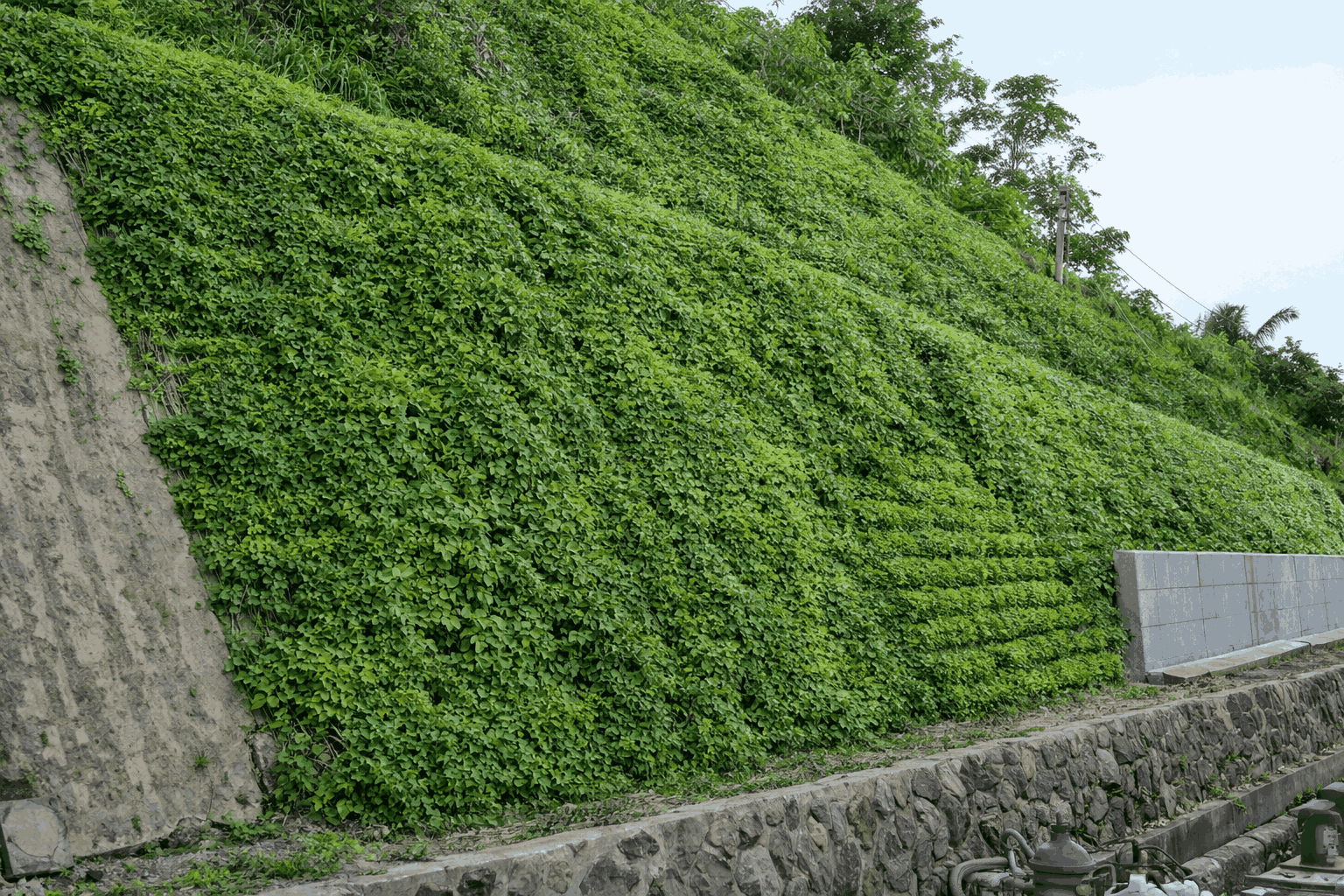
Geocell Slope Protection: A Modern Solution

Have you ever seen a neat, green hillside beside a toll road, Petra friends, or instead seen a slope collapse after heavy rain? In construction, maintaining the stability of sloping ground is a major challenge. Especially in Indonesia, where high rainfall means erosion and landslides are constant threats.
For years, civil engineers relied on concrete or shotcrete to retain soil. But a much more modern, flexible and environmentally friendly solution has now become a favorite: Geocell Slope Protection.
If you are looking for an efficient soil reinforcement method for an infrastructure project or even private property, this article explains in full why Geocell is the answer you need.
What Is Geocell?

Before discussing its functions further, let’s first get to know this material. Geocell is a cellular confinement system made from High-Density Polyethylene (HDPE) or a newer polymer alloy.
Imagine a giant, flexible honeycomb. When expanded, geocell forms a three-dimensional structure like a network of interconnected cells. This structure is then filled with soil, gravel or concrete.
Unlike geotextile, which is a flat fabric sheet, geocell’s 3D structure enables it to keep the infill material from moving sideways. This is the key to its strength in slope protection applications.
Why Do Slopes Need Protection?
You may ask, “Why is soil on a slope so hard to keep still?” The answer lies in gravity and water.
When rain falls, water flows over the ground surface (run-off). This flow gradually carries away soil particles. Over time, increasingly large channels form, causing erosion and eventually a landslide.
Conventional methods often fail because they are:
- Inflexible: Rigid concrete can crack if the soil beneath it moves.
- Expensive: Building a retaining wall requires enormous material and labor costs.
- Unattractive: Concrete walls look barren and don’t blend into nature.
This is where Geocell Slope Protection comes in as a game changer.
How Geocell Works on Slopes

The way geocell works is actually simple yet ingenious. It is known as the principle of “confinement”.
When geocell is installed over a slope and filled with soil, its cell walls prevent that soil from sliding downward. The walls provide lateral (sideways) restraint that locks the infill material in place.
Put simply, geocell acts like thousands of “mini plant pots” or “mini dams” spread across the entire slope surface. This structure prevents the formation of water channels that could trigger severe erosion.
Benefits of Using Geocell
If you are weighing the best method for your project, here are the reasons geocell deserves to be your first choice:
- Superior Erosion Control
Geocell prevents soil particles from moving even on steep slopes. The system is highly effective at resisting hydraulic forces from rainwater flow, keeping the ground surface intact.
- Supports Vegetation
This is geocell’s main selling point over concrete. You can fill its cells with topsoil and plant grass or other ground cover. Plant roots grow through the bottom of the geocell and bind the soil even more firmly. The result? A green, attractive slope that is naturally stable.
- Cost-Effective
Using geocell is often cheaper than building a reinforced concrete wall. Why?
- Local Infill: You can use local soil (if it meets requirements) as infill, saving material purchasing and transport costs.
- Fast Installation: Installation is relatively quick and does not require overly complex heavy equipment.
- Good Drainage
Geocell walls usually have small perforations. These allow groundwater to drain smoothly, preventing the buildup of pore water pressure behind the slope that often causes landslides.
- Durable and Strong
The HDPE used in geocell resists soil chemicals, corrosion, weathering and UV rays. This makes it a low-maintenance, long-term solution.
Comparison: Geocell vs Other Methods
To give you more confidence, let’s make an apple-to-apple comparison between geocell and other slope protection methods.
| Feature | Geocell (Vegetated) | Shotcrete (Sprayed Concrete) | Stone Masonry |
| Appearance | Green & Natural | Hard & Gray | Hard & Rigid |
| Flexibility | High (Follows contours) | Low (Cracks easily) | Low |
| Cost | Medium – Low | High | High |
| Environmentally Friendly | Yes | No | No |
| Drainage System | Natural (Permeable) | Needs weep holes | Needs weep holes |
The table clearly shows that geocell is far superior for applications requiring a balance of strength, cost and environmental value.
Stages of On-Site Geocell Installation
Installing geocell is not as complicated as it may seem, but it still requires precision for maximum performance. Here is an overview of the installation process:
Stage 1: Subgrade Preparation
The first step is to clear the slope of brush, large tree roots and sharp rocks. The slope surface is then leveled and compacted to the designed safe gradient.
Stage 2: Non-Woven Geotextile Installation
Before the geocell is laid, a layer of Non-Woven Geotextile is usually installed over the subgrade. It serves as a separator and filter. This prevents the subgrade from mixing with the geocell infill while allowing water to pass through.
Stage 3: Geocell Expansion
The folded geocell panel is pulled open and expanded down the slope. Its upper end must be anchored securely at the crest using an anchor trench or steel stakes (J-hooks).
Stage 4: Connecting the Panels
Because slope areas are usually extensive, geocell panels must be joined. A special tool such as a pneumatic stapler or dedicated connectors is used so the panels are firmly attached and don’t separate when loaded with infill.
Stage 5: Infilling
Once neatly installed and secured with stakes at specified intervals, it is time to add the infill. The material (soil, gravel or concrete) is placed from the top downward using an excavator or by hand.
Stage 6: Compaction and Planting
The infill is then compacted. If the goal is revegetation, the final step is to sow grass seed or plant ground cover.
Types of Geocell Infill

Geocell’s flexibility is also reflected in the infill options you can choose to suit your project:
- Topsoil: Used when you want a green, vegetated slope. Suitable for city parks, housing areas or toll road verges where appearance matters.
- Aggregate (Gravel/Crushed Stone): Used in areas requiring excellent drainage or where plants struggle to grow. Friction between stones confined by the geocell provides high stability.
- Concrete: Used on very steep slopes, waterways (canals), or areas scoured by high-velocity water. Geocell acts as flexible formwork that keeps the concrete thickness uniform.
Case Studies: Geocell Applications
Where can Geocell Slope Protection actually be applied? Almost anywhere!
- Highway & Toll Road Infrastructure: Protecting roadside slopes from landslides that could endanger motorists.
- River Embankments & Canals: Preventing erosion caused by fast-flowing river water.
- Mining Areas: Stabilizing waste soil piles (disposal areas) so they don’t pollute the surroundings.
- Property Development: Maximizing hilly, contoured land for safe residential areas.
Conclusion
Maintaining slope stability isn’t only about preventing landslides, but also about long-term safety investment and environmental conservation. Geocell Slope Protection offers a smart engineering solution: structurally strong, flexible under ground movement and visually attractive.
If you are planning a slope reinforcement project or need advice on the right geocell specifications, don’t hesitate to consult an expert. Choosing the right material from the start will save you from soaring repair costs later.
Want to know more about geocell’s technical specifications or need the best quotation for your project? You can contact the Petra Nusa Elshada team through this website’s contact page. We are ready to provide the best geosynthetic solution for your construction needs.
Let’s build stronger, greener infrastructure together!
Need a Consultation for Your Project?
Feel free to consult us about your geosynthetic material needs. We supply a wide range of high-quality geosynthetics ready to ship throughout Indonesia. Let’s discuss your project needs now!
Check our catalog: Click here
Chat on WhatsApp Now: Click here
Remember Geosynthetics, Remember Petra!
Other Articles

What Is Geogrid? Functions and Geogrid Types
Geogrid is a material classified as a geosynthetics product. It comes in sheets with frame-like apertures and functions as reinforcement to strengthen soil-reinforcement structures. Geogrid types vary in aperture shape, which is generally square, oval or another form. Geogrid works by being placed on the ground surface and then covered with fill. Interlocking occurs as […]

Building a Geomembrane Biofloc Pond with HDPE
Biofloc is a farming technique for catfish, fish, shrimp and other farmers that uses probiotic bacteria to process the organic waste produced from digestion and leftover feed. A geomembrane biofloc pond helps make this technique very effective at increasing productivity and maintaining water conditions. Biofloc ponds usually use a circular steel frame lined with tarpaulin. […]