


Building a Geomembrane Biofloc Pond with HDPE

Biofloc is a farming technique for catfish, fish, shrimp and other farmers that uses probiotic bacteria to process the organic waste produced from digestion and leftover feed. A geomembrane biofloc pond helps make this technique very effective at increasing productivity and maintaining water conditions.

Biofloc ponds usually use a circular steel frame lined with tarpaulin. Tarpaulin is considered economical and easy to shape. However, it is not durable, so farmers must check it regularly to make sure it is still in good condition.
Read also
HDPE geomembrane sizes and specifications
Using tarpaulin to build biofloc ponds is a hassle for farmers. We offer a solution for anyone starting a biofloc farming business: geomembrane.

Here are the advantages of geomembrane and why we recommend it for lining biofloc ponds.
Heat resistant
Geomembrane withstands temperatures of up to 90° Celsius, so it can be used on surfaces exposed to direct sunlight.
Waterproof and corrosion resistant
This makes it suitable for biofloc lining, because it can stay submerged in water for long periods without risk of damage.
Does not leak easily
Geomembrane does not scratch easily, let alone leak. This gives farmers peace of mind that their pond will not leak, so they do not need to keep monitoring it for leaks.
Available in various thicknesses
Geomembrane comes in a range of thicknesses, from 0.5 mm to 2 mm. The thicker the geomembrane, the more durable it is.
Flexible (easy to shape)
It is easy to shape to the biofloc pond frame. Geomembrane also follows the pond’s curves better, so the folds are stronger and do not come loose easily.
Lasts Up to 10 Years
The HDPE (High Density Polyethylene) in geomembrane allows it to last up to 10 years. Farmers do not need to replace the geomembrane when starting a new farming cycle, and this can be repeated for up to 10 years. As a result, profits are also higher.
Other Articles
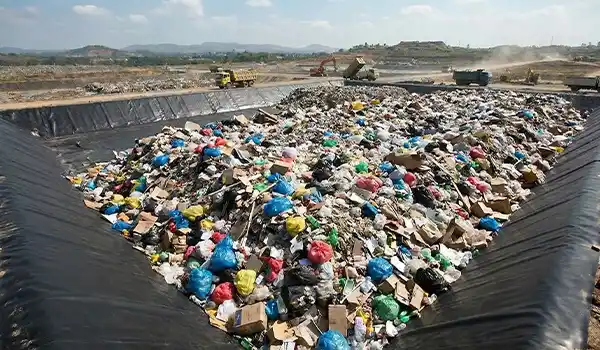
Advantages of HDPE Landfill Geomembrane
Have you ever imagined what happens to the hundreds of tons of waste that accumulate at a landfill every day? When rain falls on the site, water seeping into the waste pile reacts and produces a highly toxic, foul-smelling liquid called leachate. If this dirty liquid seeps freely into the ground, the groundwater we consume […]

Geocell Slope Reinforcement for Soil Slopes
A reinforced soil slope, such as one built with geocell slope reinforcement, is a form ofmechanical soil stabilization using planar reinforcement elements in aslope structure with a face inclination of less than 70°. Mechanically stabilizedearth structures with a face inclination of 70° to 90°are classified as retaining walls. The main functions of a geocell-reinforced soil […]