


What Is Geogrid? Functions and Geogrid Types

Geogrid is a material classified as a geosynthetics product. It comes in sheets with frame-like apertures and functions as reinforcement to strengthen soil-reinforcement structures. Geogrid types vary in aperture shape, which is generally square, oval or another form.

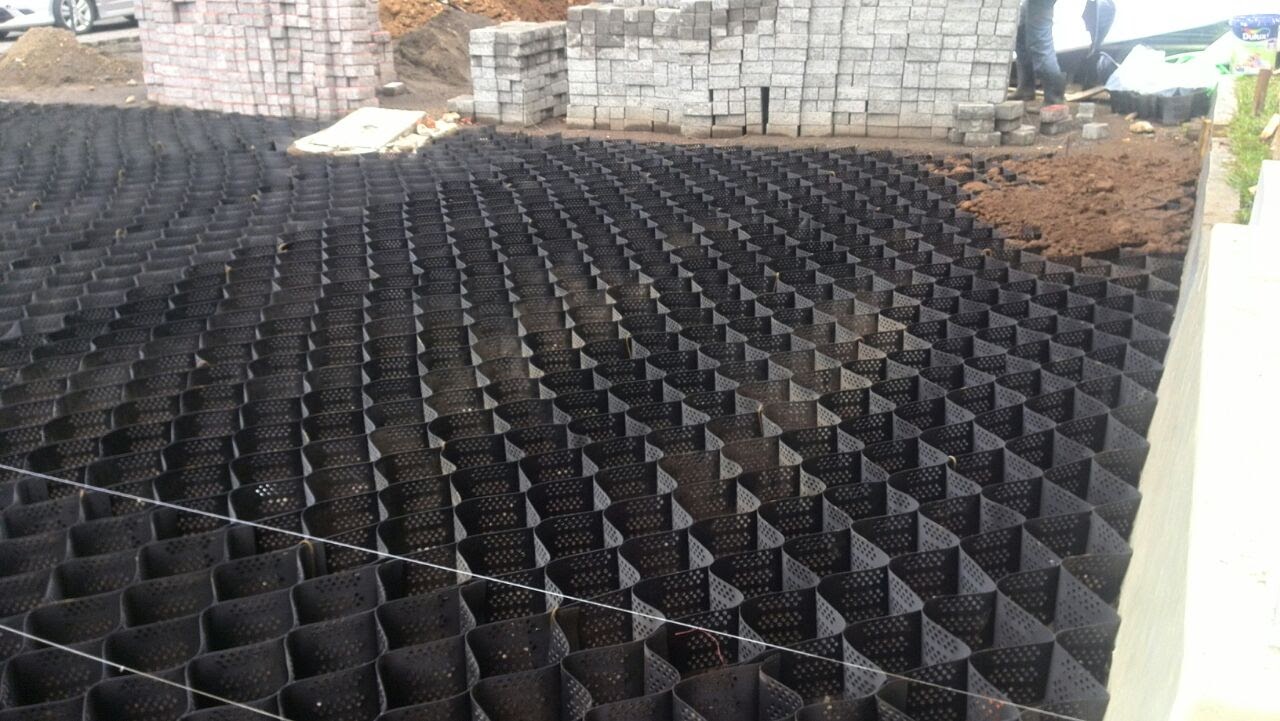
Geogrid works by being placed on the ground surface and then covered with fill. Interlocking occurs as the fill enters the apertures between the geogrid ribs, producing high frictional resistance.
Understanding Geogrid Types
Three geogrid types are commonly available and widely used in construction projects. They are distinguished by the shape of their apertures.
Biaxial Geogrid
Biaxial geogrid has characteristic square apertures. This type functions as a subgrade stabilization material that helps prevent differential settlement and reduce maintenance costs. Biaxial geogrid can also reduce base or subbase thickness by up to 60%, lowering construction costs.

Triaxial Geogrid
This type is called triaxial because it has triangular apertures. Its function is nearly the same as the biaxial type: reinforcing soil on slopes and beneath roads, where it can be combined with woven geotextile.

Uniaxial Geogrid
This geogrid type has slightly wider apertures than the 2 preceding types. Its function is also nearly the same as other geogrids, but it is more commonly applied to slope stabilization, allowing taller structures to be built in relatively confined spaces.

Geogrid Functions
This material has 2 main functions: reinforcement and base-course stabilization. These functions differ in how they perform, as explained below:
As Reinforcement
Geogrid tensile strength plays a major role in reinforcement. Geogrid can reinforce structures such as embankments, soft soil and steep slopes. When it is used to reinforce an embankment over soft soil, however, an additional material is needed: non-woven geotextile, which serves as a separator.
As a Stabilizer
When geogrid is used as a stabilizer, the geogrid and aggregate work together to form a composite mass with a higher modulus and greater stiffness than aggregate without a stabilizer. Stabilization requires stiffness at low strain but does not require high ultimate tensile strength.
Other Articles
Choosing Geomembrane Thickness for Shrimp Ponds
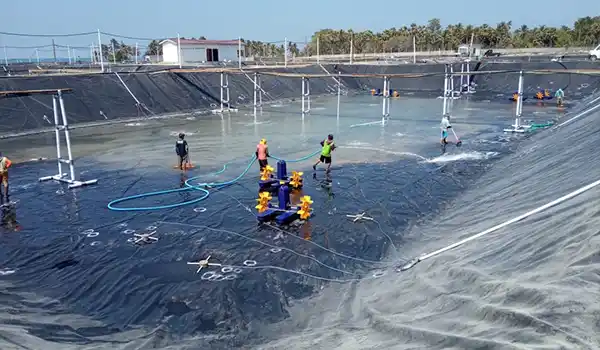
Have you ever felt confused when choosing geomembrane thickness for a shrimp pond? As a modern pond farmer, you surely know that using geomembrane, especially one made from High-Density Polyethylene (HDPE), has become a mandatory standard for intensive and super-intensive shrimp farming. The goals are very clear: prevent leaks, maintain stable water quality and minimize […]