


Authentic HDPE Geomembrane: How to Spot a Fake
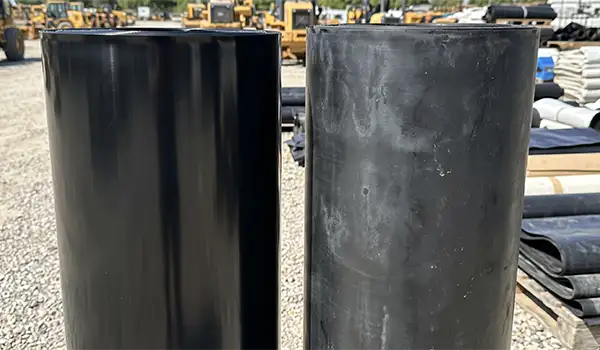
Hello! If you are working on a large-scale project such as building an aquaculture pond, treating waste, or constructing a dam, you are certainly familiar with the liner known as geomembrane. Today, High Density Polyethylene (HDPE) is a favorite because it is highly impermeable and exceptionally durable.
Building a biofloc pond with HDPE geomembrane does require careful preparation, but the result is well worth the efficiency and durability you gain. With a strong medium, you can focus on managing water quality and feed without worrying about pond leaks.
But wait: high market demand has led unscrupulous sellers to offer counterfeit or extremely poor-quality goods. If you choose the wrong one, a project designed to save money can instead run up losses because of unexpected leaks and premature damage. For anyone seeking the best, long-lasting project results, this article thoroughly explains how to distinguish authentic HDPE geomembrane from a fake. Read on carefully!
Why Is Geomembrane Authenticity Important?
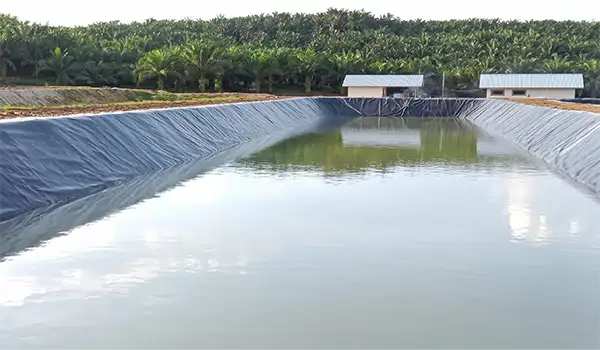
Geomembrane essentially serves as a protective liner or leakproof barrier. In field applications, this material is often exposed directly to sunlight for years, comes into contact with extreme chemicals, or supports very heavy water and soil pressure. A genuinely authentic geomembrane is purpose-engineered with advanced technology to endure all these extreme conditions for decades.
Counterfeit or fake products, by contrast, are usually made carelessly. These inferior materials are extremely fragile, tear easily when they touch sharp-edged materials such as gravel, and quickly deteriorate under continuous intense sunlight.
Characteristics of Authentic, High-Quality HDPE Geomembrane
To avoid being fooled by an unrealistically low quote, look for these main characteristics of authentic HDPE geomembrane manufactured to construction industry suitability standards:
1. Carries Standard Certification
Authentic products made by professional manufacturers always undergo rigorous testing and carry international or national certification. Standards you should ask the seller to provide include testing standards from the Geosynthetic Research Institute (GRI-GM13), American Society for Testing and Materials (ASTM D638), or SNI standards. If the seller cannot clearly show these standard specifications, you should question the product’s quality!
2. Made from 100% Virgin Material
One trick used by dishonest manufacturers to push the HDPE geomembrane price far below the market is mixing in used plastic. Authentic products, however, are always made from 100% new resin, often called virgin material. Recycled material immediately reduces flexibility and tensile strength, causing geomembrane to become stiff, brittle, and prone to cracking.
3. A Precise, UV-Resistant Composition
Technically, high-quality geomembrane consists of 97.5% pure HDPE polymer plus a formulation of around 2.5% carbon black, antioxidants, and a heat stabilizer. The carbon black creates the deep black color and performs the vital job of blocking ultraviolet (UV) exposure that could damage the plastic structure. Fake products usually get their black appearance from ordinary coloring, so the color fades quickly and the material becomes brittle outdoors.
4. Uniform Thickness
Another physical feature you can feel directly is consistent thickness. Authentic products have clearly defined thickness options, measured precisely by machine, ranging from 0.3 mm and 0.5 mm to 2 mm. They are also distributed neatly in rolls of consistently sized sheets, for example 5.8 meters to 7 meters wide. Cheap products, in contrast, often have uneven thickness: thick around the edges but thin through the center.
5. Flexible and Impact Resistant
Try lightly testing the sample’s elasticity. Authentic HDPE does have a dense molecular structure, yet it also has exceptional tensile strength and flexibility. This makes it resistant to blunt impacts and abrasion during installation over uneven ground. It is also considered safer for the environment; certain grades are sterile enough for clean-water or drinking-water containment without any risk of rust or toxic contamination.
The Dangers of Using Fake Geomembrane
You may think you can save on the project budget at the beginning by buying cheaper goods. Unfortunately, the signs of fake geomembrane can turn into a nightmare within just a few months.
The material quickly deteriorates under daily sunlight, then develops holes and leaks. When used as an aquaculture pond liner, water quality deteriorates and fish can die, leading to a failed harvest. When used in mining waste treatment, toxic substances may seep into the soil and pollute the environment around the project site. In the end, you face remediation and repair costs far greater than the small initial saving.
Put Your Trust in Petra Nusa Elshada
Examining and distinguishing pure, authentic geomembrane by sight alone requires extra care. The safest, smartest preventive step is therefore to buy directly from an Indonesian geomembrane distributor with a proven track record.
Do not hesitate to consult the Petra Nusa Elshada team. We supply many types of high-quality geosynthetic material, ready for delivery throughout Indonesia. Let’s discuss your project needs now!
View Our Catalog: Click here
Chat on WhatsApp Now: Click here
Think Geosynthetics, Think Petra!
Other Articles

What Is Geocell? Soil Stability and Construction
Innovative Technology Construction and civil engineering are constantly developing and innovating to make infrastructure more sustainable and efficient. One increasingly popular innovative technology is geocell. In this article, we explain in depth what geocell is, how it works and its benefits in construction. We also discuss the potential of this product to help protect the […]

Geotube Sludge Dewatering: How It Works and Its Benefits
Discussions about geotubes are not limited to their effectiveness in protecting coastal areas from severe abrasion. Beyond that, the topic of geotubes is also closely linked to geotube sludge dewatering technology. As is well known, a geotube is a tube- or pipe-shaped container made of geotextile. Besides being used for coastal abrasion protection and reclamation, […]
