


Geotube Sludge Dewatering: How It Works and Its Benefits

Discussions about geotubes are not limited to their effectiveness in protecting coastal areas from severe abrasion. Beyond that, the topic of geotubes is also closely linked to geotube sludge dewatering technology.

As is well known, a geotube is a tube- or pipe-shaped container made of geotextile. Besides being used for coastal abrasion protection and reclamation, this geosynthetic product is also used in waste management. Read the information below for more details.
Understanding Geotube Sludge Dewatering
Many people may still not know what geotube dewatering is or how it differs from a standard geotube. Geotextile dewatering is a drying or dewatering technology made of geotextile material.
Read Also: Geotube Dewatering: Benefits and Work Process
The geotextile used is specially designed to form a container or tube that filters the sludge inside it. The geotextile tube is made with strong seams and fitted with filling ports.

With a geotube, water flows out through the pores of the fabric, while the solids inside continue to consolidate. Once they meet the minimum standard, they can be transported and disposed of according to the established procedures.
Read Also: Geotube as the Best Method for Handling POME Waste
Geotubes come in a wide and flexible range of sizes, so they can be placed wherever they are needed.
Benefits and Advantages of Geotube Sludge Dewatering
Now that you know what geotextile tube dewatering is, you are probably wondering what the advantages of this technology are. Below are some benefits and advantages of geotextile tube sludge dewatering that you should know.
- Effectively achieves volume reduction and solids retention.
- Delivers a high waste discharge rate with a clear filtrate that can be recirculated back into the system.
- Custom-sized geotubes effectively save space on limited land.
- Makes it easier to remove and dispose of the solids filtered from the waste.
- Can be an effective and efficient waste management solution using environmentally friendly technology with a minimal carbon footprint.
- Reliable in all weather conditions and reduces operational safety risks.
- Saves cost and time, with easy maintenance.
Geotube Sludge Dewatering Process and Stages
Drying and managing waste with geotube technology involves at least 3 stages. Here is the explanation:
1. Filling Stage
The first stage is filling, which begins by pumping sludge into the geotube. An environmentally friendly polymer is then added to aid filtration, binding the solids and separating the water.
2. Dewatering Stage
The second stage is dewatering, marked by clear effluent flowing out of the geotube through the small pores of the geotextile. This produces effective dewatering and efficiently reduces the volume of material inside.
This volume reduction allows the geotube to be filled repeatedly. As a result, more than 99% of the solids are captured and the clear filtrate can be collected and recirculated through the system. The resulting water is usually of a quality that can be reused or returned to waterways.
3. Consolidation Stage
The final stage is consolidation. After dewatering is complete, the solids inside the geotube keep compacting as residual moisture escapes through the pores of the fabric. The volume reduction can reach 90%. The solids can then be disposed of or applied to land.
Geotube sludge dewatering is the most effective solution for waste management. Besides saving cost and space, the process is fairly simple and more environmentally friendly. If you need top-quality geotubes, contact https://petrane.co.id/ right away.
Other Articles

Benefits of Geomembrane for Shrimp and Fish Ponds
The benefits of geomembrane for shrimp and fish ponds. Geomembrane is a sheet made from several types of material, but the ones most often found and most popular in Indonesia are High Density Polyethylene (HDPE) and Low Density Polyethylene (LDPE). Geomembrane is impermeable to liquids, UV resistant, resistant to chemicals and microorganisms, cost-effective, strong and […]

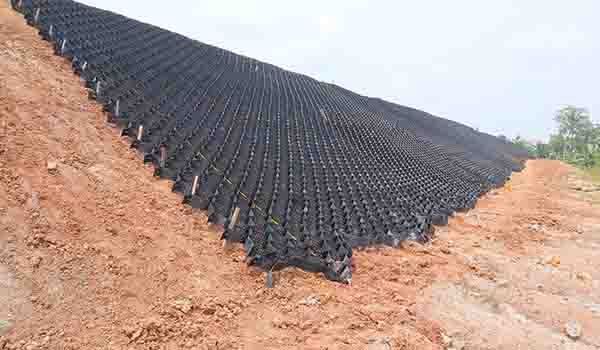
Geocell Slope Protection: A Modern Solution
Have you ever seen a neat, green hillside beside a toll road, Petra friends, or instead seen a slope collapse after heavy rain? In construction, maintaining the stability of sloping ground is a major challenge. Especially in Indonesia, where high rainfall means erosion and landslides are constant threats. For years, civil engineers relied on concrete […]