


Cut and Fill Earthworks for a Solid, Stable Foundation
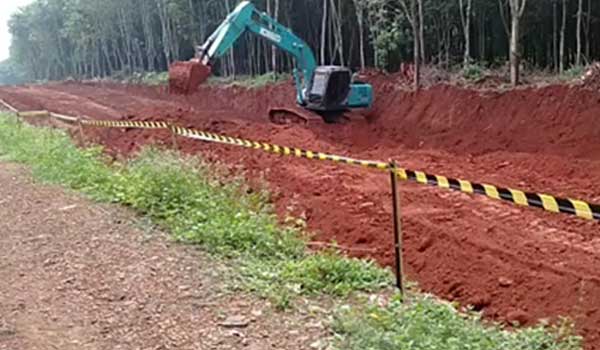
In construction and development, cut and fill earthworks are an essential process that determines the success of land grading, road building and building projects. The process is not simply about removing excess soil or adding soil to low areas; it also depends on sound techniques, planning and execution so the result is solid and meets standards.
What Are Cut and Fill Earthworks in Construction and Development?

Cut and fill earthworks involve removing (cut) and adding (fill) soil to achieve the desired ground elevation and contours. The process is crucial in infrastructure and housing development, and it forms the basis for keeping structures stable and safe from landslides, ground movement or damage caused by unstable soil.
To understand the whole process, it helps to know that cut means excavating soil from higher areas, while fill means placing soil in lower areas or depressions. Both operations must be carried out in a controlled way and according to technical standards so the ground can support the structure properly and remain stable in the long term.
Applying cut and fill earthworks is not limited to removing and adding soil. It also covers calculating the volume of soil to be moved, analyzing slope stability and assessing environmental impact. Through this process, construction becomes more efficient because surplus soil can be reused, while shortfalls can be made up with quality material. Experts such as geotechnical engineers and architects play a vital role in ensuring a satisfactory and safe result.
Steps in Carrying Out Cut and Fill Earthworks

The success of cut and fill earthworks depends heavily on careful planning and correct execution. In general, several important steps must be followed to achieve the best result.
First, a complete field study is carried out to assess soil conditions, site morphology and potential risks such as liquefaction, ground movement and erosion. This information is the basis for determining the volume of soil to be moved and the working methods.
Next, the design stage produces a detailed plan of the cut and fill locations, including elevation measurements, contour maps and stability points. Technologies such as drones or satellite imagery greatly speed up and clarify this analysis. Once the plan is complete, execution begins, with soil moved gradually and in a controlled manner so it does not damage the environment or nearby buildings.
Heavy equipment such as excavators and dump trucks is commonly used in this process. Regular soil testing is also important to confirm the strength and stability of the ground after cut and fill work. When the work is finished, the soil is compacted so it is dense and stable enough to support the structure built on top of it. With these steps, cut and fill earthworks are not just a mechanical process but part of a construction strategy.
Benefits of Well-Executed Cut and Fill Earthworks

Applying cut and fill earthworks correctly brings many important benefits to a construction project. One is creating a stable, solid base so building foundations do not shift or collapse in the future.
With proper cut and fill, the ground contours can be shaped to match the architectural design and infrastructure needs. It also helps reduce construction costs because soil that is moved and reused lowers the need for additional materials such as fill soil, crushed stone or other reinforcing materials.
Beyond the technical aspects, the process also improves time and cost efficiency. Once the ground contours meet the specifications, the project can run more smoothly without costly, time-consuming rework. An equally important benefit is the environmental impact: well-planned cut and fill work helps minimize erosion, reduce landslide risk and make the best use of available natural resources.
Buildings also become more durable and safer against natural hazards such as earthquakes and floods. With properly engineered ground, the risk of water seepage, cracking and structural damage is minimized, making the whole construction process more sustainable and environmentally friendly.
Frequently Asked Questions (FAQ) about Cut and Fill Earthworks

What are cut and fill earthworks and what is their main purpose?
Cut and fill earthworks are the removal and addition of soil to adjust ground elevation to construction requirements. Their main purpose is to create a stable base that matches the design so the structure stands firm and lasts.
Why is this process important in road and building construction?
It is important because it ensures the ground beneath the structure is stable enough, reduces the risk of movement or collapse, and speeds up construction as a whole.
What are the main tools used in cut and fill earthworks?
The main equipment is excavators and dump trucks, which move soil quickly and efficiently. Surveying technology such as total stations and drones also helps ensure accurate data and planning.
How do you calculate the volume of soil to be moved in cut and fill?
Soil volume can be calculated by measuring the difference in ground elevation before and after the work with digital or manual topographic survey equipment, then processing the data in planning software.
What are the environmental impacts of cut and fill earthworks if they are not done properly?
Negative impacts include soil erosion, water sedimentation and environmental degradation. The process must therefore be carefully planned and follow environmental standards to keep its impact minimal.
Conclusion
In construction of any scale, whether housing, roads or major infrastructure, cut and fill earthworks play a central role. The process is not about removing and adding soil at random, but about careful planning to create a stable and durable base. With the right approach and skilled experts, cut and fill earthworks help deliver efficient, safe and sustainable development while preserving the balance of the surrounding ecosystem. A deep understanding and professional execution are therefore essential to achieve the best result on every construction project.
Other Articles

Class 1 Geotextile Separator and Its Uses
Geotextile is a modern method that is currently trending in geotechnical engineering. Using geotextile is one of the best options for dealing with soft soil. Geotextiles are divided into three groups: the class 1 geotextile separator, class 2 and class 3. Many people do not understand why this geotextile technique is used. Geotextile is a […]

Geotextile Tube (Geotube) and Its Functions
A geotextile tube, or geotube, is made from non-woven or woven geotextile, in either polyester (PET) or polypropylene (PP), and shaped like a very large sack. To understand geotube functions, start with its size: geotextile tubes vary, reaching 15 to 30 metres as required, and can be filled with aggregate, sand or soil. Geotextile tubes […]
