


Expansive Soil Hazards and Effective Solutions
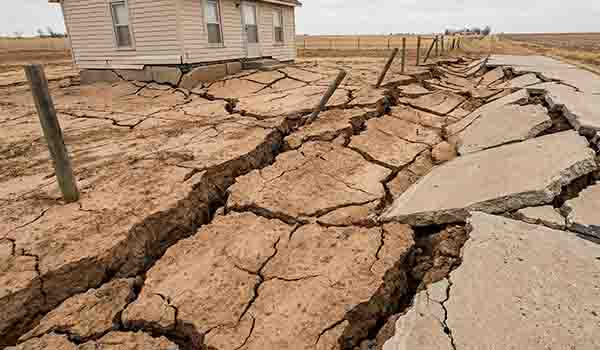
Have you ever seen the walls of a house or a road crack even though it was not very old? Or perhaps a door suddenly became difficult to open during the rainy season but returned to normal during the dry season? Do not immediately blame the cement quality or contractor. The main problem may lie directly beneath our feet: Expansive Soil.
Whether you work in construction or civil engineering, or simply own property, understanding soil characteristics is essential. One of the soil types that causes engineers the most trouble is expansive soil, often called swelling soil.
In this article, we will thoroughly examine expansive soil, why it can be so destructive, and the modern solutions you can use to address it. Read through to the end!
What Exactly Is Expansive Soil?

Simply put, expansive soil is a type of soil containing particularclayminerals that are highly sensitive to changes in moisture content. This soil has a “dual personality.” When exposed to water, its volume expands (swelling) dramatically. Conversely, in dry conditions or during the dry season, it undergoes extremeshrinkage.
This volume change is substantial. The pressure generated as the soil expands (swelling pressure) can lift building foundations, break concrete slabs, and damage underground pipe networks.
Why Does It Expand and Shrink?
The secret behind this soil’s “unstable” behavior lies in its constituent minerals. Expansive soil generally contains a clay mineral called Montmorillonite.
Imagine this mineral as a giant sponge. Montmorillonite’s crystalline structure readily absorbs water molecules between its layers. When water enters, the distance between layers increases, causing the volume to expand. By contrast, other minerals such as Kaolinite tend to be more stable and less reactive to water. Therefore, the higher the montmorillonite content at your project site, the greater the potential damage.
Field Signs of Expansive Soil
Before deciding to build a project or purchase land, it is advisable to conduct a visual survey. Although laboratory testing, such as Atterberg limits testing, is the most accurate method, several physical signs are visible to the naked eye:
- Polygonal Cracks When Dry:
During the dry season, inspect the soil surface. Are there wide cracks forming polygonal patterns? This indicates that the soil has shrunk drastically after losing water. - Sticky When Wet:
Take a handful of wet soil. Expansive soil usually feels extremely sticky and plastic and is difficult to clean from your hands or boots. - Characteristic Color:
Although not always a definitive indicator, expansive soil is often dark gray to black and is called black cotton soil in some regions. - Undulating Ground Surface:
On roads built over this soil without special treatment, you often feel anundulatingsurface, as if the asphalt were “alive.”
Adverse Effects on Infrastructure
You may ask, “How severe is the impact?” The answer is extremely severe and expensive. Repairing damage caused by expansive soil costs billions of dollars worldwide every year, exceeding losses from natural disasters such as flooding in some countries.
The following problems may affect your infrastructure:
- Damage to Shallow Foundations
Homes and shop buildings typically use shallow foundations. When the underlying soil expands, the foundation is lifted (heave). The problem is that this uplift is often uneven (differential movement). One end of a building may rise 5 cm while the center rises only 1 cm. The result? Structural failure. - Cracks in Walls and Floors
This results from foundation movement. Brick walls develop characteristic diagonal cracks, usually extending from door or window corners. Ceramic floors may also lift (popping) and break apart. - Road Damage (Pavement)
For road contractors, expansive soil is a major enemy. A swelling and shrinkingsubgradecauses the asphalt or concrete pavement above it to lose uniform support. The result is an undulating road, alligator cracking (alligator cracking), and subsidence. - Broken Underground Pipes
Infrastructure includes not only visible structures but also underground utilities. Strong soil movement can break buried clean-water or wastewater pipes and fiber-optic cables.
Modern Solutions for Expansive Soil
Now we reach the most important part. If your project site is identified as expansive soil, must the project be canceled? Certainly not. With appropriate civil-engineering methods, you can control this soil.
The following methods are commonly used, from conventional approaches to available modern technology.
1. Soil Replacement
This is the most traditional method. Expansive soil is excavated as deeply as possible, usually 1-2 meters, removed, and replaced with selected stable, non-expansive fill.
- Advantages: Highly effective when the expansive-soil layer is thin.
- Disadvantages: High costs for heavy equipment and new fill material, plus disposal problems for the excavated soil.
2. Chemical Stabilization
This method mixes chemicals into the soil to change its physical properties.
- Lime: Highly effective for clay soils. Lime reacts with soil moisture and reduces soil plasticity, making the soil less prone to expansion.
- Cement: Increases soil strength and reduces swelling-shrinkage potential.
- Fly Ash: A coal-combustion by-product that can also stabilize soil.
3. Using Geosynthetic Materials (Smart Solution)
In modern construction, geosynthetics have become a preferred solution because of their efficiency and durability. Several geosynthetic types are highly effective in addressing expansive-soil problems.
- Non-Woven Geotextile as a Separator

Imagine placing quality fill over expansive clay. Without a separator, the soft expansive soil will gradually migrate upward and mix with the fill, degrading the foundation quality.
Solution: Install Non-Woven Geotextile. This material functions as a separator that prevents the subgrade clay from mixing with the aggregate above while still allowing water to flow through it by filtration.
- Geomembrane as a Moisture Barrier

Because changes in moisture content are expansive soil’s main enemy, why not “lock” its moisture level?
Solution: Geomembrane is an impermeable layer that can be installed vertically or horizontally around a foundation. It prevents rainwater or groundwater from seeping beneath the building and triggering soil expansion. By keeping moisture stable, the soil will not expand and shrink.
- Geogrid for Reinforcement (Reinforcement

If you build a road over unstable soil, you need additional reinforcement.
Solution: Geogrid locks the overlying aggregate through interlocking. This helps distribute vehicle loads more evenly, reducing the risk of localized differential settlement caused by a moving subgrade.
- Deep Foundation System
If the expansive-soil layer is very thick, shallow foundations are not recommended. You need driven piles or bored piles that pass through the expansive soil to reach hard soil or bedrock below. The foundation “straddles” the unstable soil so surface movement does not affect the building.
Building-Maintenance Tips for Expansive Soil
If you already own a building on this soil type, severalmaintenancemeasures can minimize damage:
- Manage Drainage Properly
Make sure rain gutters do not discharge water directly beside the foundation. Create drains that convey water away from the building. Do not allow water to pond around the house. - Consider Vegetation
Avoid planting large trees too close to the foundation. Tree roots absorb substantial groundwater. During the dry season, roots draw water from beneath the foundation, causing the soil to shrink dramatically and the foundation to settle. - Install Paving Blocks Around the House (Apron)
Creating an impermeable area, such as a concrete apron or paving over a plastic underlayer, 1-1.5 meters wide around the house can help stabilize soil moisture beneath the foundation perimeter.
Conclusion: Do Not Be Afraid, but Stay Alert!
Expansive soil has a poor reputation in construction, but that does not mean it cannot be managed. The key lies in early identification and selecting the right improvement method.
Do not risk leaving your building foundation on unstable soil without protection. Investing early in soil improvement, whether lime stabilization or Geosynthetic technologies such as geotextile and geomembrane, costs far less than a complete renovation after severe cracking occurs.
Need a Consultation for Your Requirements?
If you are working on a project with problematic soil and are unsure which material to select, discuss your requirements with us. Smart solutions for strong, stable soil are within reach.
Feel free to consult the Petra Nusa Elshadateam. We supply a wide range of high-quality geosynthetics ready for delivery throughout Indonesia. Let us discuss your project needs today!
View Our Catalog: Catalog
Chat on WhatsApp Now: WhatsApp
Remember Geosynthetics, Remember Petra!
Other Articles

History of Geocell
The history of geocell (Cellular Confinement System), commonly known as geocell, covers a material used for erosion control, soil stabilization, channel protection and retaining walls. A typical cellular confinement system used today consists of HDPE geosynthetic sheets that form a honeycomb structure and are filled with sand, soil, stone or concrete. Some people may not know the […]

Non-Woven Geotextile for Steel Pipe Protection
Steel transmission pipelines installed in mountainous areas often face significant risks during construction and throughout their service life. One of the biggest challenges is geotextile pipe protection: shielding the pipe and its outer coating from scratches, impacts and other mechanical damage. Today, the pipeline industry uses various additional mechanical protection systems, including non-woven geotextile made […]

HDPE Pipe: Prices and Sizes
HDPE pipe, also commonly called PE-100 pipe, is a product designed to carry pressurized clean water, and it meets food-grade standards. Available in a wide range of HDPE pipe sizes, most well-known brands on the Indonesian market already manufacture this product in accordance with the SNI (Indonesian National Standard). HDPE pipe is a newer technology […]