Geomembrane Tips for Expansive Soil

In construction, damage is often caused by movement of the subgrade or an unstable foundation area, which is where geomembrane for expansive soil can help. Foundations are usually unstable because construction does not meet standards or because of clay soil. Clay is a type of expansive soil. Expansive soil swells when saturated with water and shrinks when dry (a change in volume).

To deal with expansive soil, the soil must not be exposed to sun or water. There are several ways to achieve this, such as placing soil fill, building above the water table, creating barriers to hold back water, and building a drainage system so that water does not saturate the soil.
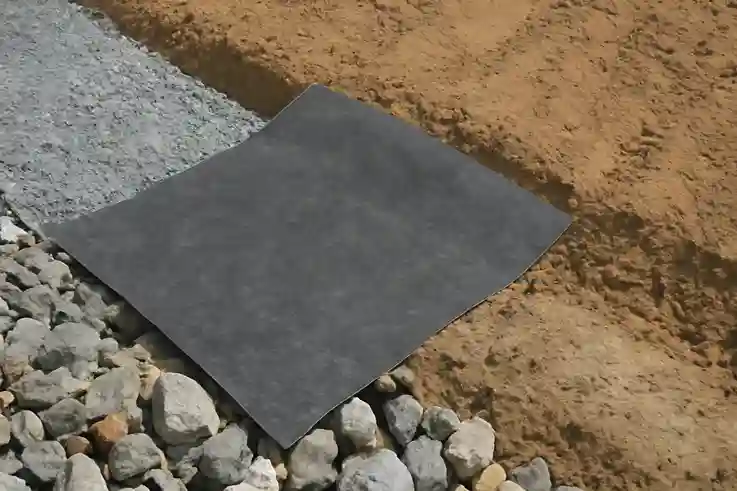
Water barriers can be made of concrete, stone, timber and so on. These materials are fairly expensive, not always available, and some need time to harden. One solution is to use a geosynthetic: geomembrane. Geomembrane is a waterproof (impermeable) product that can protect expansive soil from water. This prevents the expansive soil from swelling and keeps its volume unchanged.

Below is a simple design for road construction on expansive soil. The expansive soil (clay) is protected with geomembrane to prevent it from becoming saturated. The road base must be sloped so that water flows straight to the drainage and does not stay in the road layers. The road is built with a 2%-4% slope, with drains on both sides. The geomembrane used can be ≥ 0.75 mm thick. The thicker the geomembrane, the safer it is and the better its puncture resistance if the expansive soil still contains sharp stones.

Note that the geomembrane used in this case only protects the expansive soil; it does not reinforce the soil or the road structure. Of course, actual site conditions should be reviewed with a specialist to get an effective and efficient result.
Other Articles

Geomembrane Benefits for Road Construction
What Is Geomembrane? Geomembrane is a type of geosynthetic in the form of a thin sheet made from high-grade polyethylene blended with carbon black, antioxidants, anti-ageing and anti-UV additives. The material resists a wide range of chemical liquids, waste and microorganisms, and has low permeability and excellent UV resistance. HDPE geomembrane is also very strong […]

Geopipe Types and Functions
Geopipe is a pipe made from HDPE (High Density Polyethylene). It is round, ribbed (corrugated) and perforated. This article covers the main geopipe types and functions. The holes in the pipe wall allow water from outside the pipe to enter and be collected, then flow on to the outlet. Geopipe is commonly used for infiltration, […]