


Gabion Baskets: An Increasingly Popular Retaining Solution!
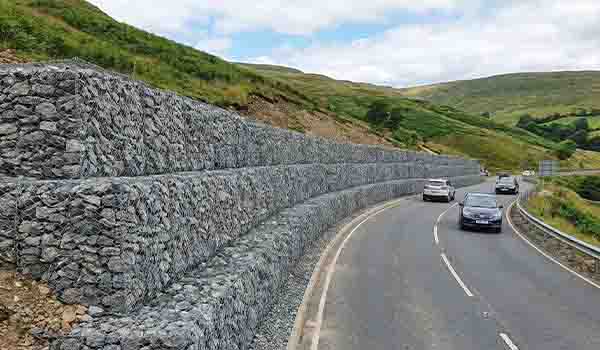
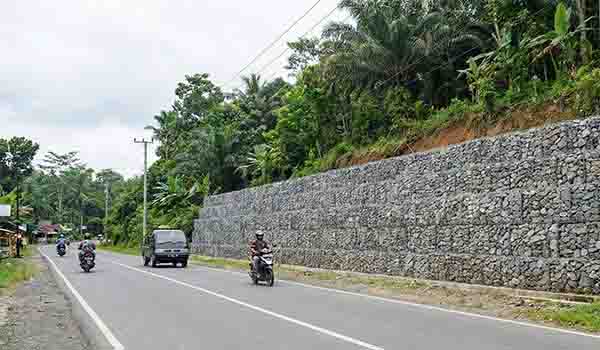
Hello, Petra friends! If you live in Indonesia, you are surely familiar with roadside slopes along toll roads or riverbanks stacked with wire baskets filled with large stones. Yes, these are called bronjong, known internationally as gabions.
They may look simple—just wire and stone—but do not be fooled. This material is a “hero” in civil engineering! Particularly in tropical countries such as Indonesia, with heavy rainfall and frequent landslides, gabions are often a better solution than rigid concrete.
But did you know that gabions are no longer used only to retain landslide-prone soil? In this article, we will thoroughly explore gabions, from their remarkabletechnical functions and increasingly attractive applications to tips for choosing the right type for your needs. Grab a coffee and let us begin!
What Exactly Are Gabion Baskets ?
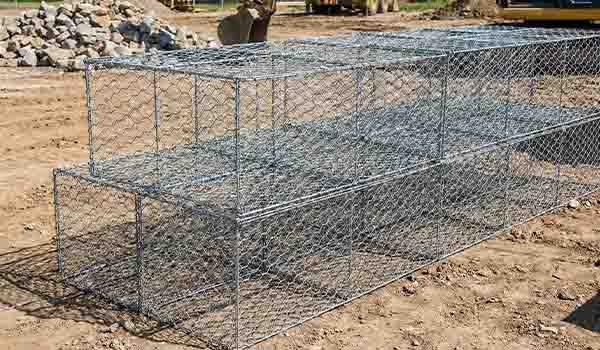
Let us start with the basics. The word “gabion” comes from the Italian gabbione , meaning “large cage.” Gabions are woven wire mesh formed into boxes (cubes or rectangular blocks) or cylinders, which are then filled with natural stone, usually river stone or quarried stone.
The wire is not ordinary wire. It must have high Tensile Strength and an anti-rust protective coating. In the Indonesian market, you will usually find two main protective coatings:
1. Heavy Galvanized:
Steel wire coated with a thick zinc layer. This is the minimum standard for durable gabions. It is shiny silver at first and gradually becomes matte.
2. PVC Coated:
This is the “upgraded” version. Galvanized wire receives an additional PVC plastic coating, usually gray or green. This type is essential if your project is in a corrosive area, such as near the sea with saltwater or a river with highly acidic water.
The mesh pattern is also specific, usually hexagonal with adouble twist. Why double twist? So that if one wire breaks, the surrounding mesh does not unravel.
Why Choose Gabions?
You may ask, “Why not just cast concrete? Wouldn’t it be smoother?”
This is the interesting part. Gabions have unique advantages that concrete retaining walls lack. Here are the reasons:
1. Permeability
This is the gabion’s “ace card.” Concrete walls are impermeable. During heavy rain, groundwater behind a concrete wall accumulates and creates enormous hydrostatic pressure. What if the drainage outlet becomes clogged? Boom! The concrete wall can fail or crack.
By contrast, gabions are porous. Water flows freely through the gaps between stones, so water pressure behind a gabion wall always remains low. The soil is more stable because water is not trapped.
2. High Flexibility
Soil is dynamic; it can move, settle, or expand. Concrete is rigid, so even slight movement in the underlying soil can break it. Gabions? They are flexible! If the soil beneath them settles slightly, the gabion structure adjusts without losing its function. Technically, it tolerates differential settlement.
3. Environmentally Friendly
Look at gabions installed several years ago. They have probably begun to grow grass or wild plants, right? Do not remove them! Plant roots further strengthen the soil bond inside and around the gabions. Gabions blend with nature, unlike concrete, which remains a foreign object in the soil.
4. Economical and Easy
Gabion installation does not require specialists. Ordinary construction workers can do it after brief instruction. The stone filling can often be sourced near the project site, reducing transportation costs.
Gabion Applications: From Rivers to Trendy Cafés
A. Civil Engineering Applications (Functional)
- Slope Protection (Retaining Wall Structure) This is the most classic function. Gabions are stacked in tiers like steps to retain soil and prevent landslides. They are commonly used on mountain roads or sloping residential areas.
- River Bank Protection River currents are destructive. They can gradually erode riverbank soil until houses above collapse. Gabions are installed along riverbanks to dissipate flow energy while retaining the bank soil.
- Bridge Abutment Protection Bridge foundations are often scoured by eddies. Gabions are frequently placed on the riverbed around bridge piers to prevent scouring.
- Small Weirs For village irrigation, small weirs are often built from stacked gabions because they cost much less than concrete weirs.
B. Architectural & Landscape Applications (Aesthetic)
This is currently a trend. You have probably seen it on Pinterest or in industrial-style cafés.
- Decorative Fencing (Gabion Fencing) Tired of masonry or iron fences? Gabion fences look natural and sturdy yet modern. Neater wire is usually selected, with stones in particular colors such as white stone or black pebbles.
- Garden Benches and Planters Small gabions can be filled with stone and topped with wooden boards, creating extremely durable, theft-resistant garden benches because they are heavy. They can also be shaped in a circle to form large planters in city parks.
- Building Facades Some ingenious architects use thin gabion layers as an outer building skin (facade) to reduce solar heat while giving buildings a unique visual texture.
Brief Guide to Proper Gabion Installation
Although it looks easy, gabion installation is an art. Stacking them carelessly can lead to collapse. Here are the basic steps to consider:
Step 1: Site Preparation (Subgrade)
The foundation soil for the gabions must be level and compacted. Soft soil will cause them to sink.
Step 2: Basket Assembly
Gabions arrive from the factory flat-folded. Unfold them, raise the sides, and lace every corner with binding wire. Make sure the ties are tight and neat.
Step 3: Placement
Place empty baskets in position. When installing them in a row, lace each basket to the adjacent one before filling them with stone. This locks them together and prevents shifting.
Step 4: Stone Filling
- Stone Size: Make sure the stones are larger than the wire mesh openings so they cannot slip out. The ideal size is usually 15-25 cm.
- Stone Type: Use hard, durable, water-resistant stone. River stone or quarried andesite is the best choice.
- Filling Technique: Do not dump stones all at once! Fill one-third first, then install internal bracing wire so the gabion does not bulge outward. Fill to two-thirds and install bracing again. Then fill completely.
Step 5: Closing
Close the basket lid and lace it tightly with binding wire. Done!
Tips for Choosing Gabion Wire
Many gabion types are available. To avoid buying the wrong one, check these specifications:
- Check SNI Compliance: Make sure the product follows SNI. This ensures galvanization quality and tensile strength.
- Wire Diameter:
- For light-duty projects such as gardens or fences: 2.7 mm wire is sufficient.
- For heavy-duty projects such as high slopes or fast-flowing rivers: Use wire of at least 3.0 mm, or even 4.0 mm if needed.
- Mesh Size (Opening):
- 8×10 cm: The most common.
- 10×12 cm: For very large stones.
- Coating Type: Remember this rule -> Near the sea/polluted water = PVC required. Away from the sea/dry conditions = Galvanized is sufficient.
Conclusion: A Long-Term Safety Investment
Choosing gabions is a smart decision for the safety of your property and infrastructure assets. Besides being strong and durable, gabions provide flexibility that concrete construction lacks.
Whether you are a contractor working on rural infrastructure or a homeowner who wants to beautify the backyard with an industrial atmosphere, gabions are a versatile material that belongs on your shopping list.
Need a Consultation for Your Project?
Still unsure how to calculate the gabion quantity for your project? Or need the best gabion price quote?
The Petra Nusa Elshada team is ready to help! We provide high-quality factory-made gabion wire in various sizes, ready for delivery throughout Indonesia. Do not risk your project’s safety with low-quality wire!
Feel free to consult the Petra Nusa Elshadateam. We supply a wide range of high-quality geosynthetics ready for delivery throughout Indonesia. Let us discuss your project needs today!
View Our Catalog: Catalog
Chat on WhatsApp Now: WhatsApp
Remember Geosynthetics, Remember Petra!
Other Articles
Causes of Geosynthetic Clay Liner Damage
Geosynthetic Clay Liner is a geosynthetic product used as a waterproof layer in construction and as an alternative to geomembrane. A Geosynthetic Clay Liner can self-heal if the bentonite clay between its geotextile layers is damaged. However, geosynthetic clay liner damage does not only occur in the bentonite layer; the geotextile layers can be damaged […]


Geotube Dewatering: Advantages and Process
Optimizing Dewatering with Geotube for Successful Construction Projects Introduction: In the construction industry, water management is a key factor. One of the main challenges is removing water from the construction area, especially when working below the water surface or in areas with a high groundwater table. This is where geotube dewatering technology becomes so important. […]