


Geocell: Types and Functions Explained
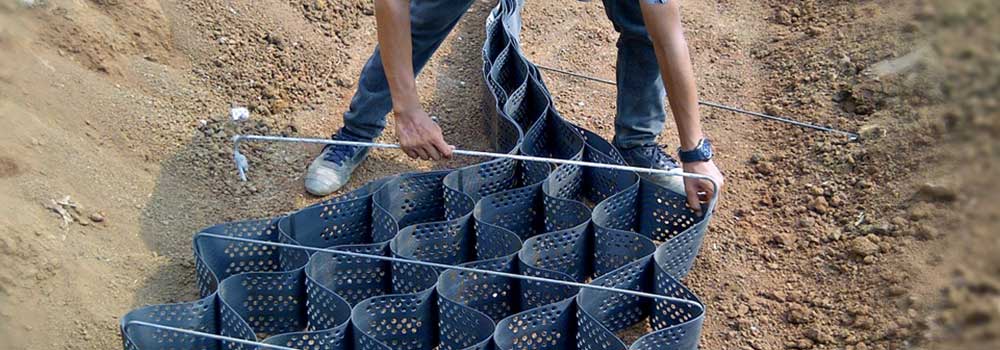
Geocell has several functions you should know about when comparing geocell types and functions. The most useful is preventing landslides on ground surfaces located on slopes, which is very important for soil no longer covered by plants or large trees. Another function of geocell is stabilizing soft soil and increasing its bearing capacity, especially in road construction.
Geocell is very helpful. An engineer should understand that geocell consists of HDPE sheets or strips joined together to form a stronger, more precise structure. Geocell looks very much like a honeycomb that can be expanded like an
accordion. Geocell offers many other advantages,
such as easy installation, so engineers can adapt it to soil conditions and structure.
With geocell, installation is fast, so it doesn’t take much time. Another advantage is that it can last for several years, so no daily maintenance is needed. Grass can also grow in the gaps of the geocell because nutrients from the soil can still reach it, which also gives it an attractive, artistic look.
Today, geocell is divided into two types, each with a different use. Smooth Geocell looks just like zinc sheeting but is much stronger and more flexible than zinc. This smooth type is widely used in construction such as toll roads and bridges.

The second type is Textured Geocell, which is widely used in toll road construction and slope stabilization. It looks like a honeycomb with small holes on its sides. Both types of geocell have their own advantages and disadvantages, and geocell prices in Indonesia also vary.

Other Articles
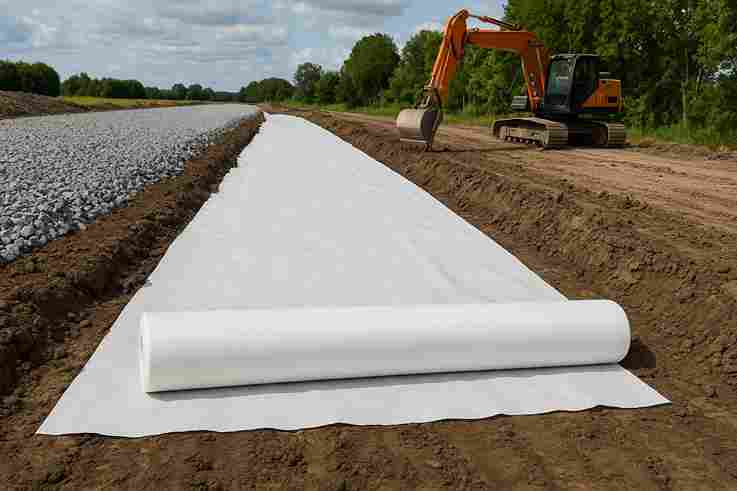

Geotextile Manufacturing Process in the Factory
Non-woven and woven geotextiles are the most widely and frequently used geosynthetic products in construction. Geotextile can be used for reinforcement, filtration, stabilisation and separation. So what does the geotextile manufacturing process look like? Polyester and polypropylene are the main raw materials used to make geotextile products; non-woven geotextile and woven geotextile basically use the […]

What Are Geosynthetics? Types and Advantages
Today’s technological progress has produced many innovations, one of which is the use of geosynthetic products in construction. So what are geosynthetics? Broadly speaking, they are synthetic, man-made materials rather than natural ones. Even so, they are used in connection with soil and rock. Geosynthetics are made of synthetic fibers that are either woven or […]