


Geosynthetics for Railway Track Construction
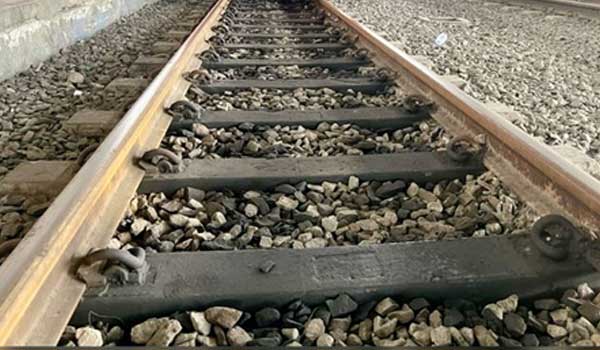
Railway track construction with geosynthetics is a modern infrastructure innovation that improves the quality and durability of railway lines. Using geosynthetics in track construction not only increases efficiency, but also solves many of the geotechnical challenges that frequently arise.
History of Railways in Indonesia

Geosynthetic materials for railway track construction
The history of railways in Indonesia began in the Dutch colonial era, when the colonial government saw rail as a way to transport agricultural produce and building materials from mines and plantations to the ports. The first railway line was built in the Jakarta-Bogor area in the late 19th century, marking the starting point of railway infrastructure development in the country.
Over time, the railway network grew rapidly and spread to other strategic regions such as Sumatra, Sulawesi and Kalimantan. At that time, railways were not only a means of economic transport, but also a symbol of colonial power that showcased the dominance of modern technology of the day.
With Indonesia’s independence, railway development changed significantly in terms of ownership and management. The Indonesian government began managing the railway network independently, integrating scattered lines and improving capacity and service quality. Today, railways are part of the national strategy for transport infrastructure development and for strengthening connectivity between regions.
Railway Infrastructure and New Projects
Geosynthetic materials for railway track construction
Railway infrastructure in Indonesia continues to grow at both national and regional scale. New lines are built not only to increase capacity but also to drive economic growth in remote regions that have long been underserved by infrastructure development.
Major projects such as the Jakarta-Bandung high-speed railway reflect Indonesia’s determination to follow the global trend toward efficient, modern high-speed transport. The line not only improves public mobility, but also eases logistics access and strengthens the competitiveness of national industry in regional and international markets.
Besides high-speed rail, the government is also focusing on revitalizing old lines with the latest technology. By strengthening existing tracks and adding new lines, connectivity between regions will improve and overland travel times, long a major obstacle to national mobility, will be reduced. Overall, railway infrastructure development will strengthen the foundation of a sustainable economy and accelerate Indonesia’s path to becoming a developed nation.
Introduction to Geosynthetics in Railway Track Construction
Geosynthetics are materials made from synthetic or natural materials and used in geotechnical engineering to improve the behavior of soil and other materials. Their use in railway track construction has become widespread over the past few decades because of their significant benefits in improving track stability and durability.
In railway track construction, geosynthetics serve various functions such as soil reinforcement, erosion control and foundation stability. Using geosynthetics makes track construction more cost- and time-efficient and helps overcome soft soil and complex geological conditions. Recent research shows that geosynthetics can reduce the need for large earthworks, protect soft soil against cracking and increase the bearing capacity of the ground on which the track is laid.
Good railway track construction depends heavily on a strong, stable foundation. Without an adequate support system, a railway can suffer failures such as track deformation, depressions and even line damage that disrupts operations. Integrating geosynthetics into track construction is therefore not just an innovation, but a necessity for the sustainability of modern railway projects.
The Role of Geosynthetics in Optimizing Track Construction
Geosynthetics play an important role in tackling the geotechnical challenges that arise during railway construction. These include reinforcing soft soil, controlling erosion and reducing stress on the track substructure. The material offers a simple, effective solution, such as reinforcing soil without large-scale excavation or major modification of the ground.
Another advantage of geosynthetics is their ability to reduce future track maintenance costs. Ground treated with geosynthetics is more resistant to train loads and environmental factors. As a result, the track lasts longer and maintenance needs are minimized. Geosynthetics also simplify the construction process, shorten construction time and reduce the impact on the surrounding environment.
Experience and case studies from many countries show that using geosynthetics in railway construction can speed up the work without compromising quality and safety.
Types of Geosynthetics Used in Railway Track Construction
In practice, various types of geosynthetics are used as part of railway construction systems. The choice depends heavily on soil conditions, the environment and the specific needs of the project. Below is an overview of the types of geosynthetics most often used in railway track construction.
Each type has a different main function and characteristics, so it must be chosen correctly to achieve optimal results. Using the right type greatly influences project success, cost efficiency and the long-term durability of the railway line.
Geogrid and Geonet for Soil Reinforcement

Geosynthetic materials for railway track construction
Soil-reinforcing geosynthetics are designed to strengthen soft soil and improve its stability. They usually take the form of geogrid or geonet, which confine the soil and distribute loads evenly.
Geosynthetic soil reinforcement is highly effective for soil that tends to slump or deform under heavy train loads. By increasing bearing capacity, the amount of prior compaction and earthwork can be reduced, saving construction time and cost. Reinforcing geosynthetics can also solve slope stability problems and reduce unwanted ground movement.
In practice, geosynthetic soil reinforcement is carried out by placing the material within the soil layers before the track layers are installed. Besides improving soil stability, it also helps reduce the risk of derailment and maintains the structural integrity of the railway line.
Geotextile for Erosion Control (Soil Separation)

Geosynthetic materials for railway track construction
Soil erosion is one of the main problems in railway infrastructure construction, especially in hilly areas or on steep slopes. To tackle it, geotextile that acts as an erosion control layer is essential.
The type of geosynthetic commonly used is geotextile, which separates the soil from the cover material and holds it in place so it is not washed away by rainwater runoff or river currents. This layer also helps accelerate the growth of natural vegetation, which reinforces the soil biologically.
In practice, erosion control geotextile is placed in critical areas such as slopes, riverbanks and beneath bridges. The main advantage of this system is its ability to prevent structural damage caused by unstable ground contours and extreme slopes. Using geotextile can reduce future backfilling and track repair costs while providing better environmental protection.
Geocomposite for Drainage and Reinforcement
Geosynthetic materials for railway track construction
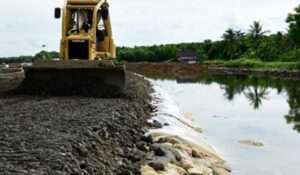
Drainage is an important aspect of railway track construction, keeping the line dry and free from excessive water build-up. Using geocomposite in the drainage system provides an innovative way to manage water flow efficiently.
With geocomposite, water can be channeled in a controlled way from the soil to the main drainage system. This is essential to prevent excess water pressure in the foundation, which can cause settlement and track deformation. The material also retains soil particles so they do not clog the drainage channels, extending the life and efficiency of the drainage system.
In use, geocomposite is placed strategically beneath the track surface, following the ground contours, and is sometimes combined with small drainage pipes. A geosynthetic-based drainage system significantly reduces the risk of flooding, subsidence and disruption to railway operations.
Make sure you use high-quality geosynthetic products from Petra Nusa Elshada so your railway project delivers good results. Petra Nusa Elshada offers a wide range of high-quality geosynthetic materials at affordable prices. Contact Petra Nusa Elshada today for consultation and orders.
Applying Geosynthetics in Railway Track Construction
Geosynthetic materials for railway track construction
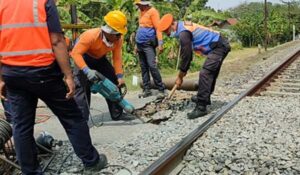
Applying railway track construction with geosynthetics is not simply a matter of installing materials; it also requires careful planning, design and execution. The quality of this process determines the long-term success of the track. Below are the main steps engineers and contractors must pay attention to.
The first step is to analyze soil and environmental conditions at the project site. This data is the basis for determining the right type and quantity of geosynthetics. After the materials are selected, the next stage is detailed installation layout planning, including the sequence of layers and anchoring techniques adapted to site conditions.
After planning, installation is carried out according to strict procedures. Make sure the geosynthetic material is laid neatly, without wrinkles, and installed in line with applicable standards. Using the right heavy equipment and working methods is essential for the layers to reinforce the foundation effectively.
Supervision during this process must be continuous and strict to ensure there is no damage or improper installation. Once installation is complete, an evaluation is carried out to confirm that all layers work as planned. The final step is load and stability testing of the track before it goes into operation.
Key Factors in Applying Geosynthetics
The success of geosynthetics depends on several key factors:
- Choosing materials that suit soil conditions and project needs
- Correct, neat installation techniques
- Quality control during construction
- Comprehensive planning from start to finish
- Routine maintenance and inspection once the line is in operation
By paying attention to these factors, geosynthetic-based track construction not only provides long-term stability and safety, but also becomes an environmentally friendly and economical solution.
Conclusion
Geosynthetic materials for railway track construction
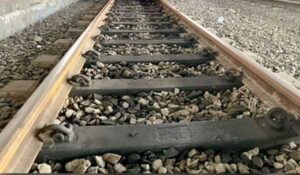
Using railway track construction with geosynthetics is an innovative step that brings major benefits to infrastructure. The technology improves the stability, efficiency and sustainability of railway lines around the world, including in Indonesia, which faces fairly complex geotechnical challenges. With the right material choice, careful application and strict supervision, geosynthetic-based track construction can ensure project success and safe, durable railway operations. In the future, wider adoption of this technology will be key to more advanced and environmentally friendly railway infrastructure.
Other Articles
HDPE Pond: A Durable, Cost-Effective Solution
Hello, Petra Friends! Have you ever felt frustrated because a newly built fishpond or water reservoir suddenly leaked? Or perhaps you are tired of continually patching a concrete pond that cracks because the ground shifts? If you face this problem, it is time to learn about a technology now popular in construction and aquaculture: the […]

Geocell Road Construction for Stronger Pavements
In geocell road construction, when a load acts on the “subgrade,” the soil does not deform if the shear strength of the subgrade is greater than the applied load. A road pavement system usually consists of 1 or more material layers. These layers reduce the pressure transferred to the subgrade. Granular material can transfer loads to the subgrade because […]

What Is Cocomesh? Functions and Installation
Cocomesh What is cocomesh? Erosion control blankets come in 3 types of material: natural material (coconut fiber), polymer and metal. Cocomesh is a natural erosion control blanket. Cocomesh is a natural material used to prevent and reduce the effects of erosion on slopes, with a function similar to geomat in general. The difference between cocomesh […]