Benefits of Geotextile for Sustainable Infrastructure

Geotextile is one of the most important innovations in civil engineering, offering many benefits in construction and land management. The material has become an integral part of modern infrastructure projects, helping to increase soil bearing capacity and prevent erosion. In this article we take an in-depth look at geotextile for sustainable infrastructure, including its types, applications, advantages and the challenges of using it.
What Is Geotextile and What Types Are There?

Geotextile for sustainable infrastructure projects
Before getting into the benefits and applications, let’s first understand what geotextile is. Geotextile is a synthetic fabric used in civil engineering applications, especially in building roads, bridges and other projects that require soil stability.
Geotextile comes in several types based on its function and how it is used. In general, geotextiles can be grouped into three main categories:
Permeable Geotextile

Types of geotextile used in infrastructure
This type of geotextile is designed for water permeability. Usually used for drainage, permeable geotextile helps prevent water from ponding on the ground surface, which increases soil bearing capacity.
Permeable geotextile is very important in projects such as highways, building foundations and parking areas. With this material placed in the subsurface layer, water can flow freely without damaging the structure above.
Non-permeable Geotextile
By contrast, non-permeable geotextile does not let water pass through. This material is often used where water containment is required, such as in dams or ponds.
Non-permeable geotextile helps maintain structural integrity and prevent leaks, which is critical in projects involving the storage of hazardous liquids or large volumes of water.
Reinforcement Geotextile
Reinforcement geotextile strengthens the soil and increases structural stability. By adding this geotextile into the soil mass, we can increase load capacity and soil shear strength.
Reinforcement geotextile is very useful in projects involving steep slopes or landslide-prone areas. Used correctly, such projects can be carried out more safely and efficiently.
Benefits of Geotextile for Sustainable Infrastructure Development
Geotextile offers significant benefits for infrastructure development. Let’s explore these benefits in depth.
Improves Soil Stability
One of the main benefits of using geotextile is its ability to improve soil stability. In many construction projects, weak soil can cause serious problems. By using geotextile, we can increase soil bearing capacity and prevent structural collapse.
In practice, geotextile helps distribute loads evenly over a wider area. This is especially important where soil conditions are inconsistent or at sites prone to ground movement.
Prevents Erosion
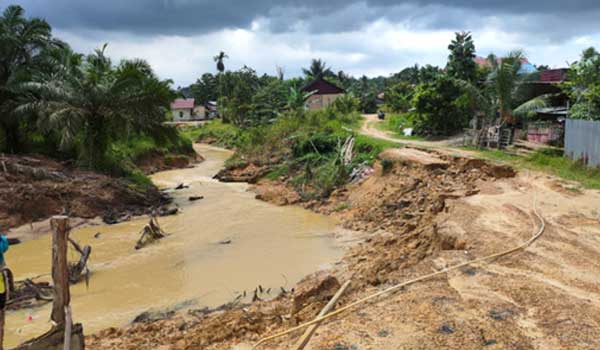
Erosion is a serious problem that can lead to economic and environmental losses. Geotextile can prevent erosion effectively. The material acts as a shield against water currents that would otherwise carry soil particles away.
Erosion prevention is vital in construction projects near water, such as rivers and lakes. By installing the right geotextile, we can keep banks stable and help sustain the surrounding ecosystem.
Optimizes Drainage
A good drainage system is key to avoiding many construction problems. Geotextile plays an important role in drainage systems by improving water flow.
When water can flow freely through the geotextile, the risk of ponding is minimized. This not only maintains soil bearing capacity but also extends the service life of the infrastructure.
Environmentally Friendly
Using geotextile is also environmentally friendly. Various studies show that the material reduces the need for additional materials that could harm the environment.
With geotextile, we can reduce the negative environmental impact of construction projects. The material can also be recycled and reused, making it more sustainable than other alternatives.
Challenges and Considerations in Using Geotextile
Despite its many benefits, geotextile also brings its own challenges. Understanding them is important for better planning and implementation.
Choosing the Right Material
One of the biggest challenges in using geotextile is choosing the right type for a particular application. Each type of geotextile has unique characteristics suited to specific conditions and needs.
Choosing the wrong material can cause the geotextile to fail in its function, which can lead to financial losses and potential hazards for users.
Implementation Cost
Although geotextile offers many advantages, the upfront cost of purchase and installation can be a consideration. In some cases, the project budget may not be enough to include this technology.
However, it is important to see this cost as a long-term investment. Although it may be expensive at first, lower maintenance and a reduced risk of damage often make geotextile the more economical choice.
User Knowledge and Expertise
Using geotextile also requires specialized knowledge and skills. The installation team must have a good understanding of geotextile properties and the best way to apply them.
Insufficient training or misunderstanding can lead to installation errors, which in turn can produce unwanted results in the project.
Specific Environments
Every project has unique environmental conditions. A geotextile that works well in one environment may not suit another. For example, groundwater content, soil type and weather conditions can all affect how effective a geotextile is.
That is why an in-depth analysis of local conditions before deciding to use geotextile is essential. It helps ensure the selected material truly fits the project’s goals.
Geotextile FAQ
What is geotextile?
Geotextile is a synthetic material used in civil engineering to improve soil stability and prevent erosion.
How does geotextile help prevent erosion?
Geotextile helps stabilize the soil and protects the ground surface from water currents, which prevents erosion.
Are there different types of geotextile?
Yes, there are several types of geotextile, including permeable, non-permeable and reinforcement geotextiles, each with a different function.
Is geotextile environmentally friendly?
Yes, geotextile can be more environmentally friendly than other construction materials, especially if it can be recycled.
What are the challenges of using geotextile?
Challenges include choosing the right material, implementation cost and the need for specialized knowledge for correct installation.
Conclusion
Geotextile is one of the most important innovations in civil engineering. With its ability to improve soil stability, prevent erosion and optimize drainage, its use in infrastructure projects is increasingly relevant. Although there are some challenges to overcome, the long-term benefits geotextile offers clearly far outweigh them. With the right material selection and correct installation, geotextile can be a sustainable solution to many of the problems engineers and contractors face today.
Other Articles

Geomembrane Uses and Benefits in Construction
Geomembrane is a type of geosynthetic used as a waterproof liner, made from synthetic plastic-like materials. Geomembranes are generally produced from thin polymer sheets, but they can also be produced by impregnation. Here are the main geomembrane uses. HDPE geomembrane can also be used as a waterproof layer to separate solids and liquids, whether waste […]