


Geotube Protection Materials and Installation

The material that forms a Geotube is made of polymers that are not UV resistant, so geotube protection materials are needed.
Geotube structures must also be protected against impacts from sharp materials such as drifting
logs or collisions with small boats. Taking into account the conditions of each section
where the Geotube is installed, concrete mattresses are used to protect the Geotube in sections
prone to impact, and geomembrane material is used in sections with little impact.
Concrete mattresses are a composite of two layers of geotextile that
act as formwork, with concrete mortar as the fill material. Geomembrane
is a waterproof material made of High Density Polyethylene polymer, with
good resistance to chemicals and UV rays. The material is very flexible,
so if local settlement occurs, it will not be damaged and will keep functioning well.
Installation Process
The Geotube is filled using a hopper, which in principle delivers the fill
slurry using pressure from a pump and the effect of elevation (Peurifoy & Schexnayder, 2002). To deliver high-pressure water output, a pump with a capacity of 300 m3/hour is used. The Geotube material is then rolled out.
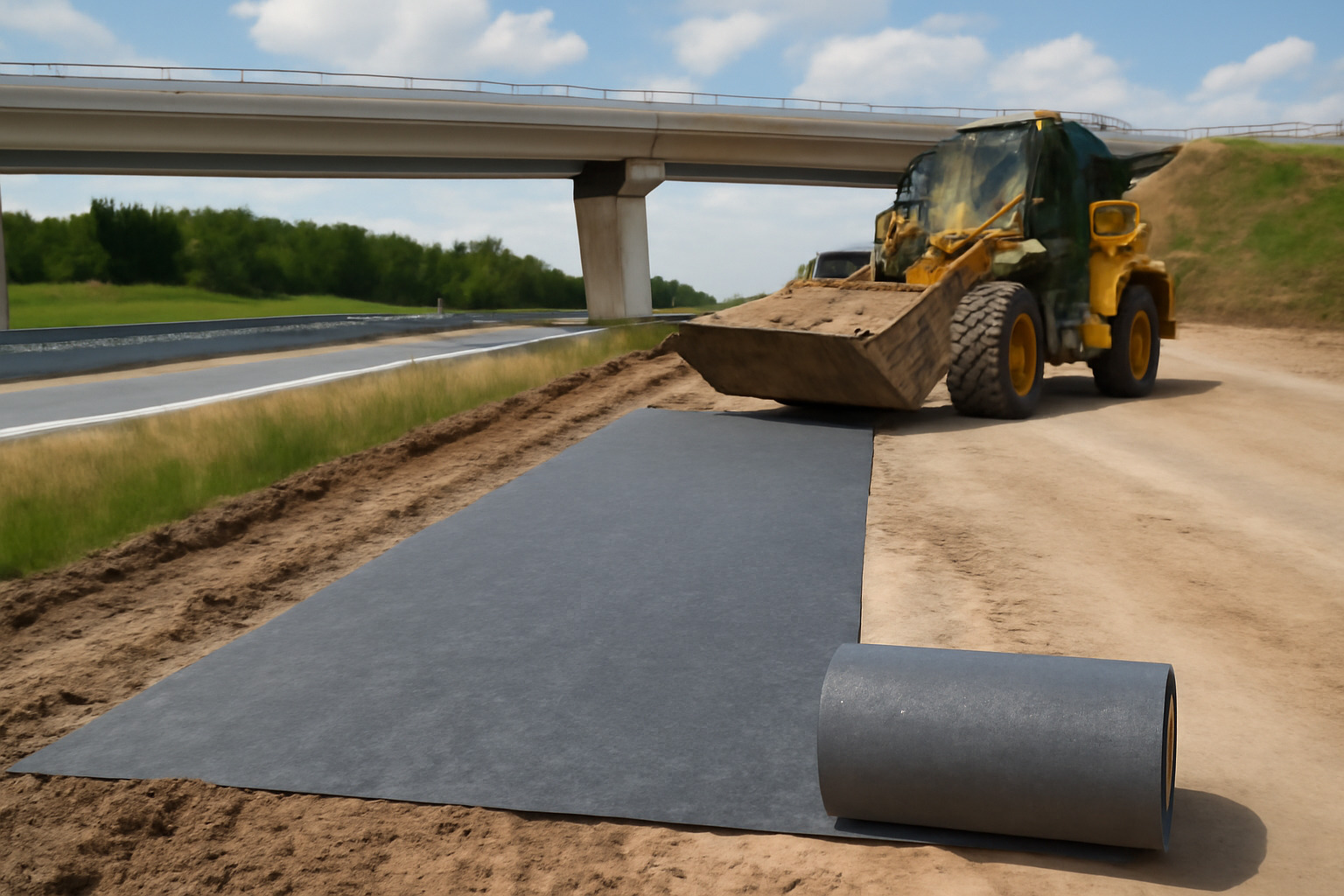
Rolling out the Geotube material

Pumping sand into the Geotube

Geotube filled to the design height

Challenges
Several challenges were encountered during installation, including: (1) site preparation
took a relatively long time because many objects were found, such as shipwrecks and large pieces of timber.
These objects had to be removed so that the geotube structure sits on stable ground; (2) the sand fill contained a lot of rubbish and wood debris that could disrupt filling with a pump. As a solution to this problem, filling was done with a hopper relying on gravity; (3) the relatively large tidal range slightly hampered geotube work, especially in sections under water.
Other Articles

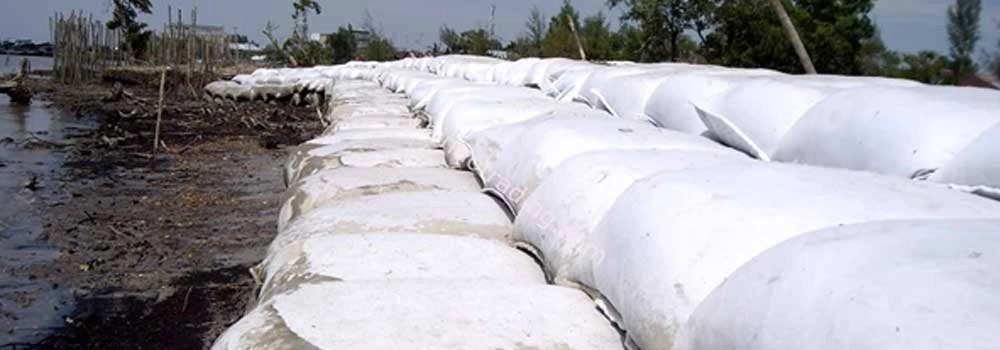
Geobag Types and Geobag Installation Steps
A geobag is a sack-shaped geotextile product. Made of quality, weather-resistant material, geobags are often used as an alternative to rock for protecting coastlines, rivers and erosion-prone areas. So how is geobag installation carried out? The right installation method is essential for geobags to perform at their best, because they are used to retain soil […]