


HDPE Geomembrane for Ponds: A Complete Guide
What Is HDPE Geomembrane?
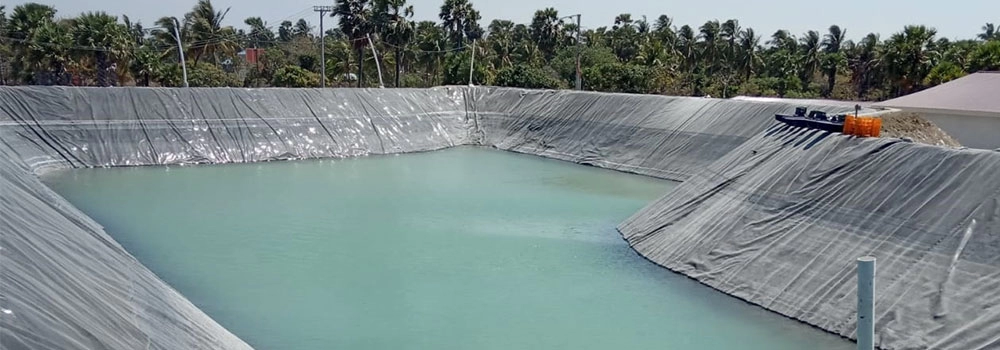
HDPE Geomembrane lining is often applied to ponds and aquaculture ponds because it is waterproof and resistant to UV rays, chemicals and corrosion. This lining functions as a waterproof liner that can effectively prevent water seepage and extend a pond’s service life. HDPE Geomembrane’s resistance to various chemicals provides protection against different water types and contents.

Another advantage of HDPE Geomembrane is its compatibility with aquatic life. This material is safe for aquatic organisms and plants, allowing ecosystems to develop in ponds. HDPE Geomembrane lining is also a cost-effective solution because its long service life provides excellent durability. Based on these properties, applying HDPE Geomembrane can be considered the right choice and a long-term investment.
HDPE Geomembrane Applications
- Sanitation Projects: landfills/final disposal sites and wastewater treatment
- Construction Projects: subway projects, roof reservoirs and pipelines
- Aquaculture Ponds: fish ponds, shrimp ponds and salt ponds.
Why Use HDPE Geomembrane for Aquaculture Ponds?
HDPE Geomembrane resists ultraviolet rays and has a long service life. HDPE Geomembrane is also flexible and can be installed to follow the shape of a pond. Based on experimental data and field practice, HDPE Geomembrane is the best choice for aquaculture pond applications. HDPE Geomembrane can save costs and improve efficiency in terms of time and production.
What HDPE Geomembrane Thickness Suits Aquaculture Ponds?
HDPE Geomembrane thickness varies from 0.3–3 mm. However, HDPE Geomembrane commonly available on the market generally ranges from 0.5–2 mm. A thickness of 0.5–1 mm can be used for aquaculture pond applications. For shrimp ponds, the minimum required thickness is at least 0.75 mm. HDPE Geomembrane generally has a service life of around 5–10 years.
How Can You Tell HDPE Geomembrane Quality Apart?
High-quality HDPE Geomembrane lining is usually produced using 100% virgin raw material. However, some Geomembrane liners are produced using recycled material. Geomembrane produced from recycled material may contain contaminants such as viruses, heavy metals and other hazardous chemicals. In addition, the quality of Geomembrane made from recycled materials tends to be unstable. If used as a waterproof liner, it may allow deposited pollutants to leak and contaminate the environment.
Geomembrane thickness also sometimes fails to meet the promised standards and specifications. To save production costs, manufacturers reduce Geomembrane thickness. This affects its thickness and quality, causing it to fall short of standards.

Installing HDPE Geomembrane in Aquaculture Ponds
- Geomembrane can be installed in a damp environment. However, an excessively damp environment and direct immersion of the geomembrane in water during installation should be avoided.
- Geomembrane welding should not be performed after the geomembrane becomes wet.
- Do not drag the geomembrane during transport, so that it is not torn or punctured by sharp objects.
- The product must be stored in a cool, dry place. Do not expose it to rain or direct sunlight.
Other Articles

Comparing Geocell Infill Materials
When using geosynthetics, especially geocell, the main focus should be the infill material in each cell. The infill must be evenly distributed so that the results are effective and do not fluctuate. Besides even distribution, attention should also be paid to the types of geocell infill materials that can be used. Geocell infill can be […]

Geomembrane Price per Roll and Installation Cost
What Is Geomembrane? Geomembrane is a synthetic waterproof liner (usually made of High-Density Polyethylene or HDPE) that is widely used for shrimp ponds, water storage ponds, landfills and industrial wastewater ponds. Before buying, it is important to understand the estimated geomembrane price per roll and the cost components of installation. Estimated Geomembrane Price per Roll […]

HDPE Geomembrane Lifespan in a Waste Pond: How Long?
Managing a waste pond is not something to take lightly. If you are designing or managing a waste treatment system, you surely know how important it is to prevent toxic substances from leaking and damaging the surrounding environment. This is where HDPE (High-Density Polyethylene) geomembrane provides the primary protection. However, one strategic question often comes […]