Comparing Geocell Infill Materials
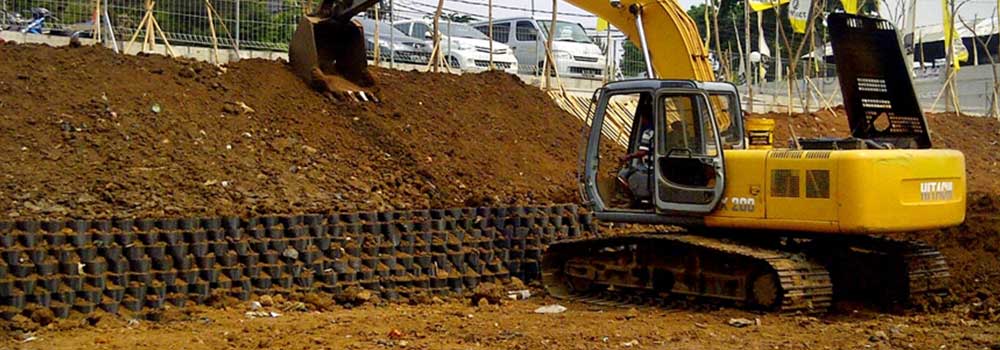
When using geosynthetics, especially geocell, the main focus should be the infill material in each cell. The infill must be evenly distributed so that the results are effective and do not fluctuate. Besides even distribution, attention should also be paid to the types of geocell infill materials that can be used. Geocell infill can be aggregate, sand, soil or cement (for non-perforated geocell only). The test setup is shown in figure 3.1, with an added geogrid and a clay foundation soil.


The geocell tests used 3 types of infill: aggregate, sand and red soil. The load-bearing capacity of the geocell-reinforced bed (compared with the unreinforced bed) increased 13-fold with aggregate infill, 11-fold with sand infill and 10-fold with red soil infill (figure 3.2).

Settlement reduction can be calculated with the Percentage Reduction of Settlement (PRS) formula, where So is the test result without geosynthetics and Sr is the result with geosynthetics for each material type. The results show settlement reductions of 78%, 73% and 70% for aggregate, sand and red soil infill respectively (figure 3.3). Of the three infill materials tested, aggregate was found to be the most effective.

Other Articles

HDPE Pipe: Functions, Advantages and Sizes
HDPE Pipe Today, most water distribution systems use plastic pipes. One reason plastic pipes are so widely used is that they do not give the water a strong odor. HDPE (High Density Polyethylene) pipe is a type of plastic pipe often used for water systems, and HDPE pipe functions extend well beyond that. The pipe […]