


How a GCL (Geosynthetic Clay Liner) Works

A GCL (geosynthetic clay liner) is key to many containment projects. It is a material in which bentonite or another clay is bonded between two woven or non-woven geotextiles to slow seepage. Its main uses are in landfills and liquid containment projects. Bentonite is an absorbent aluminum phyllosilicate clay that helps create a low-permeability barrier, which makes it ideal for containment solutions.
GCL material handles slopes and high loads well and can last for decades if installed correctly. The main function of a GCL is to act as a separator between soil layers and water. How a GCL works depends on the hydraulic conductivity of the bentonite, which is able to hold back liquids.
Read Also
Definition and Functions of Geosynthetic Clay Liner (GCL)
A GCL is also vulnerable to accidental damage, which may occur during installation. In such cases, the hydraulic performance can remain acceptable depending on the extent of the damage. It has been shown that small defects can be effectively sealed by the sodium bentonite in the GCL, with only a slight increase in the hydraulic conductivity of the damaged specimen. The hydraulic performance of a geotextile-encased GCL also depends on the mass distribution, or coverage, of bentonite within the material.

To avoid local displacement of the bentonite and its possible impact on the hydraulic performance of the GCL, cover soil of suitable thickness and particle size must be placed over the GCL before it is hydrated and before any concentrated surface loads are applied.
Therefore, the choice of subgrade is another important consideration for GCL installation. As with the cover soil, the subgrade on which the GCL is installed must have a suitable particle size. In most containment applications, the installation process requires the GCL to be placed in dry conditions.
Hydration must take place after installation and requires enough clean water to activate the bentonite properly.
GCL applications:
- Protection against the groundwater table for highways, railways and water treatment structures
- Liner/lining material for landfill areas
- Liner/lining material for mining areas
- As a wall to retain water pressure
- Secondary containment layer for storage tanks.
Other Articles
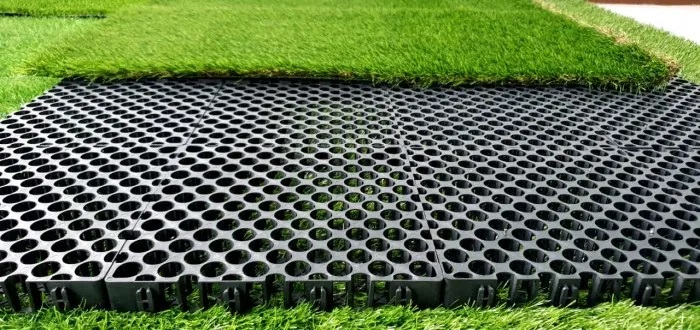
Drainage Cell: Benefits, Functions and Applications
Drainage Cell: Benefits, Functions and Applications in Modern Drainage Systems In modern urban development, effective and sustainable drainage systems are essential. One technology that has emerged as an innovative solution is the drainage cell. This article takes a closer look at the drainage cell, including its benefits, functions and applications in modern drainage systems. Let’s […]

What Is Geogrid? Definition, Types and Functions
What is geogrid? Geogrid is a geosynthetic product made from polyester, polypropylene or polyethylene, produced by bonding a grid structure through extruding, punching, heating, longitudinal stretching and transverse stretching. Geogrid has large apertures and is always used in some form of reinforcement. It is generally used for subgrade improvement, embankment reinforcement, landslide slope repair, and […]
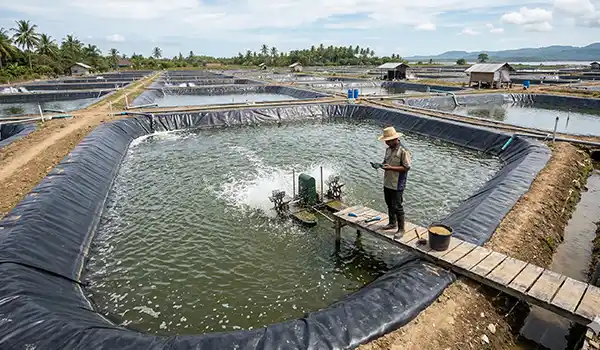
Bigger Profits: Advantages of an HDPE Pond for Aquaculture
Hello, Petra friends! If you work in aquaculture or are planning to start a fish or shrimp farming business, you have surely heard a lot about HDPE geomembrane. It is more than a passing trend; this material is gaining popularity because its performance far exceeds that of conventional cement ponds or ordinary tarpaulins. Why are […]