


6 Key Roles of Non-Woven Geotextile in a Subdrain
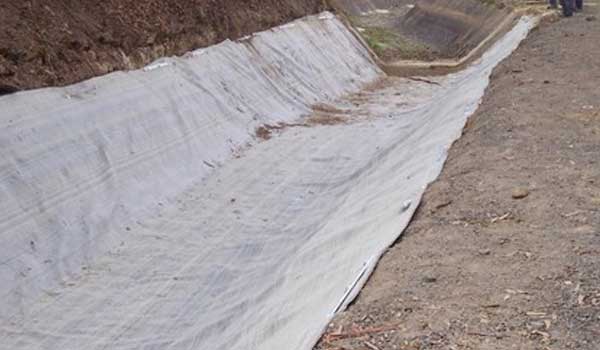
You may have seen road surfaces deteriorate quickly, building foundations weaken, or yards turn muddy every rainy season. Indeed, water left ponding on the ground can cause numerous infrastructure problems.
Retained water can reduce soil-bearing capacity, accelerate material deterioration, and even create dangerous hydrostatic pressure on underground structures. That is why a subdrain system is essential in every construction project, particularly with non-woven geotextile as a filtration layer that keeps water flowing smoothly without carrying soil particles.
Benefits of Subdrain Geotextile for Water Drainage
non-woven geotextile
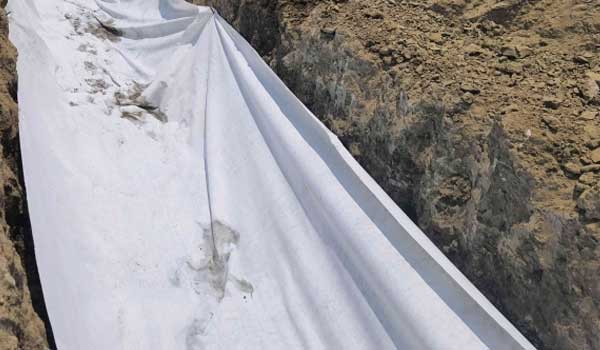
Why is non-woven geotextile better suited to a subdrain system than other types of geotextile ? The answer is closely connected to the following uses of subdrain geotextile for water drainage :
Preventing blockages in water pipes
A subdrain will not be effective if its drainage pipe is clogged. Without adequate protection, fine soil particles can be carried by water and enter the pipe through openings or perforations. Over time, this fine material accumulates and obstructs water flow. In severe cases, the blockage can cause water to pond again and damage nearby structures.
This is the main reason for using non-woven geotextile. This material has uniform pores small enough to retain soil grains while still allowing water to pass. Wrapping the pipe in a geotextile layer creates a natural filtration system that reduces the risk of clogging. In addition, the flexible and permeable properties of geotextile allow it to adapt to changing soil pressure without tearing easily or losing its filtration function.
Separating soil layers from drainage aggregate
In subdrainconstruction, coarse aggregate such as gravel is typically used to create a rapid water-flow path. Without a separation layer, however, fine soil can seep into and mix with this aggregate. Gradually, the voids between the gravel become clogged and drainage performance drops sharply.
As a separation layer, non-woven geotextile prevents fine particles from migrating into the drainage aggregate. With its bonded fiber structure, geotextile combines strength and flexibility to keep both materials in place. As a result, the drainage path performs more consistently, lasts longer, and does not deteriorate easily even under dynamic soil conditions.
Increasing water discharge capacity
Besides filtering and separating materials, non-woven geotextile for water drainage can increase flow capacity toward a subdrain pipe. The material has high permeability, so water can move horizontally and vertically with little resistance. When installed in areas with heavy rainfall or fine-textured soil such as clay, geotextile helps accelerate drainage.
Another rarely mentioned advantage is the ability of geotextile to keep flow paths stable. Because its surface does not deform readily, water flows more regularly without creating dangerous saturated zones. This is very important in project areas requiring rapid drainage, such as highways, runways, and industrial estates.
Extending the service life of a subdrain system
A subdrain without the protection of geotextile deteriorates more quickly. Blockages, soil erosion, or deformation around the drainage area may occur within months or years. Repairing such a system can be costly and disrupt ongoing construction or operations above it.
Installing non-woven geotextileprovides dual protection: preventing soil erosion while keeping the aggregate structure stable. This enables the pipe and supporting drainage material to perform optimally for longer. In many cases, using geotextile can extend the life of a subdrain several times beyond that of a system without a protective layer.
Reducing subdrain maintenance costs
When a drainage system works consistently and remains stable, routine maintenance requirements automatically decrease. You do not need to flush pipes, replace aggregate, or repair sections damaged by sedimentation as frequently. These savings are particularly significant in large projects such as toll roads, residential-area drainage, or industrial facilities requiring extensive subdrain systems.
The initial investment in non-woven geotextile may appear small compared with total construction costs, but its impact on reducing operating expenses is substantial. A more reliable system means a lower risk of failure, resulting in more efficient long-term maintenance costs.
Adapting to various drainage-system shapes
Every project has different site conditions. Some are located on soft soil, sandy soil, or a combination of both. Some also require a subdrain design that is circular, long and straight, or winding to follow the contours.
Non-woven geotextile excels because it is easy to shape, cut, and install in a wide range of subdrainconfigurations. This geotextile material is not rigid, so it can follow the shape of pipes and soil layers without excessive deformation. Whether you are planning an enclosed subdrain , French drain, or vertical drainage system, you can adapt the geotextile without reducing its performance.
Tips for Installing Non-Woven Geotextile in Subdrains
non-woven geotextile
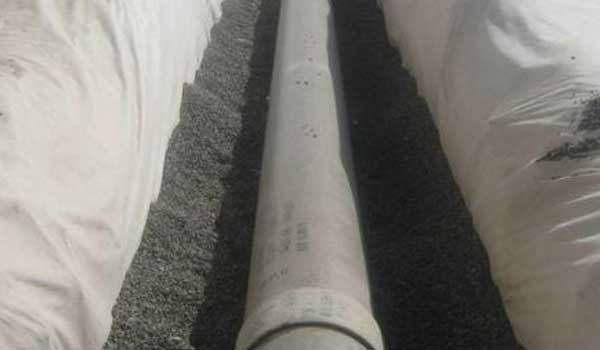
To maximize the water-drainage function of non-woven geotextile , it must be installed correctly. First, make sure the installation surface has been leveled and is free of sharp objects such as broken stone or roots that could damage the geotextile. Then spread out the geotextile without folds, which could create trapped areas and obstruct water flow.
Next, pay attention to the overlap between sheets. Ideally, provide an overlap of 30-50 cm so no gap allows soil to enter the aggregate. When installing the drainage pipe, make sure the geotextile wraps it tightly before covering it again with gravel or another drainage material.
Finally, avoid suddenly placing heavy material on the geotextile because this could make it shift or tear.
Unsure which non-woven geotextile is best for your project’s subdrain ? Products from Petra Nusa Elshada combine quality, efficiency, and reliability. The material is economical and environmentally friendly, making it suitable for projects that prioritize cost and sustainability. It also has high puncture and tear resistance, enabling it to withstand demanding field conditions.
As a local product, geotextile from Petra Nusa Elshada is designed for soil characteristics found across Indonesia. Its mechanical and hydraulic properties provide high durability, making it more resistant to long-term soil pressure and water flow. It is also quick and easy to install, helping shorten fieldwork time.
Furthermore, the material has proven effective for stabilizing soft soil and performs well as a separation layer between soft soil and fill. In concrete curing systems, this geotextile helps maintain the designed concrete quality, while its performance in drainage systems is highly consistent.
If you want a recommendation for the most suitable product, consult Petra Nusa Elshada directly through the following page to determine the best non-woven geotextile for your project needs!
Other Articles


What Is a Geotextile Tube (Geotube)?
What is a geotextile tube? A geotextile tube (geotube) is made from non-woven or woven geotextile, in either polyester (PET) or polypropylene (PP), and shaped like a very large sack. Geotextile tube sizes vary, reaching 15 to 30 metres as required, and the tube can be filled with aggregate, sand or soil. *Main materials used […]

Types of Geogrid and Their Functions in Construction
Geogrid is a geosynthetic material in sheet form with frame-like openings, which acts as reinforcement to strengthen soil structures. The types of geogrid have different apertures, from square and oval to other shapes. Geogrid installation involves laying it on the ground surface and then covering it with fill material. The fill enters the openings between the […]