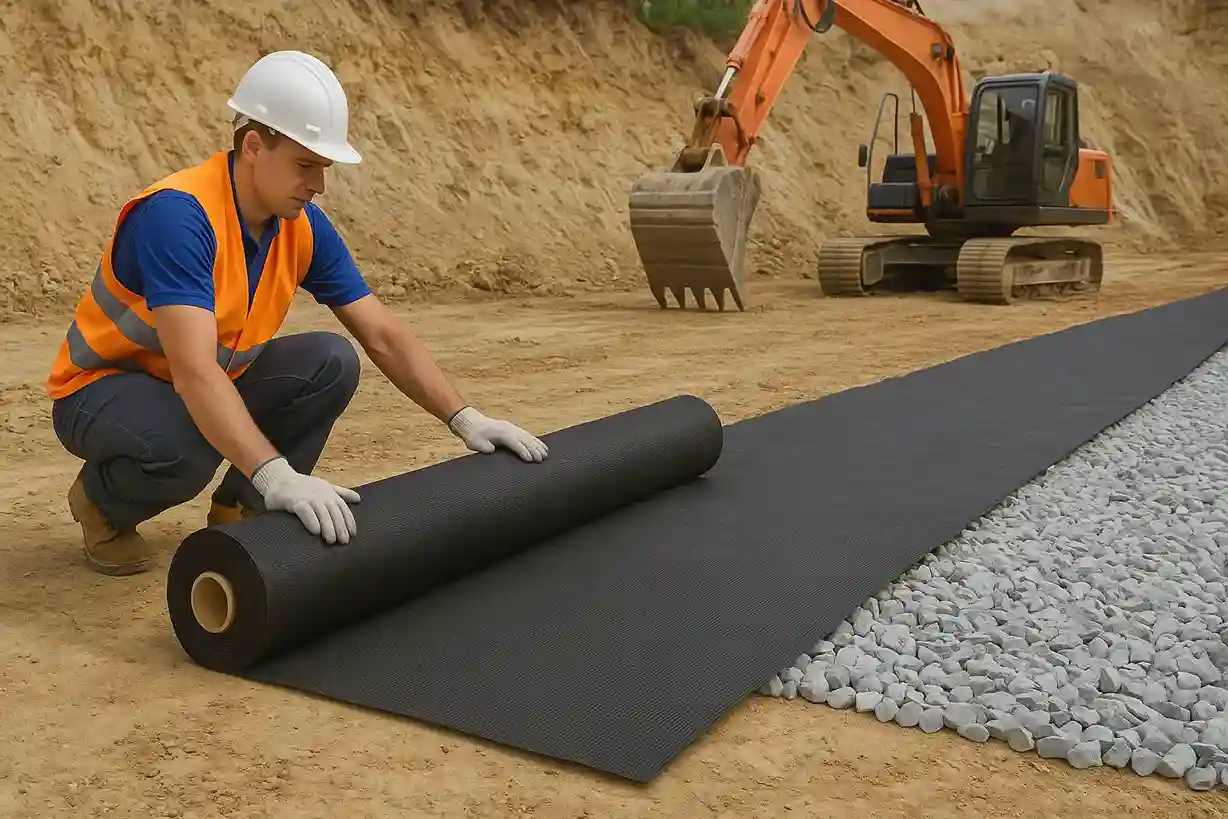
Soil Reinforcement with Geosynthetics

Before discussing soil reinforcement with geosynthetics, it helps to know the term itself. Geosynthetic combines the word geo, meaning earth or generally soil, and the word synthetic, meaning man-made material, in this case polymer material. The base materials of geosynthetics are polymerization products of the chemical/petroleum industries, with properties that resist chemical compounds, weathering, abrasion, ultraviolet light and microorganisms. The main polymers used to make geosynthetics are Polyester, Polyamide, Polypropylene and Polyethylene.
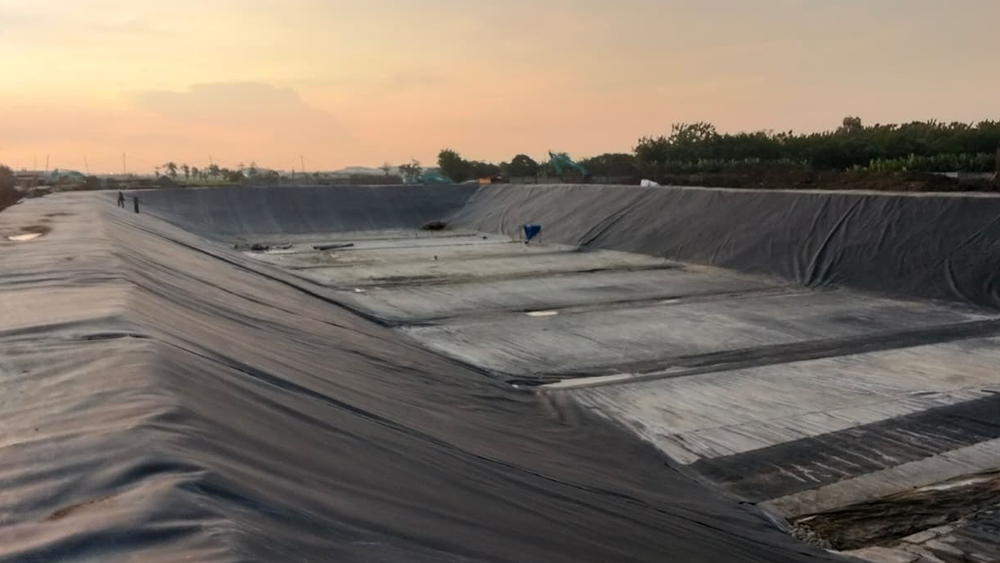
Geosynthetics are generally defined as polymer materials applied in soil. Based on their use, geosynthetics include geomembrane, geotextile, geocell, geogrid, geocomposite and other types of geosynthetics .
Geotextile for Soil Bearing Capacity
Geotextile can be used as soil reinforcement to increase the bearing capacity of the subgrade beneath an embankment. When designing the stability of an embankment on soft soil reinforced with geotextile, two requirements must be considered: Internal Stability and External Stability. Internal Stability is the calculation of embankment stability so that no sliding occurs within the body of the embankment itself. External Stability is the stability of the embankment against overturning, sliding along a shear plane, and bearing capacity failure. Calculating the geotextile design requires the relevant site data.

Other Articles
Geotextile Functions in Construction
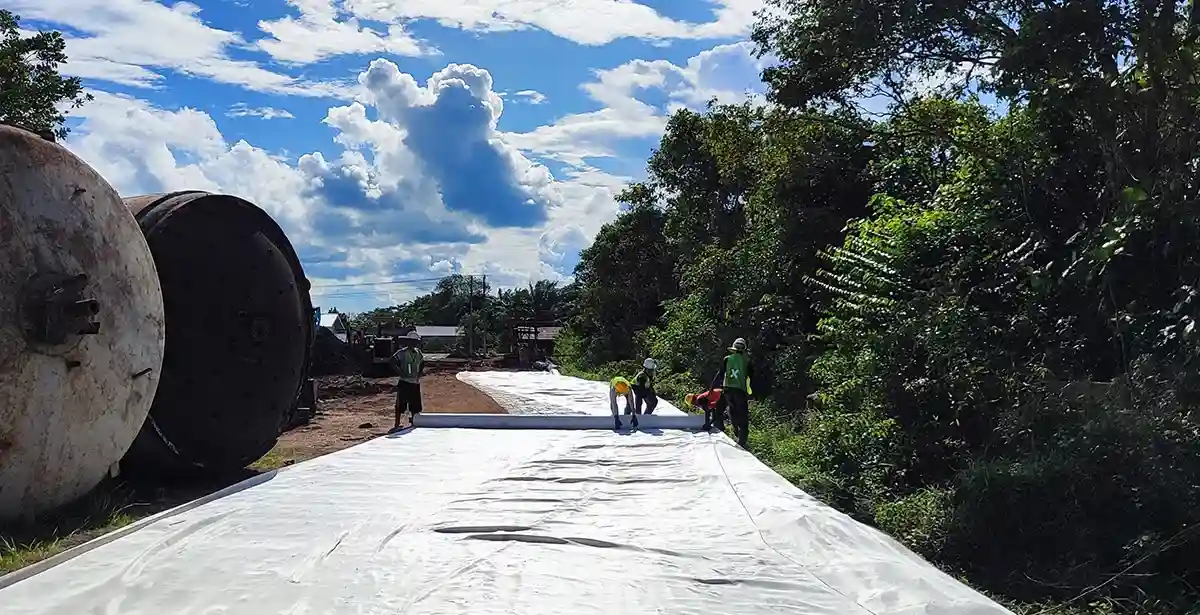
Geotextile is a permeable type of geosynthetic material. Geotextile functions include separation, filtration, protection and reinforcement. It is made from polyester or polypropylene. The two types of geotextile, woven and non-woven, differ in their material and characteristics. Woven and non-woven geotextiles are made from polyester (PET) or polypropylene (PP) polymers. Non-woven geotextile is carpet-like rather […]