


What Are Geosynthetics? Types and Functions
Geosynthetics
What are geosynthetics? Geosynthetics are materials commonly used in construction projects. They reinforce and protect structures to make them more robust. They are not natural materials, but they are used with soil and rock. Geosynthetics are also commonly used to make roads more stable.
Geosynthetics are made from synthetic materials or polymers, and with innovative technology they have been developed to solve all kinds of soil-related problems in construction. In this article, we take a closer look at the types of geosynthetics and other related information.
Read: Geosynthetics: Types and Functions in Geotechnical Engineering
Functions and Types of Geosynthetics
Geosynthetics are commonly used as supporting materials in construction projects. This article explains several of their functions, as follows:
Geotextile
Separation

Geotextile geosynthetics act as a separator between different soils. The separator helps prevent poor soil from mixing with good-quality granular material.
Geotextile acts as a barrier against particle migration between two different soils. This technique is used in applications such as road pavements, clay covers, graded filters and landfills.
Erosion Prevention
Geosynthetics such as geotextile can be very effective in preventing erosion. These materials are part of reinforcement techniques that keep soil stable and strong, especially in the rainy season.
Geosynthetics have many benefits and uses in erosion prevention, which is why they are used in most construction projects. They also have features that allow them to perform important tasks within structures such as retaining walls, canals, foundations and more.
Geocomposite
Drainage

One cause of erosion is runoff that is not properly managed or channeled. When water is not effectively retained on both sides of a structure such as a dike, the water level can build up pore pressure. A geocomposite layer is enough to stop this pore pressure from increasing.
Geosynthetics allow adequate flow within a plane without soil loss. This creates a balance in the interaction between the soil and the geosynthetic material.
Read: Save Installation Time with Geocomposite
Retaining walls are found in dam, reservoir and canal projects, and geosynthetics are usually found in these structures because they play a key role in the drainage system.
Filtration
Water management problems come in many forms, erosion being one example. Erosion damage is quite difficult to repair, so to prevent it, a geocomposite geosynthetic, one of whose components is a clay layer, can be installed in hydraulic structures.
Geocell
Stabilization

Another function of geosynthetics is stabilization. In construction, geosynthetics are usually used as additional materials to improve the mechanical properties of the soil on which a structure will be built.
Geocell is a type of geosynthetic that stabilizes soil and increases its bearing capacity on construction projects. This technique is very important because the subgrade determines how smoothly the construction work proceeds.
Geomembrane
Waterproof Layer

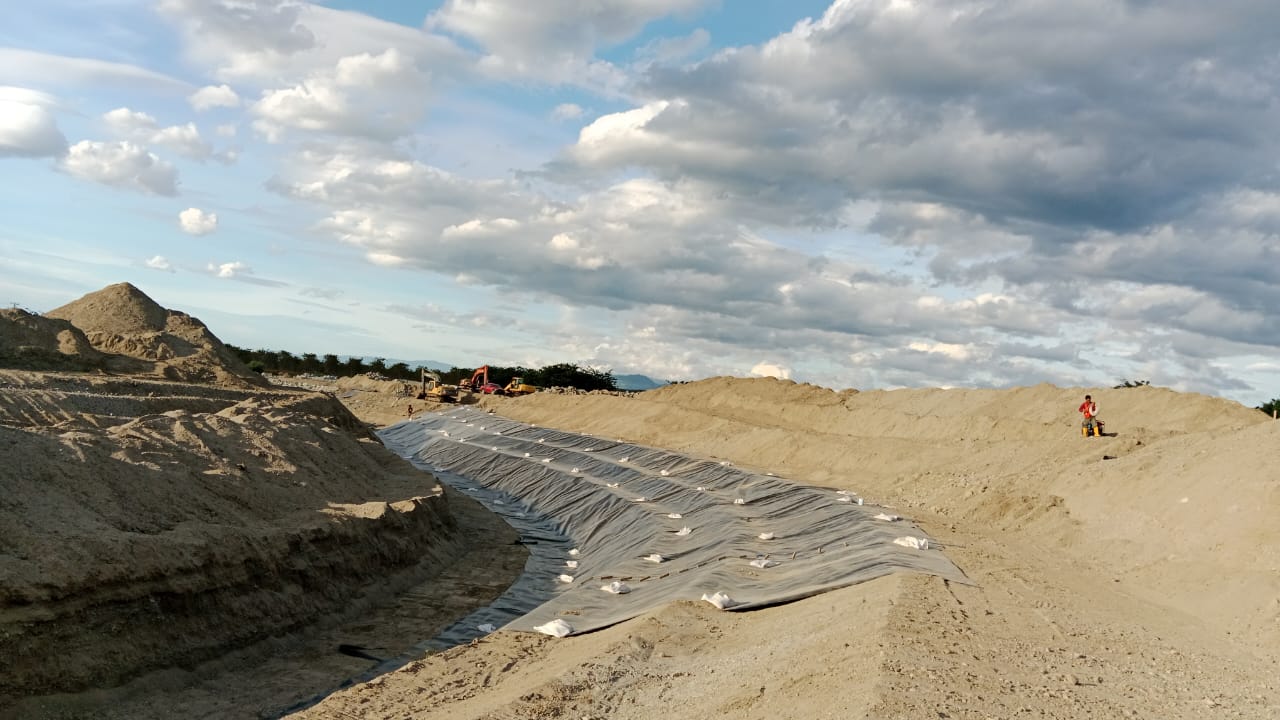
Geomembrane is a geosynthetic material that works as a waterproof layer and has many other uses. In road construction, for example, because geomembrane is impermeable it protects the road body from weather damage such as rain. The advantage of this geosynthetic is that it can contain liquids and gases as well as soil particles.
This type of geosynthetic can also protect soil and water from contamination, as it offers a high level of impermeability. It is also suitable for agriculture, manufacturing facilities, mines and other potential sources of hazardous waste.
Protection
Geosynthetics are plastic products made from polymers that help conserve resources and protect the environment. They are also arguably the most energy-efficient and cost-effective way to build infrastructure. Geosynthetics are a good choice for environments such as landfills, because they prevent leachate from seeping into the ground.
Other Articles

Geobag Sizes and Advantages for Coastal Abrasion Control
Geobags are commonly used along coastlines, riverbanks and other areas prone to erosion or landslides. With such a wide range of geobag applications, it is no surprise that geobag sizes on the market vary considerably, so they can be matched to each need. As is well known, the main function of a geobag is to […]

Geotextile Functions for Railways, Farming and Drainage
Just like road construction, railway construction certainly requires the application of geotextile. One of the key geotextile functions here is to act as a separation layer, or separator, between the soil and the underlying subsoil. The separator applied will certainly not disrupt groundwater circulation. Another advantage of this layer is that it effectively dampens the vibrations […]

Geotextile Manufacturing Process in the Factory
Non-woven and woven geotextiles are the most widely and frequently used geosynthetic products in construction. Geotextile can be used for reinforcement, filtration, stabilisation and separation. So what does the geotextile manufacturing process look like? Polyester and polypropylene are the main raw materials used to make geotextile products; non-woven geotextile and woven geotextile basically use the […]