


What Is Geocell and How Does It Work?
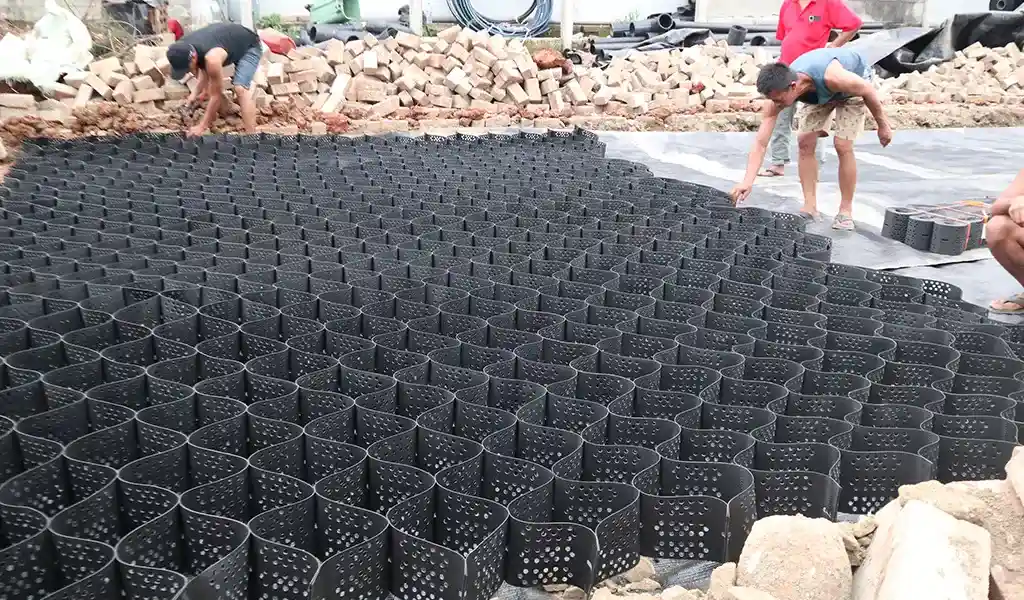
In construction and soil structure engineering, geocell has become one of the most important innovations, increasingly used for many purposes, especially soil stabilization. Geocell is a closed-cell structure made of flexible, strong porous material, usually synthetic materials such as polyvinyl chloride (PVC), polyethylene or other materials that withstand harsh environments and heavy loads. Geocell can increase soil strength and stability, ensuring construction projects proceed safely and efficiently.
How Does Geocell Work?
In construction and soil-layer applications, geocell is more than a surface liner. It acts as a framework that helps distribute loads evenly while preventing soil from shifting and collapsing at the project site. Geocell is highly effective in applications such as highways, airport runways, water reservoirs and soil reinforcement on hilly or undulating terrain.
Before exploring its benefits in depth, it is important to know that geocell is designed with an open grid structure that can be filled with infill materials such as soil, gravel or other materials as required. Once filled, this structure becomes very strong and can withstand high pressure from the loads above it. This makes geocell ideal for addressing soil movement, reducing erosion and significantly increasing soil bearing capacity.
The application of geocell is not limited to soil layers that are already stable; it is also very useful for repairing degraded soil. As a result, geocell enables construction in areas that were previously unsuitable while supporting the long-term sustainability of construction projects. The main advantage of geocell is its ability to control soil deformation and improve stability efficiently and economically.
Key benefits of using Geocell for soil stabilization
Using geocell in construction projects can deliver significant benefits in terms of safety, cost efficiency and environmental sustainability. To understand how important geocell is, here is an in-depth explanation of its main benefits for construction or geotechnical engineering projects.
As an important complement, one of the advantages of geocell is its exceptional ability to withstand heavy loads and significantly reduce the risk of soil movement. As a result, soil stabilization becomes faster, safer and more reliably successful. This advantage also opens up opportunities for infrastructure development in areas that previously faced difficulties because of unstable or subsidence-prone soil.
Increasing Soil Stability and Strength
One of the main benefits of using geocell is its ability to significantly increase soil stability and strength. Unstable soil is often a major problem when building roads, bridges and other structures, particularly in landslide-prone or undulating areas. Geocell works by restricting soil deformation when it receives loads from the structure above it.
When geocell is installed and filled with suitable material, the grid structure acts like a framework that holds the soil in place so it does not shift or collapse. This effect is vital for preventing landslides, soil collapse and even water seepage that could worsen soil conditions. When the soil is stable, the project’s foundation also becomes sturdier and more durable, reducing future maintenance and repair costs.
In addition, increasing soil strength with geocell also helps expand the area available for development. Areas that were previously unsuitable because of slippery or subsidence-prone soil can be used more effectively, ultimately driving economic growth and regional development.
Cost and Time Efficiency in Construction Projects
Using geocell is directly linked to savings in project costs and construction time. Because geocell accelerates soil stabilization, projects can be completed more quickly than with conventional methods. These savings apply not only to time, but also to the materials and labor required.
Economically, building with geocell reduces the need for additional materials such as cement, crushed stone or other reinforcing materials. Filling geocell with natural materials such as soil or gravel makes the process cheaper and more environmentally friendly. This efficiency also increases labor productivity and speeds up construction, especially in remote areas or locations with limited access.
Using geocell also reduces long-term maintenance needs because the soil becomes stronger and more resistant to erosion and instability. An initial investment that may appear higher will be offset by savings in future maintenance and repair costs.
Protection Against Erosion and Environmental Safety
Besides strength and efficiency, another benefit of geocell is its ability to protect the environment from damage caused by soil erosion. Soil erosion is one of the major challenges in infrastructure development and agriculture, often causing soil degradation, sedimentation and damage to natural habitats.
By integrating geocell into the ground surface, the soil layer is protected from external disturbances such as heavy rain and strong winds. The geocell grid keeps the soil stable so erosion can be controlled effectively. In addition, extreme climates and weather changes have less effect on soil conditions because geocell can absorb and distribute pressure evenly.
Geocell also contributes indirectly to environmental sustainability by reducing the need for traditional reinforcing materials that often harm ecosystems. Using natural infill materials also increases soil bearing capacity without damaging biodiversity around the project area.
Applying Geocell in Infrastructure and Soil Improvement Projects
Given its many benefits, it is no surprise that geocell is increasingly used in construction and soil rehabilitation. Its use is not limited to highway infrastructure, but also includes soil reinforcement projects, reservoir construction, city parks, and recreational and residential developments on difficult sites.
As technology develops and demand for sustainable construction grows, geocell applications are expected to become increasingly innovative and efficient. Understanding the various aspects of its use is therefore essential for engineers and project planners to maximize its potential.
The latest innovations in geocell use include more environmentally friendly new materials and grid designs that adapt better to specific soil and climate conditions. Geocell is also beginning to be integrated with digital technology for design and quality control, ensuring more accurate and durable results.
Get Geocell and other geosynthetic materials now, only at Petra Nusa Elshada. For more information, please click here!
Other Articles

Soft Soil Improvement Methods
Soft soil improvement means increasing the bearing capacity of the soil itself so that it is good enough to carry the loads of the structures built on it. Several factors need to be considered when improving soil, including time efficiency, cost savings and other supporting factors. Several methods can be used to improve soft soil […]
Trusted Shrimp Pond Geomembrane Distributor
Hello, Petra friends! How is your shrimp farm doing today? We hope its growth chart keeps trending upward. When we talk about the shrimp farming business, we are not only talking about quality fry or feed. There is one “silent hero” that very often determines the success of your harvests in the long run: Geomembrane. […]
