Woven Geotextile vs Non-Woven Geotextile

Woven Geotextile
Woven geotextile is a woven geosynthetic material made from PP or PET with good resistance to chemical compounds and microorganisms. This material has the following properties:
1. High Tensile Strength
2. High Puncture Resistance
3. High Tear Strength

Woven Geotextile Functions
A. Subgrade Stabilization
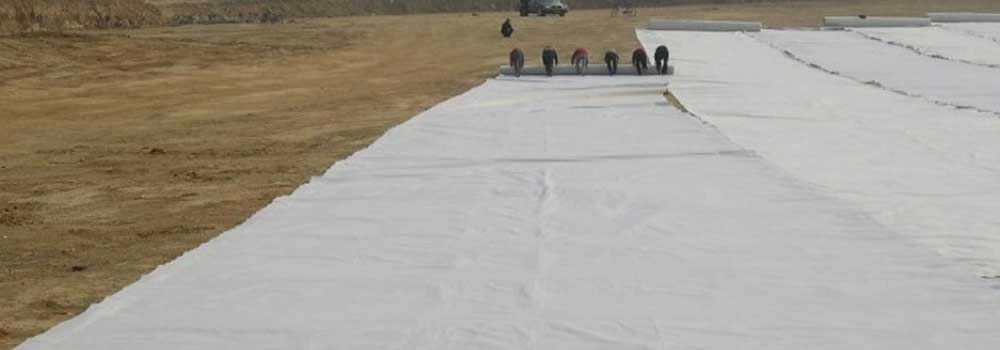
Known as a high-tensile-strength geosynthetic material, this product can reinforce subgrade, especially where soft soil is encountered. When fill is placed over the geotextile, the load can be distributed more evenly across the subgrade, helping to prevent subgrade settlement.

B. Separation
This product can also serve as a separator between the subgrade and the fill, preventing the fill material from mixing with the subgrade.


Non-Woven Geotextile
Non-woven geotextile is manufactured through a mechanical process involving heat and advanced machinery. Its base materials are PET and PP. Non-woven geotextile has the following properties:
1. High Permeability
2. Good Puncture Resistance
Non-Woven Geotextile Functions:
Filtration
Its high permeability allows this geotextile to form part of a drainage system that conveys water without carrying soil particles with it.
This material is often used to wrap perforated drainage pipes so that soil does not enter the pipe.


Separation
Non-woven geotextile also serves a separation function. However, this geotextile is not primarily intended to reinforce soft soil. Non-woven geotextile is usually used as a separator where the subgrade is in reasonably good condition.


Geomembrane Protection Layer
With its good puncture resistance, geotextile is often used as a protective layer for waterproof material (geomembrane), shielding the geomembrane from sharp objects that could damage it.

Other Articles
Buy Geotextile at the Best and Most Affordable Price
Buy geotextile at the best and most affordable price from us, a complete and professional distributor and supplier of geosynthetic materials. We sell every kind of geosynthetics you need, such as Geotextile, Geogrid, Geomembrane, Geobag, Geocell and more. For further information, please contact us. Geotextile In geotechnical engineering, geotextile is one of the most frequently […]