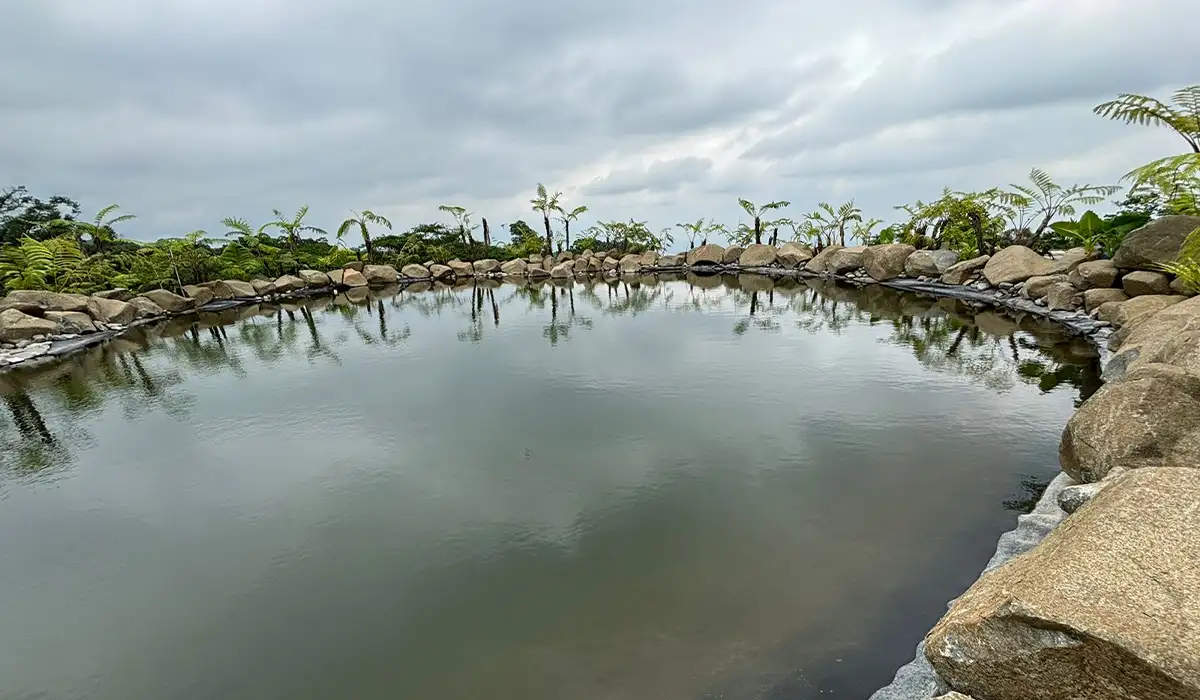
1mm Circular Pond Geomembrane in Pasuruan & Sumbawa

Project Background
Intensive fish and shrimp farming today is under heavy pressure to produce maximum harvest biomass on limited land. To meet this challenge, the circular pond system lined with a circular pond geomembrane has become a favorite among modern farmers. The round design allows the hydrodynamics, or water circulation, to work far better than in traditional square ponds.
However, there are major challenges in the field, especially in areas with soil characteristics like those in Pasuruan and Sumbawa. If a pond relies only on an excavated soil base or ordinary concrete, the risks are very high. Pond water can easily seep away into the ground, a concrete base can crack in extreme weather, and most dangerous of all, pathogens or toxins from waste that settles and soaks into the soil pores can trigger mass mortality among the farmed stock. That is why a truly tough waterproof liner is needed.
Why Choose 1mm HDPE Geomembrane?
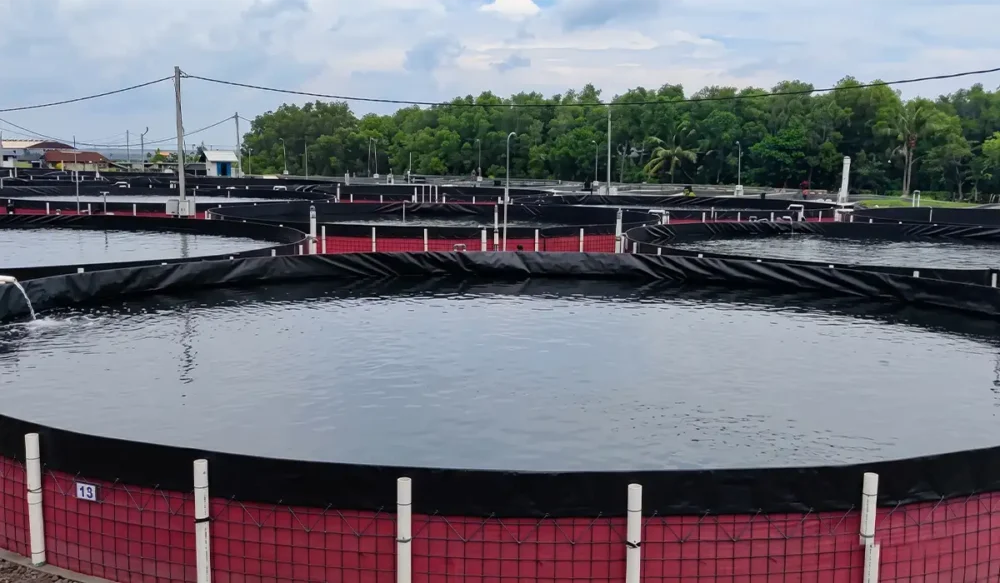
As the solution to this problem, the projects in Pasuruan and Sumbawa used HDPE (High-Density Polyethylene) Geomembrane with a thickness of 1mm.
Why specifically 1mm? This thickness is the sweet spot for medium to large intensive aquaculture ponds. The material has very high tensile strength and puncture resistance to carry the load of a large volume of water. Despite its strength, 1mm still offers enough flexibility to be shaped, folded and welded to follow the curved contour of a circular pond without stress cracking. What’s more, virgin HDPE has excellent resistance to UV exposure and a wide range of chemicals, making it a very safe long-term infrastructure investment for a sustainable farming ecosystem.
Circular Pond Geomembrane Performance and Technical Advantages in the Field
After the 1mm Geomembrane was precisely installed in the circular pond units in Pasuruan and Sumbawa, technical evaluation showed a massive improvement in operational performance. Here are the functions and technical advantages achieved by this project:
- Efficient, Leak-Free Water Management
Installing the geomembrane liner completely stopped water infiltration into the ground. Its primary function was felt immediately in keeping the pond water volume stable. With the risk of seepage eliminated, farmers can automatically reduce the need for top-up water from wells or the sea drastically. This directly helps secure the supply and improves water-use efficiency throughout the grow-out period until harvest. - Total Isolation from Subgrade Characteristics
The geomembrane liner acts as an impermeable physical shield. The material absolutely reduces the entry of mud, soil particles and contaminants from the subgrade into the clean water column of the pond. With no reactive soil particles dissolving into the water, this application consistently helps keep water quality parameters such as turbidity, pH and mineral content more stable. Overall, the lining system successfully creates a more controlled farming environment with fewer stress triggers for the farmed organisms. - High-Level Biosecurity
The soil base of traditional ponds often turns into an ideal breeding ground for anaerobic bacteria. Non-porous geomembrane breaks this biological cycle and effectively reduces the build-up of bacteria, parasites and pathogenic organisms originating from the soil. - An Optimized Central Drain System
Combining the physical design of a circular pond with the smooth surface of HDPE geomembrane makes the centrifugal movement of the water (the whirlpool effect) work perfectly. The impact is significant: leftover feed and waste collect more easily at the discharge point (central drain) in the middle of the pond bottom. The resulting self-cleaning system makes aquaculture waste management more effective, while preventing dead zones that can lead to a build-up of toxic ammonia gas on the pond bottom. - Faster Harvest Turnover and Lower Operating Costs
Because thick sludge no longer sticks firmly to the bottom surface, draining and washing the pond is faster during the pond preparation phase. The waiting time between farming cycles becomes shorter. Ultimately, this chain of technical efficiencies and operational ease leads to lower maintenance costs and has been proven to increase aquaculture productivity for farmers overall.
Conclusion
Given the operational success of these circular pond projects in Pasuruan and Sumbawa, 1mm HDPE Geomembrane has proven to be not just an ordinary “base liner”, but vital infrastructure that plays a decisive role in a successful harvest. If you are planning to build or upgrade your own intensive pond facilities, an upfront investment in high-quality geomembrane is a strategic, protective step that will save you a great deal in operating and maintenance costs in the future.