The Right Strategies for Shrimp Pond Farming
Over the past few decades, shrimp ponds have become one of the most promising fishery businesses in Indonesia. With market demand rising both domestically and internationally, good and proper shrimp pond farming management is needed so the business can survive and grow.
Shrimp ponds are one of the most promising livelihoods in Indonesia. With the right management, farmers can increase productivity while protecting the surrounding ecosystem. Here is a complete guide to help you understand how to get the most out of a shrimp pond business.
Good Shrimp Pond Farming System Management
Starting and running a shrimp pond efficiently is the key to maximum results and a sustainable business. The farming system must be designed to provide an optimal environment for the shrimp and minimize the risk of losses from external and internal factors.
It is important for farmers to understand farming concepts that are environmentally friendly and can raise productivity quickly.
Choosing a Strategic Pond Location
The pond location is the main factor affecting the success of a shrimp farming business. Before building a pond, you need to survey and analyze the geography, soil conditions, water depth, and access to a sufficient, clean water supply.
A strategic location should be easy to reach, have good access to distribution routes, and provide an environment that supports shrimp growth. Just as important, the location should have environmental potential that supports the ecosystem so the business can run long term without harming the surroundings.
Optimal Water Management and Circulation Techniques
Water is the main factor in successful shrimp farming. Poor water quality can stress the shrimp, slow their growth, and even cause mass mortality. Good water management is therefore essential.
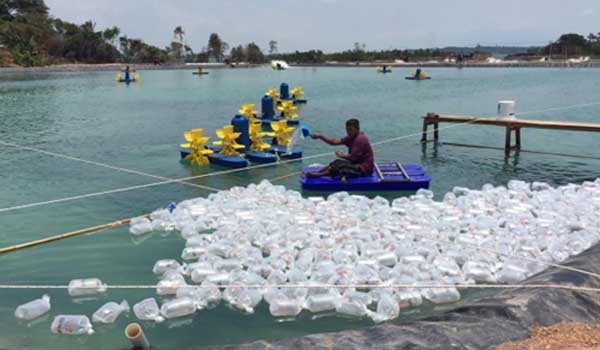
Modern water circulation technologies such as aeration and filtration systems help keep water quality stable and suited to the shrimp. Environmental management, including control of pH, dissolved oxygen, and water temperature, must also be carried out regularly. With an efficient water management system, the risk of disease drops significantly and shrimp grow better.
Using Technology and Monitoring Systems
As technology develops, a range of digital monitoring tools is now available to track pond conditions in real time. This technology helps farmers make the right decisions quickly when adjusting pond conditions.
Water quality sensors and automation systems provide accurate data on critical parameters such as temperature, pH, and dissolved oxygen. With this data, farmers can take preventive action to keep conditions stable, which raises production and lowers operating costs.
Product Marketing Strategy

Besides farming techniques, farmers also need to pay attention to marketing strategy. The shrimp market today is highly competitive, so marketing needs innovation, such as using digital media, negotiating long-term contracts, and building good relationships with buyers.
In addition, offering different products such as fresh shrimp, frozen shrimp, and other processed products can open up wider market opportunities. With this strategy, a shrimp pond business can not only survive but grow in any market situation.
Modern and Eco-Friendly Shrimp Farming Techniques

Modern shrimp farming demands innovation in methods and technology to maximize results while staying environmentally friendly. Business success depends on how well farmers can apply effective systems without damaging the surrounding ecosystem.
In shrimp pond management, the latest technology can improve efficiency and production. By applying biosecurity systems, minimizing chemical use, and adopting ecotechnology principles, farmers can keep farming running and produce high-quality products.
Polyculture and Monoculture Systems
One consideration in farming technique is whether to choose a polyculture or monoculture system. Polyculture, the farming of several species together, is quite popular because it increases ecosystem diversity and reduces the risk of losses from specific diseases.
Monoculture, meanwhile, is easier to control but carries a high risk of mass disease outbreaks that can wipe out an entire crop. For the sake of business success, many farmers are now switching to mixed systems that integrate shrimp, fish, and aquatic plants.
Applying Biofloc Technology and Recirculating Aquaculture Systems (RAS)
Biofloc technology is a recent innovation in shrimp farming that allows waste to be managed naturally and efficiently. By using microorganisms that break down organic waste into useful material, this technology increases productivity without harmful chemicals.
In addition, Recirculating Aquaculture System (RAS) technology controls water quality tightly and reduces dependence on natural water sources. This system suits areas with limited water availability and offers strong protection against environmental pollution.
Using Quality Feed to Increase Production

Feed is an important factor in successful shrimp farming. Quality feed has a strong influence on shrimp growth and health. The right feeding technique minimizes waste and improves feed efficiency.
In addition, feed innovations such as probiotic-based formulations and complete nutrition help speed up shrimp growth and reduce feeding frequency, which can significantly lower operating costs. With this strategy, harvests can increase by 20-30% compared with conventional methods.
Feed Quality Management and Size Grading
Feed management must be careful and responsible. Feeding must match the age and needs of the shrimp and follow feed quality standards for an optimal harvest. Feeding techniques must also take timing and distribution into account to avoid waste and water pollution.
Farmers should also adjust to shrimp categories based on size and age so harvesting is efficient and produces the best quality. Proper feed management lowers mortality and improves overall production efficiency.
Protecting Ponds Against Leaks and Maintaining Water Quality

The choice of pond lining has a big influence on the success of an aquaculture business. Using geomembrane as the pond lining or base layer offers many advantages that conventional options such as earth or concrete cannot match. These key advantages relate to chemical resistance, the ability to prevent seepage, and cost efficiency.
Beyond practicality, using geomembrane also has positive implications for environmental sustainability. With this liner, water pollution from pond waste can be minimized, reducing the risk to the surrounding ecosystem. For farmers, this means a much lower risk of financial losses from environmental damage.
One of the main benefits of geomembrane is its ability to prevent water from leaking out of the pond during the shrimp farming cycle. This is very important for keeping water quality stable and avoiding a loss of water volume that could affect shrimp health and harvests.
Geomembrane is made from synthetic materials such as HDPE (High-Density Polyethylene), which is highly resistant to mechanical stress and chemicals. With this liner, the pond is more stable and does not get damaged easily, even under friction or heavy loads.
What’s more, when choosing a geomembrane, resistance to UV rays, extreme temperatures, and chemical pollutants should be a top priority. The environment around a pond is not always stable and may experience drastic temperature changes or long periods of direct sunlight.
So choose a geomembrane with UV protection and resistance to chemicals such as salt, pesticides, and organic waste. This ensures the liner stays strong and does not deteriorate quickly, so the pond remains safe to use for longer.
Make sure you use high-quality geomembrane products from Petra Nusa Elshada so your shrimp pond construction delivers good results. Petra Nusa Elshada offers a wide range of high-quality geosynthetic materials at competitive prices. Contact Petra Nusa Elshada today for consultation and orders.
Besides the material, the installation process also affects the durability of the geomembrane. A correct and professional installation delivers optimal results and avoids the risk of damage during operation.
FAQ About Shrimp Pond Farming
What are the main factors affecting shrimp pond production?
The main factors include water quality, feed, management systems, and the surrounding environment. Stable water quality, quality feed, disciplined management, and a pollution-free environment are the keys to success.
How do you maintain water quality in a shrimp pond?
Water quality can be managed through optimal water circulation, adequate aeration, and automated measurement technology. Regular cleaning, pH control, and waste management are also very important to keep water quality stable.
What are the benefits of biofloc and RAS technology in shrimp farming?
Biofloc and RAS technology improve production efficiency by reducing waste and dependence on natural water sources. Natural waste treatment and an optimized environment make results more consistent and sustainable.
What marketing strategies keep shrimp pond products competitive?
Using digital media, expanding distribution networks, building a quality brand, and offering product innovations such as processed shrimp can help market harvests more widely and competitively in national and international markets.
What are the main challenges in shrimp pond management today?
The main challenges include climate change, disease outbreaks, and environmental pollution. Fluctuating market prices and rising production costs are also major obstacles that must be addressed in innovative and sustainable ways.
Conclusion
Managing shrimp ponds effectively is the key to success in this farming business. A combination of a strategic location, strict water quality management, technological innovation, and the right marketing strategy will help shrimp farmers increase productivity. By following technology trends and applying biosecurity systems, farmers can minimize risks, increase yields, and protect the surrounding environment.
Success in shrimp pond farming depends not only on technical factors, but also on the farmer’s ability to adapt, innovate, and think long term. That is why continuous learning and innovation are the best steps toward maximum success in shrimp farming.
Other Articles

What Is Cocomesh? Benefits, Definition and Uses
A Complete Guide to This Remarkable Natural Material Cocomesh, also known as “coconut netting,” is a natural material that is increasingly popular in many industries. Made from carefully processed coconut fiber, cocomesh is strong and environmentally friendly. In this article, we provide a complete guide to cocomesh benefits and uses, including its definition and how […]