


HDPE vs PVC Geomembrane: Which Liner Is Best for Mining?

Hello, Petra friends and mining industry professionals! If you are handling a large-scale project, you are surely familiar with geomembrane. This lining material is key to maintaining environmental safety around mine operations.
However, two types of geomembrane on the market often confuse engineers and project managers: HDPE (High-Density Polyethylene) and PVC (Polyvinyl Chloride). So if you are looking for the best mining liner material for your project at Petra Nusa Elshada, this article thoroughly compares HDPE vs PVC geomembrane. Let’s take a closer look!
Why Is Geomembrane Important in Mining?
Before getting into the comparison, we first need to know why this material is a must. In mining, geomembrane serves as an absolute watertight barrier.
In mining areas, geomembrane is usually installed on heap leach pads (where piles of ore are leached), tailings dams and waste evaporation ponds. In gold or copper mining, for example, hazardous chemicals are used to separate valuable minerals from rock.
The geomembrane’s purpose is crucial: preventing toxic chemicals or residual mine liquids from seeping in and polluting the surrounding groundwater. If a leak occurs, the impact not only damages natural ecosystems; the mining company can also face severe legal sanctions and massive financial losses.
Getting to Know HDPE and PVC Geomembrane
Although both serve the same function as watertight liners to prevent leaks, HDPE and PVC have very different basic characteristics and material compositions.
What Is HDPE Geomembrane?
HDPE is made from high-density polyethylene polymer. Its main characteristic is a stiff, dense and very tough structure. It has become the gold standard, or the most popular option, in many heavy industrial sectors thanks to its exceptionally long service life (up to 50 years) and its ability to withstand highly reactive chemicals.
What Is PVC Geomembrane?
PVC, on the other hand, is made from polyvinyl chloride with added plasticizer to make it softer. As a result, the material is very pliable, flexible and easily follows uneven ground contours. PVC geomembrane is often used on projects that require high adaptability to complex site shapes.
HDPE vs PVC Comparison in Mining
To see the differences between HDPE and PVC clearly, let’s examine the important aspects you must consider for a mining project one by one.
1. Strength and Puncture Resistance
In mining areas, sharp rocks, abrasion from heavy equipment and loads of many tons are an everyday reality. The advantage of HDPE in mining lies in its very high tensile strength and puncture resistance. Its tightly packed molecular structure allows HDPE to withstand extreme loads from mine material without tearing.
By contrast, PVC tends to be weaker when it must bear very heavy mechanical loads. If the soil substrate is rough and full of sharp gravel, PVC has a higher risk of tearing from punctures, so it often needs an additional protective layer such as geotextile.
2. Material Flexibility
When it comes to pliability, PVC is the winner. Because it is very flexible, PVC is easier to install in areas with many sharp bends, shifting ground or tight spaces. HDPE tends to be stiff. If your mine site has many dead corners or a very uneven ground surface, HDPE installation requires more precise handling to avoid stress cracking.
3. Chemical and UV Resistance
This factor is vital. Mine tailings water often contains strong acids, alkalis and heavy metals. HDPE is the reigning champion of resistance to aggressive chemicals (chemical resistance). In addition, HDPE withstands direct sunlight (UV) exposure for a very long time without losing quality.
Meanwhile, PVC has lower chemical resistance. The plasticizer in PVC can also evaporate over time when continuously exposed to heat and UV rays. This causes the PVC liner to shrink and become brittle later on.
4. Installation Process
Because HDPE is physically stiff, its welding process requires sophisticated special equipment (such as a hot wedge welder) and certified technicians so the seams are perfectly watertight. The process demands specialized skills, but the result is very solid. PVC sheets, on the other hand, are easier and faster to join, can adapt to ambient temperatures and are friendlier for field workers.
Which One Suits Your Project?
To make the decision easier, take a look at the following quick comparison table:
Conclusion: Choose According to Your Needs
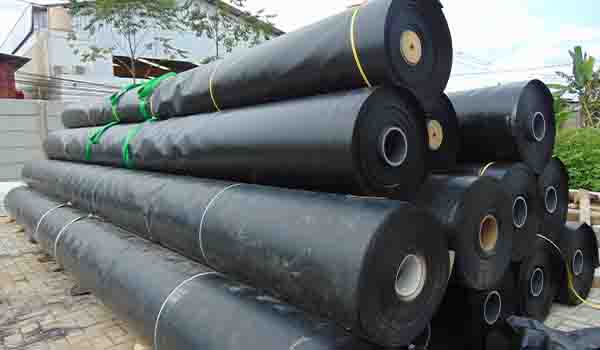
Broadly speaking, for open-pit mining projects exposed to toxic chemicals and extreme weather, HDPE is the best and safest choice. It ensures your project area stays protected from leak risks for decades. However, if you are lining an enclosed site with very extreme ground undulations, PVC can be a practical alternative.
If you are still unsure which to choose or are looking for a supply of top-quality geomembrane , our specialist team is ready to help with your project.
Would you like us to calculate an estimate of the geomembrane rolls needed for your mine site today?
Need a Consultation for Your Project?
Feel free to consult the Petra Nusa Elshada team. We supply a wide range of high-quality geosynthetics ready to ship throughout Indonesia. Let’s discuss your project needs now!
Check our catalog: Click here
Chat on WhatsApp Now: Click here
Remember Geosynthetics, Remember Petra!
Other Articles

Geosynthetics in Oil and Gas Areas
The oil and gas sector operates many different kinds of areas, such as exploitation, drilling, storage and treatment areas. These areas can produce high levels of contamination that require special treatment and protection, to prevent contamination (pollution) that could affect the soil and water. Geosynthetics for oil and gas are the right solution to this […]

Non-Woven Geotextile Sizes, Functions and Advantages
In modern construction, non woven geotextile has proven itself to be a unique and versatile material. There is a range of non-woven geotextile sizes, and each size affects its performance and the end result. Understanding this material is one of the keys to a successful project that uses geotextile. That is why, besides sizes, you […]
