


Coastal Erosion and Indonesia’s Shoreline Sustainability

Coastal erosion is one of the main challenges threatening the sustainability of Indonesia’s shorelines. It gradually removes coastal land, damages coastal ecosystems, and threatens communities that depend on those natural resources. This article examines coastal erosion in depth, including its causes, impacts, and solutions for reducing its negative effects while preserving the beauty and functions of coastal ecosystems.
What Is Coastal Erosion, and Why Is It Increasingly Concerning?

Causes, impacts, and solutions for sustainable Indonesian shorelines
Coastal erosion refers to natural or human-driven processes that remove land along a shoreline. If not addressed seriously, it can cause major damage to coastal areas and the lives of nearby communities. In Indonesia, coastal erosion is becoming an increasingly evident and complex problem that demands attention from scientists, government, and the public.
Coastal erosion occurs through interactions among waves, ocean currents, wind, and intrinsic factors such as soil characteristics and unsustainable land use. The dynamic nature of shorelines, unlike relatively fixed inland boundaries, makes this phenomenon interesting to observe but difficult to manage and control.
When erosion continues without adequate control, it not only reduces the area of coastal land but also damages natural habitats such as mangroves, which provide important protection against waves and erosion. A thorough understanding of coastal erosion and its causes is therefore the first step toward mitigation and adaptation.
Coastal-Erosion Causes That Require Attention

Causes, impacts, and solutions for sustainable Indonesian shorelines
To understand how and why coastal erosion is worsening, we must recognize its main drivers. These can be categorized as natural and human factors, which interact and accelerate erosion.
Natural Factors That Cause Coastal Erosion
Natural forces are the fundamental causes of coastal erosion. Waves and ocean currents provide the main energy that gradually erodes coastal land. Dynamic geomorphological processes, including natural sedimentation and erosion, also contribute to periodic shoreline change.
Large waves during monsoon seasons or storms accelerate coastal land loss. Global climatic phenomena such as climate change also increase the frequency and strength of storms, directly intensifying erosion. In Indonesia’s wet tropical climate, these conditions often worsen shoreline damage.
Human Factors That Accelerate Coastal Erosion
Human activities also accelerate erosion. Unplanned coastal urbanization leads to development in vulnerable areas and removes protective vegetation such as mangroves and seagrass. Carelessly placed shoreline buildings disrupt natural coastal processes and cause unbalanced shoreline hardening.
Activities such as reclamation, sand mining, and overfishing also weaken coastal ecosystems that should provide natural protection from erosion. Their combined effects make shorelines more vulnerable and threaten the sustainability of ecosystems and coastal communities.
Effects of Interacting Natural and Human Factors
Natural and human factors often interact to cause higher erosion rates. For example, tourism facilities and infrastructure built along coasts without considering their effects on sedimentation and natural vegetation will worsen shoreline damage during large waves. Sustainable management is needed so the combined effects of natural processes and human activity do not make conditions worse.
Overall, none of the causes of coastal erosion can be ignored because they reinforce one another. Mitigation must carefully integrate both aspects so solutions remain effective over the long term.
Environmental, Economic, and Social Impacts of Coastal Erosion

Causes, impacts, and solutions for sustainable Indonesian shorelines
Coastal erosion has serious environmental and socioeconomic effects. Understanding these impacts is important for initiating strategic coastal-management measures.
Environmental Impacts
A principal environmental impact of erosion is the loss of natural habitats such as mangroves and seagrass beds, which protect against waves and improve water quality. Losing this vegetation makes coastal ecosystems vulnerable to further damage and reduces biodiversity.
Coastal erosion also changes land use in coastal areas. Unavoidable displacement can create new settlements in less safe or unsuitable locations. Rivers and lakes near the coast may also become shallower because of uncontrolled sedimentation, worsening floods and obstructing water flows.
Economic and Social Impacts
Coastal erosion directly damages economic sectors that depend on the coast, including fisheries and tourism. Many fishing communities lose livelihoods because their homes and essential infrastructure are damaged. Tourism investment is also threatened as once beautiful, clean beaches become barren and lose their appeal.
Conserving and reconstructing damaged shorelines also requires large budgets, creating economic burdens for governments and communities. Without serious intervention, erosion may continue, worsen social inequality, and increase coastal displacement.
Mitigation and Adaptation Solutions
Addressing these wide-ranging impacts requires integrating strategic solutions, from conserving natural ecosystems and building coastal-protection infrastructure to establishing sustainable land-use controls.
Coastal-erosion impacts must be understood holistically so policies can protect shorelines and preserve the ecosystems supporting community life. Proper measures will help ensure a better, more sustainable future.
Sustainable Coastal-Erosion Prevention and Management
Addressing coastal erosion requires an integrated, sustainable approach rather than partial measures. Government policy, community participation, and technological development must work together to protect shorelines from the growing threat of erosion.
Conserving Coastal and Marine Ecosystems
One of the main ways to control erosion is strengthening and preserving natural ecosystems, especially mangroves and seagrass beds. Mangroves serve as natural wave barriers and absorb wave energy, reducing the force that reaches land.
Conservation must involve local communities so they develop ownership of and responsibility for these ecosystems. Restoration designs focused on soft shorelines and protection of coastal vegetation can provide effective, environmentally friendly solutions.
Coastal-Erosion Control Technology and Infrastructure
Innovative technologies such as breakwaters, groins, and seawalls can reduce erosion rates in the most vulnerable areas. However, they must be used carefully to avoid disrupting natural processes and worsening erosion elsewhere.
Infrastructure based on nature-based solutions can also be more sustainable and efficient. Careful planning, including sediment management and regular monitoring, is key to successful erosion control.
Policy and the Community’s Role
Strict spatial-planning policies and oversight of coastal activities are essential. Governments must enforce regulations governing reclamation, mining, and environmentally harmful development.
Local communities should be involved in coastal management through education, conservation training, and economic empowerment based on sustainable natural resources. Their active participation strengthens effective, long-term shoreline management and conservation.
Using Geobag Materials
Using geobags for erosion control is an innovative, effective solution for threats to beaches and coastal areas. The technology strengthens shoreline structures and extends the life of coastal areas exposed to natural and human pressures. Geobags are increasingly popular for erosion control because they offer ecological and economic advantages and are easy to implement in various coastal settings.

Geobags as a sustainable coastal-erosion solution
Implementing this technology provides a long-term, sustainable solution that preserves beaches without significantly disrupting their ecosystems. This article covers geobag erosion control, including its definition, benefits, installation methods, and an analysis of its effects on the environment and nearby communities. Its main objective is to provide insight into the importance of this innovation for managing erosion-prone Indonesian coasts.
Definition and Function of Geobags
A geobag is a synthetic geotextile bag filled with material such as sand, gravel, or rock. Its flexible form allows varied placement according to site requirements. The technology was first used in infrastructure-construction projects and later developed into an environmental-conservation solution.
Simply put, a geobag functions as a barrier and soil stabilizer in eroding coastal areas. Its permeable material allows water to flow without causing excessive pressure buildup beneath it. A primary advantage is the geobag’s ability to adapt to environmental conditions and withstand damage from natural forces and aging.
The Role of Geobags in Coastal-Erosion Control
Using geobags for coastal erosion helps accelerate the rehabilitation of damaged coastal areas. Strategically placed geobags reduce wave energy and redirect currents so they do not strike the shoreline continuously.
Besides strengthening the shoreline, geobags can form a natural retaining structure that resists wave pressure and abrasion. Their relatively simple installation and moderate cost make them a preferred option for managing erosion-prone coastal areas. This approach considers both function and ecology, supporting coastal-ecosystem sustainability.
Benefits and Advantages of Geobags for Coastal Erosion

Geobags as a sustainable coastal-erosion solution
Using geobags to address erosion offers substantial benefits. A primary consideration is their ability to reduce environmental damage while improving coastal stability. The technology addresses not only technical factors but also economic and ecological considerations.
Economic Advantages and Time Efficiency
A factor driving the use of geobags for coastal erosion is their lower installation cost compared with conventional coastal-engineering methods such as breakwaters or concrete walls. Geobags can be mass-produced and filled on site, reducing expensive construction-material requirements and lengthy installation processes.
Installation is also relatively fast and can be performed by local workers with minimal training. This makes the solution well suited to areas needing immediate intervention within a limited period. Its time and cost efficiencies are important for coastal communities that cannot afford major projects.
Ecological and Environmental Benefits
Unlike concrete walls that can interrupt ecological pathways, geobags can support natural coastal habitats. Their permeable geosynthetic fabric provides space for plants and other organisms to develop.
Geobags can also help preserve coastal biodiversity without unduly disrupting natural sediment processes and seawater flows. This positive effect is important for maintaining balance in ecosystems that are highly sensitive to external disturbance. Geobags for coastal erosion therefore provide a solution that is both effective and ecologically sustainable.
Longer Shoreline Life and Environmental Stability
Beyond economic and ecological benefits, a key advantage of geobags is extending the life of shorelines vulnerable to erosion. By reinforcing the coast and absorbing wave energy, geobags help slow erosion.
Their effect on long-term coastal stability is significant. Areas once vulnerable to wave damage can become more stable and better able to withstand climate change and other natural dynamics. This directly benefits nearby communities that depend on coastal areas for their livelihoods.
Geobag Installation Methods in Coastal-Erosion Areas
Implementing geobags for coastal erosion requires careful planning and methods suited to site conditions. Geobags must be installed structurally and systematically for optimal, durable results.
Site Preparation and Analysis of Natural Conditions
Before installation, the physical conditions of the coastal rehabilitation area must be analyzed comprehensively. This includes studying wave patterns, currents, water depth, and sedimentation at the site.
This information is essential for determining geobag design and layout. Bag dimensions, shape, and placement depend heavily on site data. This scientific approach ensures the solution is effective and durable despite dynamic, challenging coastal conditions.
Installation Techniques and Placement Strategies
After analysis, geobags are installed according to the completed design. They are usually arranged in tiers or parallel lines depending on site conditions and the project’s primary purpose. Placement must dissipate wave energy so it does not strike the shoreline directly.
Installation also includes filling the area behind the geobags to create a strong, stable protective wall. This is performed carefully while considering sediment balance and the area’s natural contours. The approach reinforces the structure and accelerates rehabilitation of the eroded area.
Routine Maintenance and Evaluation
Installation does not mark the end of the work. Routine supervision and maintenance are needed to ensure geobag stability and effectiveness. Factors to monitor include damage from large waves, positional shifts, and sediment deposition around the geobags.
Regular evaluation helps identify areas requiring adjustment or repair. This approach sustains shoreline protection and reduces the risk of structural failure that could worsen erosion later.
FAQs About Coastal Erosion
What is coastal erosion, and how does it occur?
Coastal erosion is the loss of land along a shoreline caused by waves, currents, and other factors. It occurs naturally but is often worsened by unsustainable human activity.
What are the main factors increasing coastal erosion?
The main factors include wave energy, ocean currents, climate change, and human activities such as reclamation and environmentally harmful coastal development.
How does coastal erosion affect the environment?
Its effects include damage to natural habitats such as mangroves and seagrass, changes in land use, increased flood risk, and coastal biodiversity loss.
What are the best solutions for coastal erosion?
Solutions include integrating natural-ecosystem conservation, protective infrastructure, sustainable spatial-planning policies, and community participation.
Should coastal communities participate?
Yes. Communities should participate actively through education, ecosystem conservation, and support for conservation policies to make shoreline protection more effective and sustainable.
Conclusion
Addressing coastal erosion requires major measures balanced by innovation, education, and management involving all stakeholders. When every party works together, the sustainability of Indonesia’s shorelines and ecosystems will be better protected in the future.
This concludes the explanation of coastal erosion. Make sure you use only high-quality geobags from Petra Nusa Elshada so your erosion-control system lasts and achieves the best quality.
Petra Nusa Elshada offers a range of high-quality coastal-erosion prevention materials at affordable prices. Contact Petra Nusa Elshada today for consultation and orders.
Other Articles
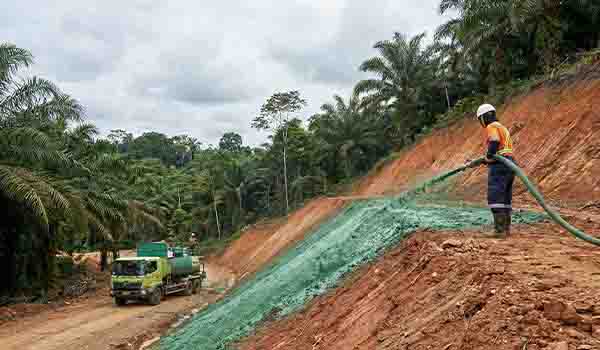
What Is Hydroseeding? A Fast Green Fix for Erosion
Hello, Petra friends! Have you ever seen a hillside or highway embankment that was once barren suddenly turn into a neat carpet of green grass in a short time? Most likely, that wasn’t the result of planting grass one by one or manually laying sod (turf). It was the result of a technology called Hydroseeding. […]


Geomembrane Price and Why Quality Matters
Geomembrane is a waterproof liner made from HDPE. The material contains carbon black and UV stabilisers so it withstands all weather conditions and a wide range of chemicals. HDPE is also one of the strongest plastics, able to withstand temperatures of 120 degrees Celsius. Before comparing geomembrane price, it helps to understand what drives quality. […]