


Drainage Cell: Definition, Functions and Benefits

A drainage system is very important in any building, and a drainage cell is commonly used to meet a building’s drainage needs. This material is easy to install and economical compared with other methods. A drainage cell is different from a geocell. Here is the full explanation.
What Is a Drainage Cell?
A drainage cell is a geosynthetic material in the form of lightweight panel blocks that can easily be assembled by interlocking. Installation is simple: the panels can be laid vertically or horizontally. The material is made of recycled polypropylene (PP) plastic and has fairly high compressive strength.

This material can be used to drain water so it does not pool, or as an underground water storage medium. A drainage cell is elastic yet strong, with large openings that let water flow from top to bottom.
Its effectiveness in drainage projects means it is used in civil engineering structures, sports fields, basements, tunnels and roof gardens. Because they are strong despite being lightweight, these panels can bear the loads of the soil and anything placed on top.
Benefits of Drainage Cells
In practice, drainage is needed to prevent hydrostatic pressure from building up on structures or civil engineering works, which can cause structural overloading, dampness and leaks.
While geocell is usually used to prevent erosion, the drainage cell is widely used in landscaping and roof gardens to maintain soil moisture. In a roof garden, it provides a flow path so water drains quickly and plant roots do not rot in standing water.

A drainage system is considered good if it drains excess water optimally while maintaining a beneficial moisture level in the soil. If you have a roof garden or plants in a planter box, this material greatly helps plant growth. Here are some advantages of the drainage cell:
- Lightweight and easy to move during installation.
- Specifically designed for good drainage systems.
- Prevents standing water thanks to its very high lateral flow design.
- Resistant to contamination by other materials.
- Has a water reservoir in its lower section.
Drainage Cell Distributor
Petra Nusa Elshada, a distributor with the most complete range of geosynthetic and construction products, supplies top-quality, reliable drainage cells. Drainage is generally needed to prevent hydrostatic pressure on a building, and drainage cells are also suitable for civil engineering works facing structural overloading, dampness and leaks. Here are some benefits:
- Protects waterproofing layers
- Withstands all kinds of weather
- Resistant to chemicals
- Free from the risk of soil contamination
- Easy to install and use

Besides draining water so it does not pool, a drainage cell can also store water underground to keep the soil moist. Building a roof garden or a garden in your yard will certainly require a good drainage system. Contact us now and choose the drainage cell that suits your needs.
Other Articles

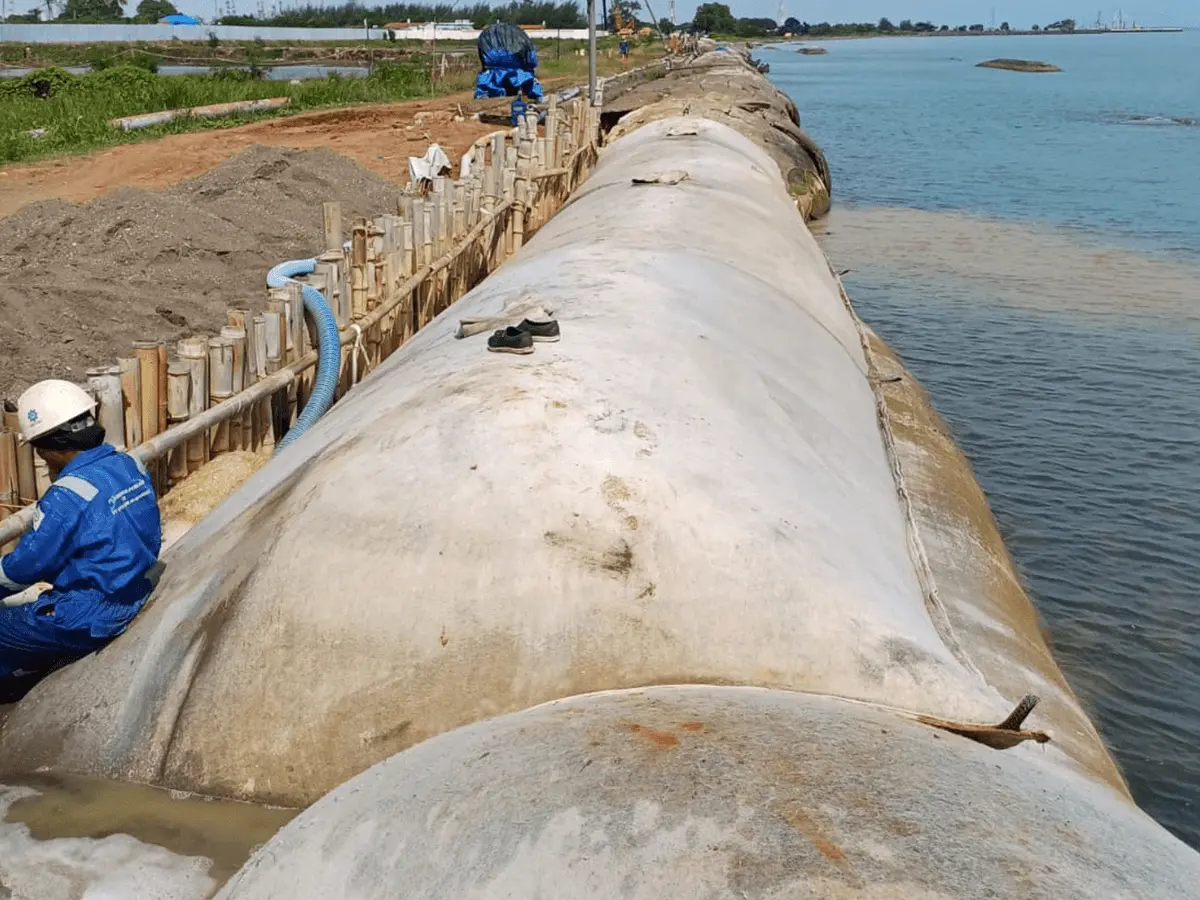
Geotube for Coastal Protection and Erosion Control
Have you ever seen a large fabric tube along the shore? That is called a geotube, and it is a proven method of geotube erosion control. In general, a geotube is a geosynthetic product made of geotextile and shaped like a large tube or cylinder. One function of a geotube is to act as an […]

Expansive Soil Treatment Methods
Expansive soil treatment is needed because expansive soil has a high potential to swell and shrink. This behavior generally results from changes in water content that alter the soil volume. Infrastructure built on expansive soil often suffers damage from ground movement. This movement occurs when changes in soil water content during the dry and rainy […]