


5 Geomembrane Benefits for Biogas Power Plants
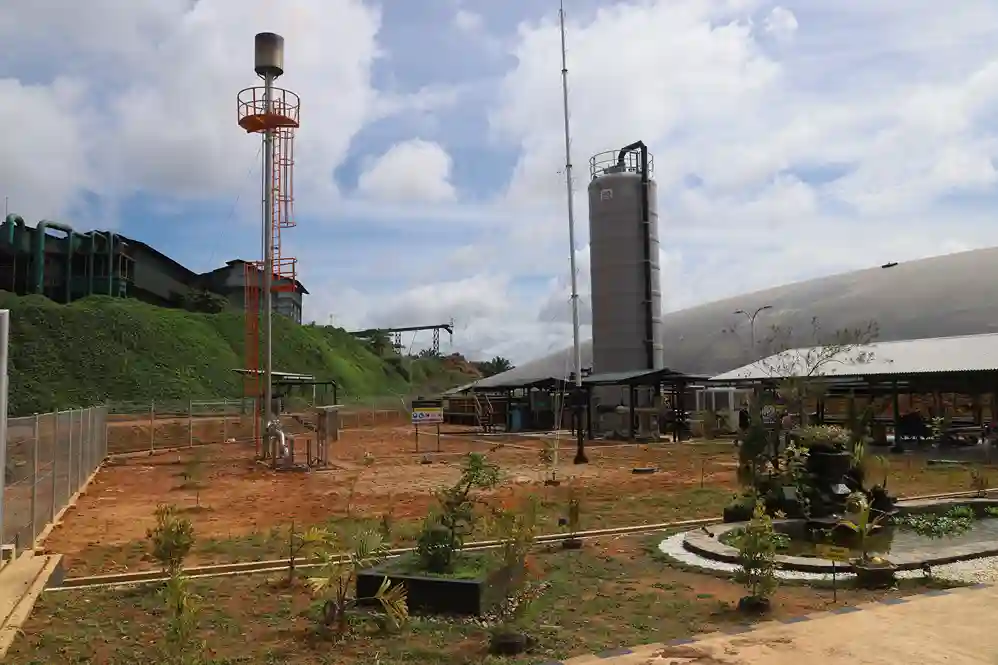
Besides airtight tanks, purification systems, agitators, mixing tanks, and electricity generators, a biogas power plant needs another important component to operate properly. This component is a geomembrane. This flexible synthetic sheet is made from HDPE or LDPE. It can therefore line liquid or solid containment areas while following their contours.
Because it is impermeable, this material is safe for contaminated substances such as waste. In other words, this polymer sheet may look simple, but it plays a major role in maintaining the stability, efficiency, and safety of the biogas production process. Without the right liner, the performance of a biogas reactor can decline, and there may even be a risk of environmental pollution.
Uses of Biogas Geomembrane for Power Plants
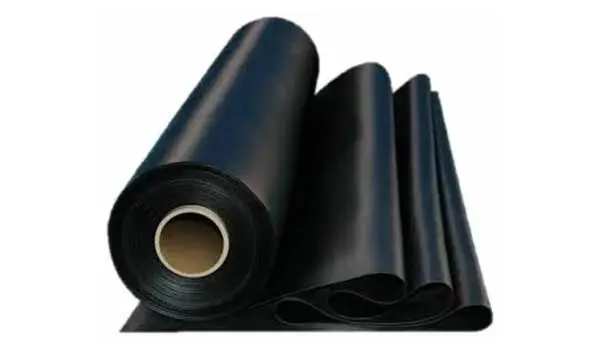
geomembrane for biogas
A biogas geomembrane provides many benefits for a power plant, with direct technical, environmental, and economic effects. Examples include:
Preventing unpleasant odors
One of the main challenges in organic waste processing is odor. As waste accumulates and decomposes, gases such as hydrogen sulfide form and release unpleasant odors. A geomembrane acts as an impermeable cover that can contain these gases.
This liner creates a physical barrier so odors do not spread around the operating area. Besides improving worker comfort, this also helps maintain good relations with surrounding communities, especially if the biogas power plant is near a residential area.
Improving biogas production efficiency
Biogas production requires anaerobic conditions, meaning an oxygen-free environment. Compared with a system without a geomembrane or one with a porous cover, a biogas power plant can improve its economic efficiency because fermentation is better controlled.
This is where geomembrane works very effectively. The material has low permeability, enabling the production chamber to remain tightly sealed and free from outside air. When oxygen cannot enter the production environment inside the tank, biogas-producing microorganisms can work optimally. As a result, the volume of gas produced is much more stable and higher.
Maintaining the biogas production temperature
Besides an anaerobic environment, temperature has a major influence on biogas reactor performance. Microorganisms work best within the mesophilic temperature range (20-45 degrees Celsius) or thermophilic range (45-80 degrees Celsius). If the temperature drops too low, the activity of biogas-producing organisms slows and gas production decreases. Conversely, if heat escapes too quickly, the operator needs more energy for additional heating.
Geomembrane helps reduce these fluctuations by retaining heat inside the reactor. This impermeable liner has fairly good insulating properties, so it can limit excessive heat loss. The benefit also extends to cost efficiency. You do not need to use electric heaters as often, which can ultimately reduce the power plant’s energy consumption and costs.
Protecting water from waste contamination
Organic waste used in biogas power generation can potentially contaminate soil and water if it is not managed properly. Even a small leak can cause serious environmental problems. In a biogas power plant system, fermentation liquid and sludge must remain in a completely sealed chamber so they do not seep into the soil. How does geomembranehelp?
Simply put, the material serves as an isolation liner that prevents waste from seeping out and contaminating nearby water sources. This function is especially important in areas that rely on wells or rivers for their livelihoods.
Preventing methane release into the atmosphere
Methane is one of the most potent greenhouse gases. Its warming effect is far greater than carbon dioxide, and even small leaks can increase emissions. A biogas power plant without a high-quality geomembrane liner or cover risks losing a significant amount of methane.
By using geomembrane, operators can retain all methane gas within the system, then direct it to a generator for conversion into electricity. This delivers a double benefit: energy production is maximized, while your biogas power plant helps reduce greenhouse gas emissions.
What Type of Geomembrane Is Suitable for a Biogas Power Plant?
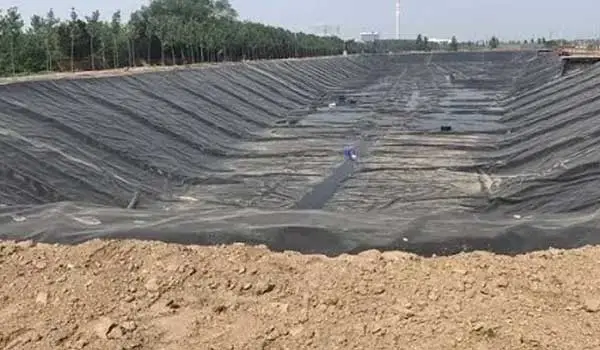
biogas pond geomembrane
How do you choose the geomembrane best suited to field conditions at a biogas power plant? First, consider the material type. Geomembrane made from HDPE (High Density Polyethylene) is most widely used because it resists chemicals, microorganisms, and sunlight exposure. HDPE is also sufficiently flexible and has a strong structure capable of withstanding gas and liquid pressure.
Second, select the appropriate thickness. The thicker the geomembrane, the better its resistance to pressure and potential tearing. For medium- to large-scale biogas power plants, geomembrane with a thickness of 1.0–2.0 mm is generally recommended. However, the exact requirement depends on the reactor design, soil conditions, and waste volume.
It is equally important to consider the flexibility and ability of the geomembrane to follow contours, particularly because biogas reactors are often round or curved. If the geomembrane is too rigid, installation becomes difficult and the risk of damage increases. An elastic, strong material makes construction easier while producing a neater result.
Finally, make sure the material resists UV exposure and weather because biogas power plants are generally located outdoors. Without protection from sunlight, geomembrane can quickly become brittle and crack.
Geomembrane Installation Tips for Biogas Power Plants
The advantages of geomembrane will not be realized if it is installed incorrectly. The installation process therefore requires precision so every seam is strong, the surface is neat, and no potential leak remains.
Before installing the geomembrane, make sure the underlying surface is level and clean. Sharp gravel, roots, or other hard objects can tear the material. Once the installation area is safe, do not pull the geomembrane too tightly. Leave some slack so it can accommodate temperature changes and ground movement. If the sheet is too taut, it will tear more easily.
At the same time, make sure every seam is sealed to prevent gas or liquid leaks that could reduce plant efficiency. As the geomembrane is installed, construct the anchor trench properly to hold the material in position so it does not shift as the digester expands.
Finally, before activating the reactor, conduct pressure tests on the seams to make sure they are airtight. This step is far more efficient in time and cost than repairing leaks after the reactor is operating.
After installation, however, you need to perform periodic maintenance: ideally, a brief inspection at the end of every shift and more thorough routine maintenance once a month. Geomembrane has high durability, but small defects can still occur and worsen if left unaddressed.
Unsure which geomembrane is right for the biogas power plant at your facility? You can choose geomembrane from Petra Nusa Elshada. Each product offers good resistance to various weather conditions, chemicals, and microorganisms. Installation is also relatively easy and can be adapted to the contours of a biogas reactor, saving construction time.
If you want to ensure that your biogas power plant operates steadily and efficiently over the long term, consult the Petra Nusa Elshada team directly and receive a recommendation for the geomembrane that best suits your operational needs. Contact us through this page!
Other Articles

Part 1: How to Determine HDPE Geomembrane Thickness
Ever since polymers were first developed as a construction material, engineers have created product variations that make work easier and can be tailored to project needs. Polyethylene was first discovered in 1933 by Fawcett and Gibson using a high-pressure technique. The high-pressure process works at temperatures above 250 degrees Celsius and pressures between 1000 and […]

What Is a Cement Geocomposite? Types and Installation
A cement geocomposite is a manufactured product with a cement-based core held within a geosynthetic layer, which hardens when hydrated. A cement geocomposite usually consists of several layers, such as a hydrophilic layer, a waterproof PVC bottom layer and a core layer containing cement with added fibers. Cement Geocomposite Composition The first, topmost layer of […]