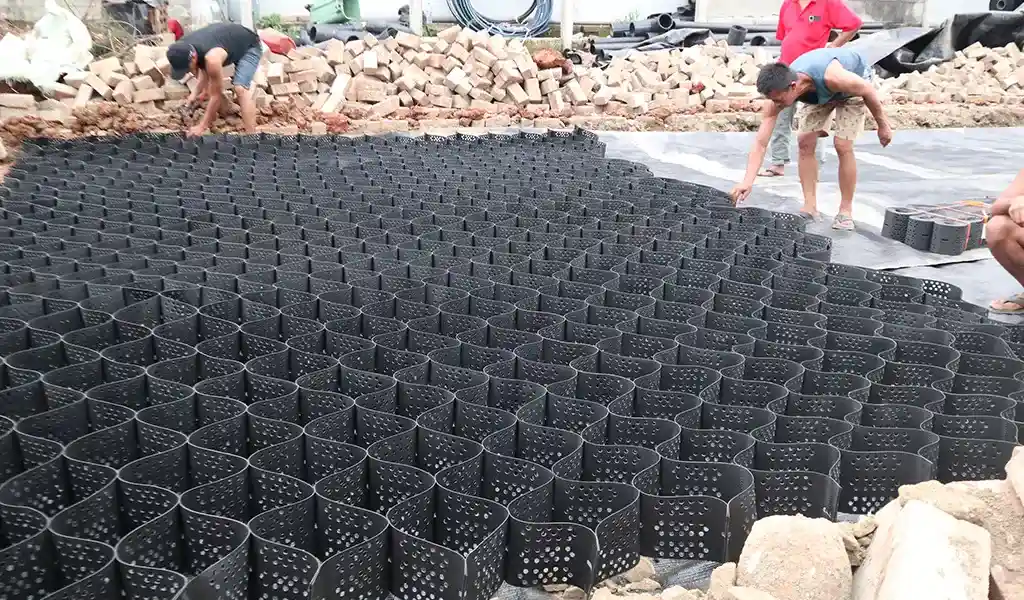
Geotextile Definition – In construction, especially work involving soil stability, water management, and erosion control, geotextile plays an important role. Geotextile is a geosynthetic material made from synthetic fibres such as polyester or polypropylene, and it serves many functions in construction projects involving soil. Geotextile is now very common in many civil engineering and infrastructure applications, including highways, embankments, and even waste management.
Geotextile comes in various forms and specifications, including non-woven geotextile, woven geotextile, and geotextile tubes, each with different applications depending on project needs. This article explains the geotextile definition, its types, and its functions in construction and infrastructure.
Geotextile Definition and Its Functions in Construction
Geotextile is a synthetic-fibre material designed for civil engineering applications. Essentially, geotextile acts as a separation, filtration, and reinforcement layer within soil structures. It can regulate water flow and reduce soil movement, making it very useful in many construction projects, from road building to erosion control on slopes and riverbanks.
Depending on its type, geotextile can be permeable or impermeable to water, according to the specific needs of the project. When installed within soil layers, geotextile can filter small soil particles so they do not enter the drainage system, or act as a barrier to prevent different soil layers from mixing.
The main advantage of geotextile is its ability to improve soil structure and increase the bearing capacity of the upper soil layer without major excavation or replacement of the soil itself. As a result, geotextile helps improve cost and time efficiency in construction.
Non-Woven Geotextile: Flexibility for Filtration and Separation
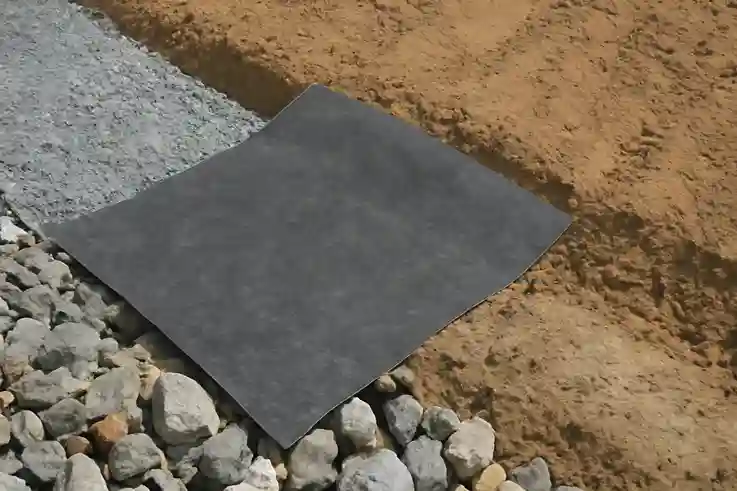
One of the most commonly used types of geotextile is non-woven geotextile. As the name suggests, non-woven geotextile is not woven like ordinary fabric; instead, its fibres are bonded mechanically or thermally. This gives non-woven geotextile a more flexible structure that can be used in many applications.
The main functions of non-woven geotextile are separation and filtration. In many drainage projects, non-woven geotextile is used to filter small soil particles that could clog water channels, keeping water flowing smoothly without disturbing the stability of the surrounding soil. Non-woven geotextile is also widely used in erosion control projects, especially on slopes and in landslide-prone areas.
In addition, non-woven geotextile has good permeability, allowing water to flow through soil layers without causing unwanted mixing of materials. Its use can reduce the need for additional drainage materials, making it an economical and efficient choice in many civil engineering applications.
Woven Geotextile: Strength for Soil Reinforcement and Protection
Unlike non-woven geotextile, woven geotextile is made from tightly woven fibres using a special technique. Woven geotextile has higher tensile strength and is usually used in applications that require high stability and load support.
Woven geotextile is ideal for projects that require soil reinforcement, such as highway, bridge, and railway construction. With its high tensile strength, woven geotextile can distribute loads from the surface to the underlying soil layers, helping prevent settlement or soil displacement under heavy loads.
Woven geotextile also provides separation and filtration, preventing different soil layers from mixing and improving the stability of the soil structure. Its key advantage is its ability to withstand high pressure, making it a very useful material for large, critical infrastructure projects.
Geotextile Tube: A Solution for Protection and Reinforcement
A geotextile tube is another form of geotextile used in coastal protection, slope stabilisation, and loose material management projects. It is made from geotextile fabric formed into a large tube, which is then filled with sand, soil, or other materials to create a reinforcing structure. Geotextile tubes are typically used for shoreline reinforcement, wave barriers, and erosion control.
The main function of a geotextile tube is to provide strong yet flexible protection in coastal areas or regions frequently exposed to waves and erosion. As part of a coastal protection project, geotextile tubes help reduce the impact of sea waves on land and infrastructure and improve the stability of slopes threatened by erosion.
Geotextile tubes are also often used in construction projects in waterlogged areas or environments exposed to chemicals or pollution. Because the material is very strong and durable, geotextile tubes are an efficient solution for managing materials that cannot easily be contained by conventional structures.
Functions of Geotextile in Construction and Infrastructure
Geotextile performs many important functions in construction projects. One of its main functions is separation between different soil layers. In many civil engineering applications, weaker soil must be separated from stronger layers to maintain structural stability. Geotextile acts as this separation layer, preventing material mixing that could weaken the soil structure.
Geotextile can also act as a filter. In drainage projects, geotextile helps filter water and soil particles, preventing fine soil from clogging drainage channels and keeping water flowing smoothly. Geotextile can also be used for soil reinforcement, strengthening the soil structure by distributing loads from the ground surface.
In the waste management sector, geotextile serves to maintain the stability of the geomembrane layer and protect it from damage caused by abrasion or contact with sharp materials. Geotextile is also often used in slope stabilisation to prevent erosion that could cause major damage to land and infrastructure.
Why Choose Petrane for Your Geotextile?
Petrane has become a trusted geotextile supplier in Indonesia, providing various types of geotextile for civil engineering and construction projects. We fully understand how important material quality is to the success of your project. That is why Petrane supplies high-quality geotextile proven in projects large and small across Indonesia.
Petrane supplies geotextile in various types, such as non-woven geotextile, woven, and tube, and also offers technical consultation to ensure you choose the geotextile best suited to your project. Our services include fast, on-time delivery throughout Indonesia, so your project is not held up by material procurement issues.
With years of experience in geosynthetics, Petrane is ready to provide the best solutions for all your geotextile needs. We offer competitive prices and responsive, professional customer service to ensure your project succeeds from start to finish.
Geotextile Ordering Information
If you need quality geotextile for a construction or infrastructure project, Petrane is the best choice for you. We supply various types of geotextile, including non-woven geotextile, woven, and tube, which can be tailored to your project’s technical requirements. Our team is ready to help you choose the right product, provide a competitive quote, and ensure on-time delivery to your project site.
For more information, product orders, or technical consultation, please contact our team via WhatsApp at +62 821 2383 4360. We are ready to help at every stage of your project, from planning to execution. With Petrane, make sure your project runs smoothly and efficiently with the best geosynthetic materials on the market.