5 Criteria for Choosing Non-Woven Geotextile
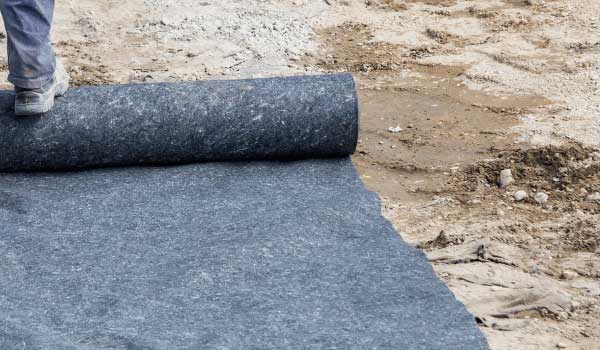
You may have felt confused when seeing the many types of non-woven geotextile on the market at different prices. At first glance they look the same, yet choosing the wrong specification can have serious consequences—from drainage systems that clog quickly to separation layers that tear before the end of their service life.
Non-woven geotextile is indeed a versatile material for filtration, separation, and protection. However, its optimal performance depends heavily on how well its mechanical and hydraulic properties match the project site conditions. That is why you should not focus on price alone. You need to understand the key technical non-woven geotextile criteria before making a decision.
Key Non-Woven Geotextile Criteria for the Right Selection
Why is focusing on technical specifications more important than price when choosing non-woven geotextile? The answer lies in the main functions of non-woven geotextile, which are determined by the following five key criteria:
- Apparent Opening Size (AOS)
Non-woven geotextile is widely relied upon for filtration, which means letting water pass while retaining soil particles. To make sure filtration works properly, you must check the AOS specification. AOS indicates the maximum pore size of the geotextile.
If the AOS is too large, fine soil particles will pass through and clog subdrain pipes or drainage aggregate. Conversely, if the AOS is too small, water cannot flow quickly, causing ponding or increased water pressure. The AOS must therefore be matched to the particle size distribution of the soil at the project site. For very fine soils, such as clay or silt, you need a smaller AOS.
- Permeability or Water Flow Rate (Permittivity)
This criterion measures how fast water can flow through the geotextile. High permeability is essential for drainage systems, such as subdrains or French drains, where water must be removed promptly.
If the geotextile has low permeability, water will be held above the material, prolonging drying time and potentially causing dangerous saturation. You need to make sure the permittivity value of the selected geotextile is within the recommended limits for drainage projects. This value is often expressed in liters per minute per square meter (L/min/m²) or in permittivity units (second⁻¹).
- Puncture Resistance
Although non-woven geotextile is more flexible and permeable, it is also often used as a protective layer (cushion) for geomembranes, or as a separator in areas prone to sharp stones. In these functions, the material’s ability to resist tearing or puncture is crucial.
Without adequate puncture resistance, placing coarse material such as gravel, or even moving heavy equipment during installation, can tear the geotextile. A tear creates a gap that allows fine soil to mix with aggregate, causing functional failure. Pay attention to the CBR Puncture Strength value to make sure the material can resist damage during installation and operation.
- Tensile Strength and Tear Strength
Tensile strength is the material’s ability to withstand a load without breaking, while tear strength is its ability to resist the spread of an existing tear. Although non-woven geotextile generally has lower tensile strength than woven geotextile, this strength remains vital for maintaining the material’s integrity as it is pulled and spread out on site.
In separation applications over soft soil, non-woven geotextile must have sufficient tensile strength so that it does not deform excessively when fill is placed on top of it. You also need to make sure its tear strength is high to limit damage if small tears occur from impact with sharp objects during construction.
- Mass per Unit Area
Mass per unit area, often called weight (for example 150 gsm or 250 gsm), is a practical indicator commonly used in the field. In general, the higher the weight, the thicker and stronger the material.
Choosing the right weight is often a compromise between cost and performance. For light drainage projects or separation on relatively stable soil, a low weight may be sufficient. However, for geomembrane protection or separation on very soft soil that requires high puncture resistance, you should choose a geotextile with a greater weight. Always verify that the weight you choose is also supported by suitable AOS, permeability, and tensile strength values.
Recommended Weights and Applications for Non-Woven Geotextile
| Weight (Mass per Unit Area) | Main Function | Tensile Strength (kN/m) (Approximate) | Example Project Applications |
| 150 gsm – 200 gsm | Filtration & Light Separation | 4 – 8 kN/m | Subdrain Pipe Wrapping, French Drain Filters, Separation Beneath Paving Blocks, Concrete Curing. |
| 200 gsm – 300 gsm | Standard Separation & Protection | 8 – 15 kN/m | Separation between Subgrade and Aggregate on Local/Residential Roads, Open Drainage Channel Filters, Landscaping Projects. |
| 300 gsm – 450 gsm | Medium Protection & Separation | 15 – 25 kN/m | Geomembrane Protective Layer (Cushion) in Landfills (Medium-Load Areas), Parking Area Base Stabilization, Light Rail Base Separation. |
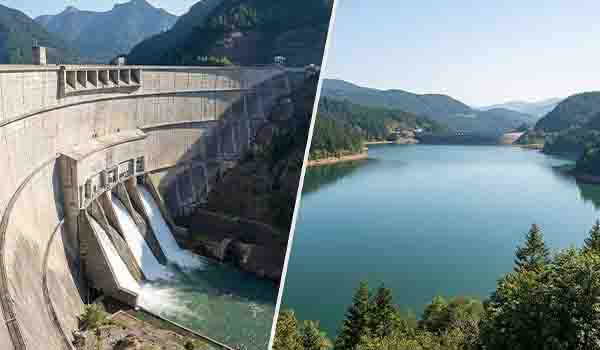
| 450 gsm – 600 gsm | Heavy Protection (Heavy Cushion) | 25 – 35 kN/m | Geomembrane Protective Layer in Retention Ponds or Dams (High-Load/Coarse Rock Areas), Separation of Soft Clay from Heavy Aggregate Fill. |
| > 600 gsm | Extra-Heavy Protection & Isolation | > 35 kN/m | Geomembrane Protection at Extreme Sites (Large/Coarse Rocks), Heavy Geotechnical Applications Requiring Maximum Thickness. |
Tips for Ensuring Non-Woven Geotextile Quality
To make sure your selection is quality-assured, you need to take a few additional steps. Make sure you always request full technical data (Data Sheet) from the supplier. Do not rely only on the weight label. Check whether all values (AOS, Permittivity, Puncture Resistance) have been tested to recognized international standards, such as ASTM or ISO.
Also consider environmental factors such as UV exposure. Geotextile left exposed to sunlight for too long can lose strength. If your project requires storage or temporary exposure, make sure the material contains adequate UV inhibitors .
Finding it hard to compare all these technical specifications? Products from Petra Nusa Elshada offer a range of non-woven geotextiles with transparent, certified technical data. Our materials are designed with a focus on the optimal balance between precise AOS for effective filtration and high puncture resistance for installation durability.
Geotextile materials from Petra Nusa Elshada are manufactured under strict quality control, ensuring that every weight delivers consistent permeability and tensile strength performance. Discuss your project needs—whether subdrains, riprap filters, or geomembrane protection—directly with our team of experts!
If you want a recommendation for the most suitable product, you can consult Petra Nusa Elshada directly through the following page to determine the best non-woven geotextile based on the technical criteria for your project.
Other Articles

Key Factors When Choosing HDPE Geomembrane
When reviewing HDPE Geomembrane specifications, several factors must be considered to ensure the material’s suitability and durability for a particular project. The following specifications require attention: Thickness: geomembrane thickness varies from 0.3–3.0 mm. The required geomembrane thickness depends on the application and the level of protection needed against seepage or chemical exposure. The thicker the […]