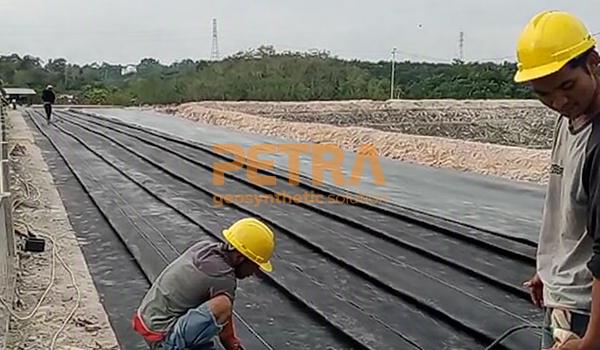
What Is a Geotube? Definition, Functions and Advantages

Efforts to tackle and prevent abrasion and erosion are important because they minimize the damage caused. Besides the geobag method, geotube technology can also be used. So what is a geotube, and how does it differ from a geobag?

Much like a geobag, this method uses geotextile material, but shaped like a large tube. The tube is usually filled with soil or sand and placed along the coast. Read on for the complete information.
What Is the Difference Between a Geobag and a Geotube?
Many people still think that a geobag and a geotextile tube are the same thing. Although they look similar, there are several differences between the two materials, including:
1. Size and Volume
One fundamental difference between these two geotextile products is their size and volume. A geotextile tube is much larger than a geobag, so the volume or capacity of aggregate it holds is also much greater.
A geotextile tube is usually filled hydraulically using a pump, a dredger or a funnel. The sand pumped in stays inside the geotextile tube, while the water drains out through the pores of the geotextile fabric.
2. Function and Application
Besides differing in size and volume, the two geosynthetic products also differ in function and use. With their larger size and volume, geotextile tubes are mostly used to tackle severe coastal abrasion along longer stretches of coastline.
Geobags, on the other hand, are usually used to hold back and prevent light coastal abrasion over smaller areas, including holding back river currents.
What Is a Geotube?
A geotextile tube is a product made of woven or non-woven geotextile sheets. Its sleeve- or tube-like shape allows it to be filled with materials such as sand or soil.

Why do so many construction projects use geotextile tubes like this? One reason is that they have many advantages over other materials, including:
- Made of environmentally friendly material, so they do not pollute the surrounding environment.
- Affordably priced and available in a wide range of sizes with different capacities.
- Relatively easy and practical to install.
- Good particle retention.
- Able to follow the shape and contour of the ground surface, making them more flexible and effective on less stable terrain.
- Filling the geotextile tube with sand or soil is quick and easy.
Geotube Functions
We have discussed the definition and some advantages of geotextile tubes in construction and civil engineering. You may also be curious about what these geotextile fabric tubes are used for.
In general, geotextile tubes act as wave barriers that prevent coastal abrasion or erosion caused by wave scouring. In addition, they have several other important functions in construction projects, including:
- Use in coastal reclamation projects.
- Protection for structures and building construction.
- Building jetties, structures that project out from the shore.
- Use in building artificial dikes.
- Use as breakwaters.
In conclusion, a geotube is a woven or non-woven geotextile tube that plays an important role in many construction projects, from tackling severe coastal abrasion to coastal reclamation. To order products, please visit https://petrane.co.id/.
Other Articles

Geogrid Selection: Key Factors to Consider
Geogrid selection involves several factors, each contributing to project success. The following are key considerations: Reinforcement and Stabilization Geogrid provides effective reinforcement and stabilization. Consider the project loads, whether for soil reinforcement, slope stabilization or retaining walls. Selecting a geogrid with high tensile strength and adequate stiffness is essential for long-term stability and durability. Material […]

Guide to Choosing Geotextile: Woven vs Non-Woven
Geotextile is a geosynthetic product that comes in two types: woven geotextile and non-woven geotextile. In general, geotextile is a polymer material used to add strength to a design. The polymers used in geotextile are polypropylene (PP) and polyester (PET). Each type has its own capabilities, and its use is matched to site conditions. When […]