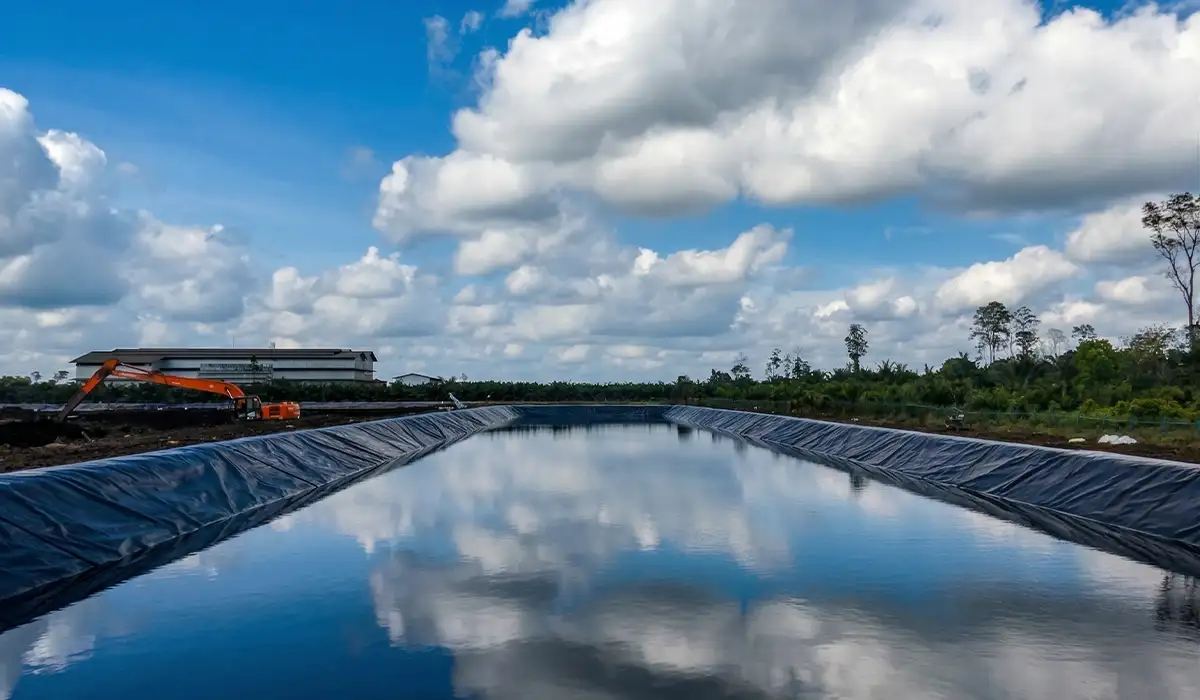
Railway Tunnel Waterproofing with HDPE Geomembrane

Background
Purwokerto and its surrounding area are known for hilly topography and relatively high rainfall. During construction of the double-track railway tunnel, the greatest railway tunnel waterproofing challenge faced by the engineering team was groundwater hydrostatic pressure.
When a tunnel is excavated, the natural balance of groundwater is disturbed. Water will always find the smallest opening through which to flow, often through natural cracks in the rock or joints in the tunnel’s concrete structure. If left unchecked, this seepage will corrode the reinforcing steel within the concrete, cause spalling (flaking concrete), and, most dangerously, create short circuits in the railway’s electrical signaling system.
A lining system was therefore required that would not only be strong but also flexible and permanently watertight.
Material Specifications: Railway Tunnel Waterproofing
For this 52,000 m² project, two main materials with crucial roles were selected:
- 1 mm HDPE Geomembrane
This is the primary water barrier. The 1mm thickness was selected because it provides the right balance between flexibility to follow the curves of the tunnel walls and high tensile strength to resist tearing during installation. - 300 gsm Non-Woven Geotextile
Before the geomembrane was installed, the rock or shotcrete wall was first covered with geotextile. It acts as a protective cushion to prevent sharp rock surfaces from puncturing the geomembrane and as a planar drainage medium for water seeping behind the lining.
Technical Analysis: How Does It Work?
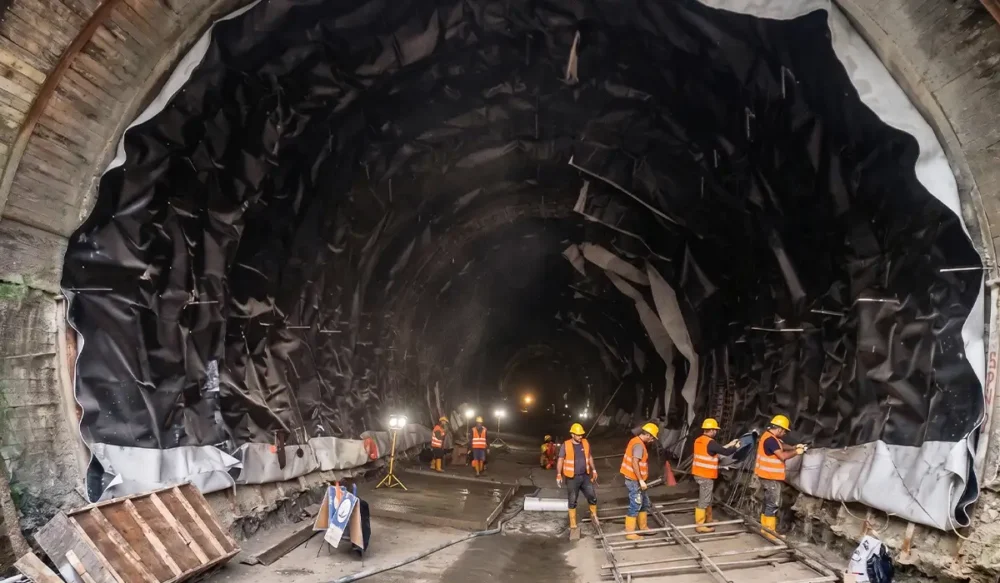
You may ask, “Why not just use conventional cementitious waterproofing?” The answer is durability and structural movement. Railway tunnels experience constant vibration whenever a train passes. The waterproof layer must withstand this vibration without cracking.
- A Concealed Drainage System
The 300 gsm non-woven geotextile installed in direct contact with the tunnel wall acts as a drainage path. Groundwater seeping from the rock is absorbed by the geotextile and channeled toward the drainage system at the bottom of the tunnel (invert). Without this layer, hydrostatic pressure would build up behind the lining and could damage the structure. - Seamless Waterproof Layer
HDPE geomembrane is made from chemically stable high-density polyethylene resin. It will not decay due to fungi or the chemical effects of acidic groundwater. During installation, each sheet is joined using double-track thermal welding. This method creates a test channel between the two weld lines, allowing the technical team to conduct an air-pressure test and verify that the seams are 100% leak-free. - Concrete Protection
Concrete is a porous material. If groundwater carrying corrosive minerals continually enters its pores, the service life of the structure will be drastically reduced. With this HDPE layer in place, the tunnel’s main concrete structure remains dry and protected, minimizing long-term maintenance costs.
Final Results: An Investment in Future Safety
The geosynthetic lining system applied to this Purwokerto project delivered highly significant results:
- Zero Leakage
No dripping water was found on the rail line, which is crucial to the operational safety of both high-speed and freight trains. - Durable Structure
The tunnel’s theoretical service life increased to more than 50 years without requiring major repairs to the wall structure. - Electrical Safety
A dry tunnel ensures that all signaling equipment and optical cables function optimally without moisture-related disruption.
Conclusion
This project proves that using the right material technology, such as HDPE geomembrane and non-woven geotextile, is not merely an additional expense but a smart investment in sustainable infrastructure.