


Non-Woven Geotextile Separator for Beach Sand
Background
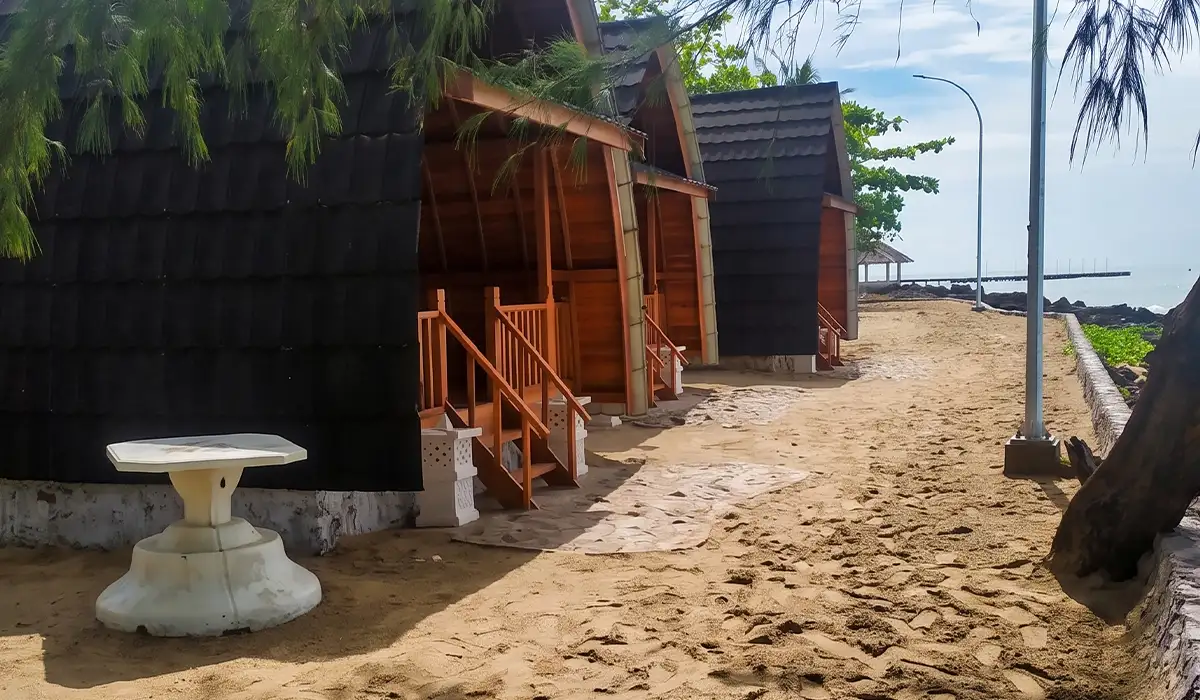
This project was located in Anyer, Banten. Anyer is a popular destination, but not every stretch of coastline has a naturally gently sloping sandy beach. Many areas are dominated by coral or compacted soil. One of our clients wanted to transform the accommodation grounds into a tropical beach setting with a stretch of white sand, effectively creating an artificial sand garden.
If beach sand is simply spread directly over the original soil or subgrade, however, it will begin to “disappear” within months. Foot traffic and rain cause intermixing: the fine sand enters the soil pores, while dirty soil rises to the sand surface. The result is muddy, contaminated sand that requires continuous replacement, creating unnecessary expense.
Project Challenge
The main challenge on this Anyer project was preserving the integrity of the sand layer so that it would not mix with the damp subgrade. We needed a geotextile separator able to perform two functions at once:
- Separation: Keeping two materials, sand and soil, apart so they cannot mix.
- Filtration: Allowing rainwater or residual tidal water to drain into the ground without carrying sand particles away.
A separator that is too thin can tear easily while the sand is being levelled. One that is too dense can trap water at the surface and leave the sand waterlogged.
Technical Solution: 300 GSM Non-Woven Geotextile

After completing the technical calculations, the PT Petra Nusa Elshada team recommended using 300 gsm non-woven geotextile. Why 300 gsm?
Technically, non-woven geotextile is made from polymer fibres, usually polypropylene or polyester, bonded through needle punching. For a beach-sand separator application, the 300 gsm specification strikes the right balance because it offers:
- High puncture resistance: It is strong enough to withstand abrasion from the sand and human activity above it.
- Water permittivity: Its randomly oriented fibre structure conveys water effectively. During heavy rain, water infiltrates immediately, keeping the sand area dry and comfortable underfoot.
- Flow rate: It prevents water from being trapped in the sand layer, avoiding saturation that could damage the sand-garden structure.
Installation Process
The work on site involved several crucial steps:
- Subgrade preparation: Sharp objects, tree roots, and rubbish were removed from the original soil. The surface was levelled so no water could become trapped beneath the geotextile.
- Geotextile deployment: Rolls of 300 gsm non-woven geotextile were laid across the entire planned artificial-beach area.
- Overlapping: Adjacent rolls were overlapped by at least 30-50 cm. This prevents the underlying soil from squeezing through the joints under load.
- Sand placement: White sand was then spread over the geotextile. The ideal thickness is generally around 10-20 cm, depending on the design requirements. Small construction equipment must be operated carefully to avoid damaging the geotextile before it is fully covered.
Final Results and Long-Term Benefits
By using 300 gsm non-woven geotextile from Petra Nusa Elshada, the accommodation operator in Anyer achieved excellent results:
- Cost efficiency: No annual sand top-ups are needed because the sand does not sink into the soil.
- Maintained cleanliness: The sand remains clean and white because clay particles from below cannot contaminate it.
- Effective drainage: The artificial beach can be used shortly after rain stops because the filtration system works effectively.
Conclusion
Using geotextile is not simply a matter of buying synthetic fabric; it is an investment in a construction project’s longevity. If you are planning a resort, garden, or public area featuring sand, be sure not to omit this separation stage.
Other Articles
Geotextile Concrete Curing Project in Depok
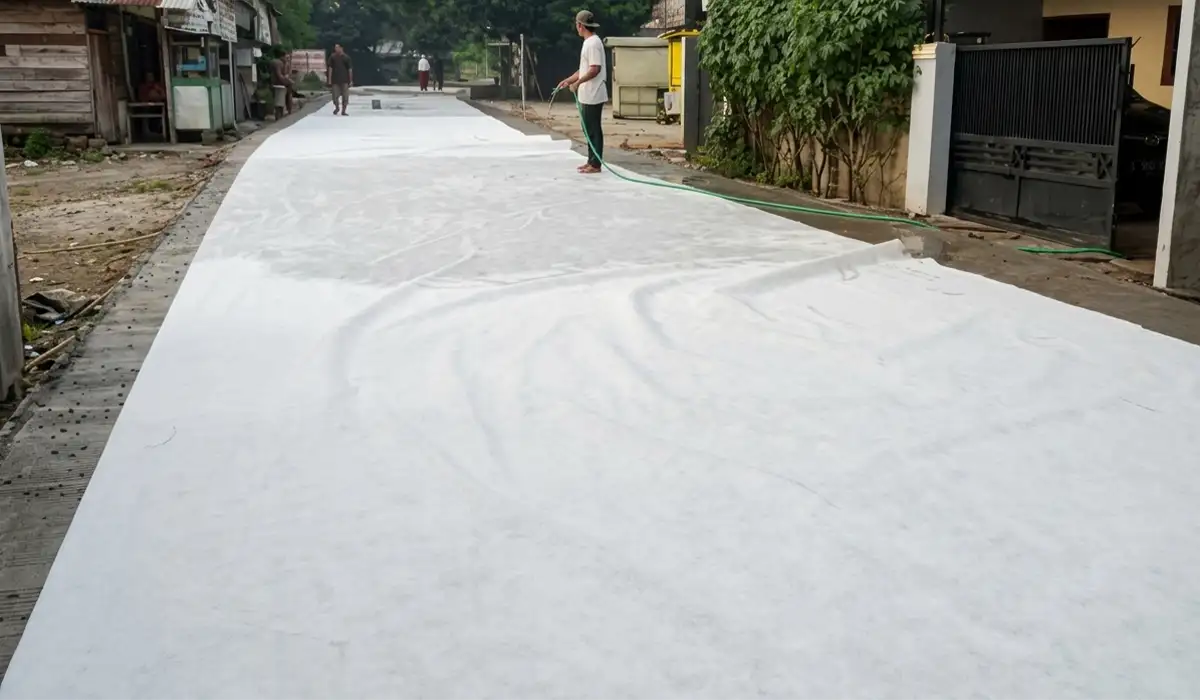
Background: Hydration Challenges and Extreme Weather This geotextile concrete curing project is located in Depok, an area with fairly challenging weather. During the day, temperatures can be scorching, humidity fluctuates drastically, and gusts of wind speed up evaporation. If you work in civil engineering, you know that cement needs water to undergo a chemical reaction […]
Non-Woven Geotextile Project on Dieng Subgrade
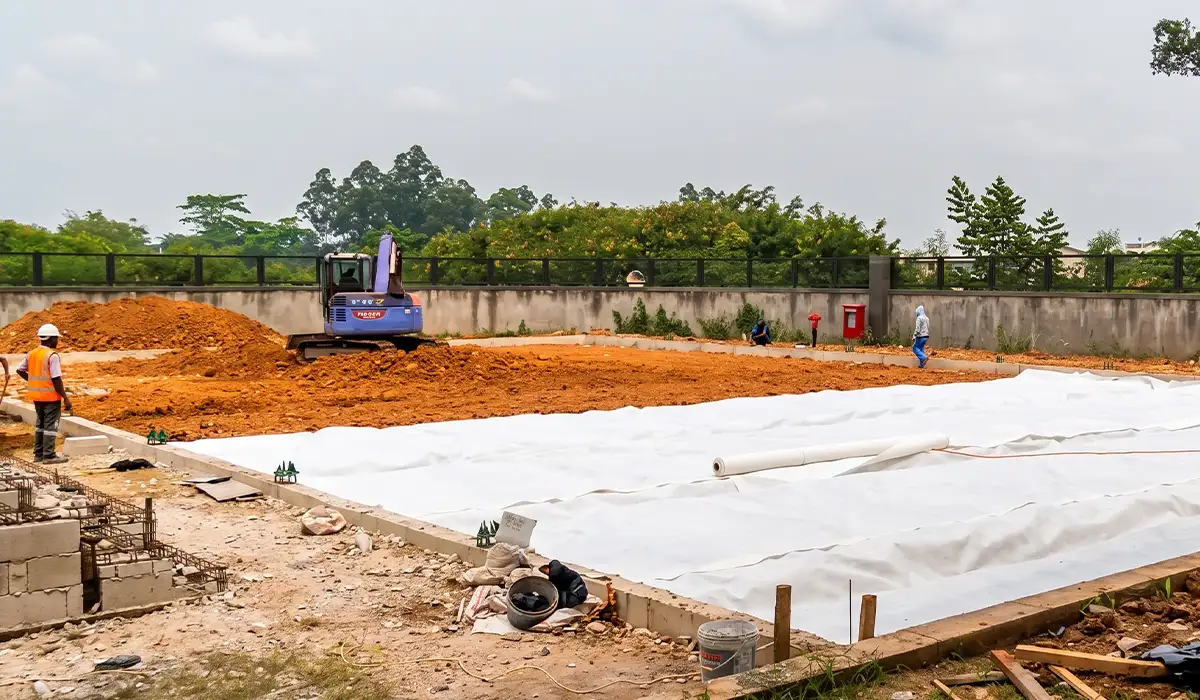
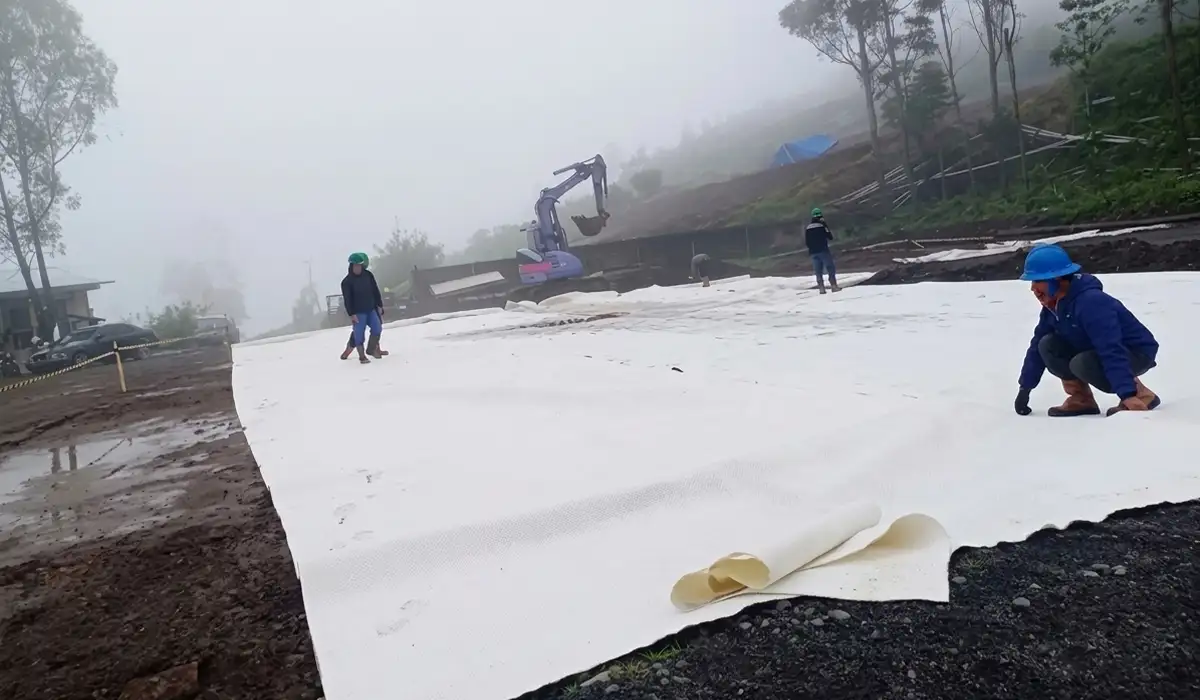
Background & Challenges The Dieng Plateau has extraordinary natural beauty, but from a geotechnical point of view, the area poses a big challenge for any non-woven geotextile project. The subgrade (subgrade) in volcanic areas often has a high water content. When heavy rain falls, this subgrade becomes fully saturated. If aggregate material (crushed stone/gravel) is […]