


Geopipe Cable Protection for Gunung Salak Geothermal

Background: Harnessing Energy in the Ring of Fire
Gunung Salak is more than a hiking destination or the pristine Halimun Salak National Park conservation area. Far beneath its surface lies vast geothermal energy potential. The geothermal project at Gunung Salak is a vital green-energy initiative supplying clean, renewable electricity to the interconnected grid.
An extensive underground cable transmission network is needed to carry electricity from the power plant to distribution points. This presents the greatest challenge. Volcanic mountain terrain is not suitable for conventional infrastructure installation. Buried materials must survive for decades without harming the surrounding protected-forest ecosystem.
Extreme Site Challenges: When Ordinary Pipe Is No Longer an Option
Under electrical civil-work standards, cables cannot simply be buried directly in the soil. They require a dedicated conduit or sleeve that acts as protective armour. In Gunung Salak’s volcanic environment, the technical team faced several overlapping challenges:
- Dynamic Terrain and Sharp Rocks
Volcanic soil is often unstable, rocky, and steeply sloped. Using ordinary rigid PVC pipe creates a high risk of breakage or cracking from ground settlement or impact with sharp volcanic rocks. - Critical Temperature and Moisture Conditions
Heavy rainfall in the mountains keeps the soil wet and creates a corrosive environment. Outdoor temperatures are very cold, while operating geothermal cables emit heat. The protective material must withstand extreme thermal fluctuations. - Installation Mobility Constraints
Taking heavy machinery into a national park to excavate perfectly straight trenches is highly disruptive. The cable conduit must be lightweight, easy to transport, and able to follow the mountain contours naturally without damaging large tree roots.
Technical Solution: 100 mm Corrugated Single Wall (CSW) Geopipe
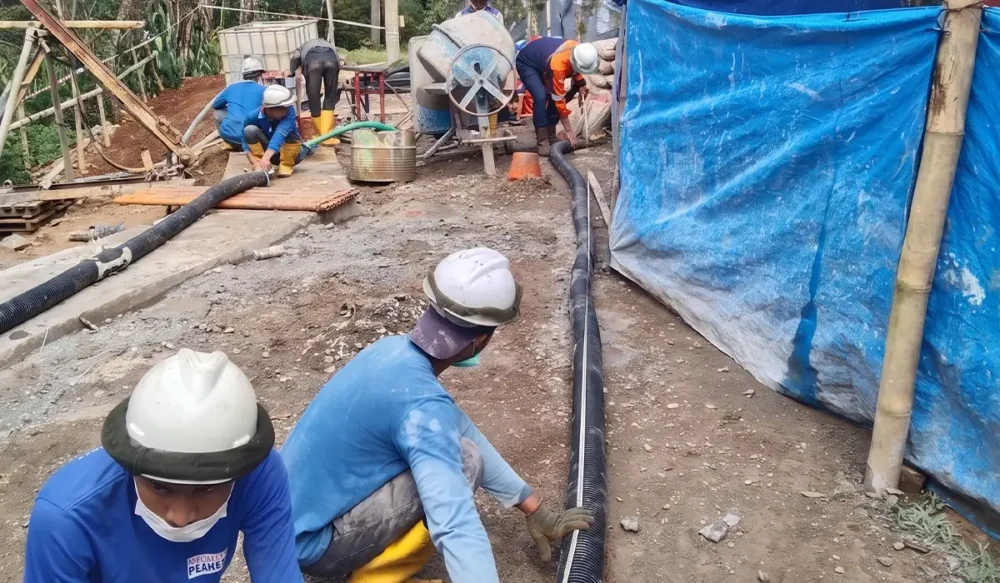
To address these limitations, the protective material was changed to a product engineered for harsh underground conditions: 100 mm Corrugated Single Wall (CSW) Geopipe.
What is Geopipe? Technically, it is a modern protective conduit extruded from HDPE or High-Density Polyethylene. Unlike ordinary smooth pipe, CSW Geopipe has a corrugated outer profile. The following technical advantages explain why this PT Petra Nusa Elshada specification was selected:
- Exceptional Flexibility (Ductility)
HDPE molecules give the material a high degree of flexibility. Geopipe can bend within a specified radius to follow an uneven trench without requiring numerous fittings or elbows. This substantially shortens the project timeline. - Ring Compression Strength (Ring Stiffness)
Its flexibility should not be mistaken for weakness. The corrugated rings on the outer wall act like load-bearing springs. When the trench is backfilled, they distribute pressure from the soil and operational loads above. The Geopipe resists collapse, ensuring its interior remains open and the cable is not pinched. - Smooth Cable Pulling (Low-Friction COF)
Although the exterior is corrugated, the inner wall is relatively smooth to simplify cable pulling. HDPE has a very low coefficient of friction (COF). When large, heavy copper cables are pulled through, minimal friction helps prevent the outer cable jacket from being scratched or torn. - Few Joints (Continuous Installation)
Unlike conventional pipe supplied in 4-metre sections, Geopipe comes in long rolls. Every underground joint is a weak point where water can seep in. Geopipe allows runs tens of metres long to be installed intact.
Environmentally Responsible and Long-Lasting
Because this project directly affects the Gunung Salak ecosystem, environmental considerations were essential in selecting the material. HDPE Geopipe is chemically inert. It does not react, rust, rot, or release toxic microplastic substances into the fertile mountain soil. HDPE provides no nutrients for bacteria or fungi, so the pipe does not degrade biologically. Its service life, which can exceed 50 years, aligns with the long-term investment horizon of geothermal energy.
Final Results and Conclusion
Using 100 mm Corrugated Single Wall (CSW) Geopipe enabled the successful installation of underground cable conduits for the Gunung Salak geothermal project. Geopipe’s flexibility allowed the trenches to follow the terrain, avoiding damage to the natural landscape while reducing installation costs for the contractor.
For electrical infrastructure operators, choosing Geopipe from PT Petra Nusa Elshada provides dependable protection. The threats of system downtime, short circuits caused by water seepage, and pipes breaking as the ground shifts can all be minimized.
In construction, purchasing a material means investing in operational reliability. For critical energy infrastructure in extreme terrain, Geopipe cable protection is a proven solution.

