


Woven Geotextile Access Road Case Study in Muaro Jambi
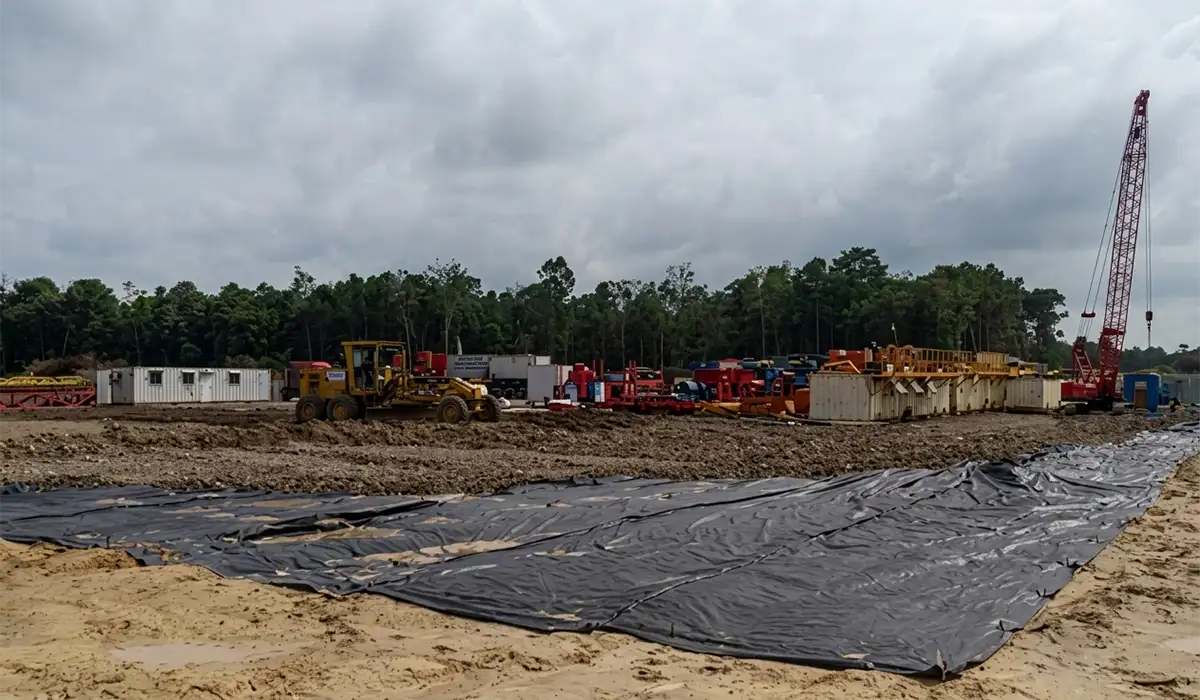
Project Background
Muaro Jambi is a regency in Jambi Province that plays a strategic role in plantations, industry and inter-regional logistics. Behind its great economic potential, however, the area faces fairly complex geotechnical challenges. Most of the subgrade (subgrade) in Muaro Jambi is soft soil (soft soil) with low bearing capacity, a California Bearing Ratio (CBR) below 3%, and high water saturation due to tropical rainfall.
When access roads began to be built for heavy vehicle traffic (such as trucks carrying farm produce and heavy equipment), conventional road foundations relying only on crushed stone fill (aggregate) immediately suffered structural failure. The foundation aggregate gradually sank into the soft subgrade. Without a proper separation and reinforcement layer, the access road was at risk of rapid damage, undulation and potholes.
To solve this systemic problem permanently without massive, extremely costly excavation of the soft soil, the engineering team chose a modern geosynthetic solution for the woven geotextile access road: Woven Polypropylene Geotextile 200 gsm covering 8,000 m².
Technical Challenges on Site
If you have ever seen a mining road or plantation access road suddenly break up only a few months after stone was laid, that is subgrade failure. In this access road project in Muaro Jambi, several key technical problems had to be solved:
- Pumping Effect (Pumping Effect) & Aggregate Intermixing: When heavy vehicle wheels pass, hydrostatic pressure develops in the soft soil beneath. Water and fine soil particles (fine particles) are pumped upwards and mix with the foundation aggregate. As a result, the aggregate layer loses its interlock and its strength drops drastically.
- Wheel Rut Formation (Rutting): Shear forces from repeated traffic loads cause plastic deformation of the subgrade. The soil is pushed sideways (lateral displacement), creating deep wheel ruts (rutting) that endanger vehicles and damage the surface layer.
- Recurring Maintenance Costs (High Maintenance Cost): The old method of continually adding more stone proved very wasteful. New aggregate simply sinks back into the soft soil if it is not physically separated.
Solution & Technical Analysis
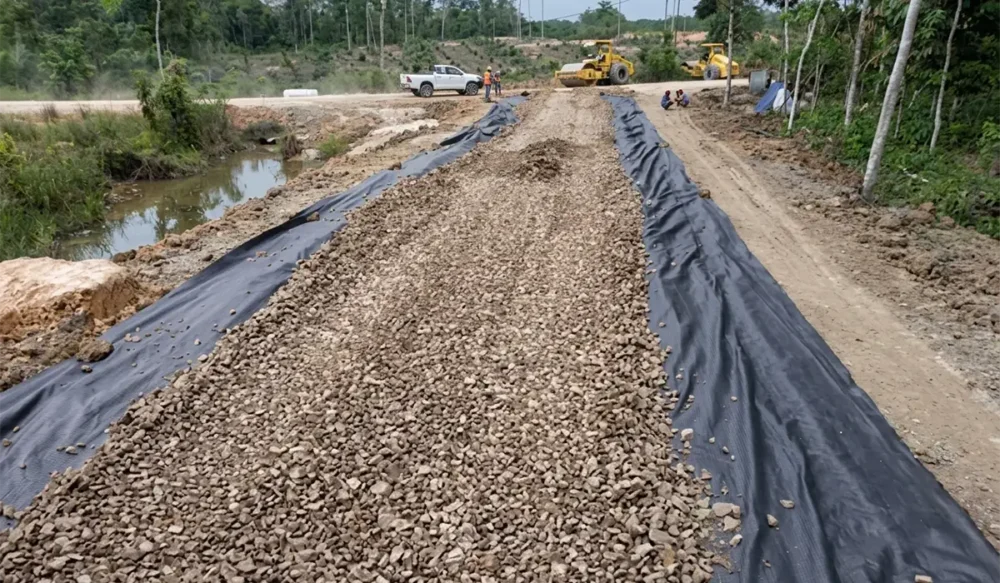
To solve these challenges over an area of 8,000 m², Woven Polypropylene (PP) Geotextile 200 gsm was used.
Why was this material chosen? Let’s break down the mechanics!
a. Characteristics of Woven PP Geotextile 200 gsm
Woven geotextile is a synthetic sheet made from woven polypropylene (PP) tape yarns using precision weaving technology. With a basis weight of 200 grams per square metre (200 gsm), the material has a highly optimal tensile strength-to-weight ratio:
- High Tensile Strength
Withstands large axial and lateral tensile forces when the road carries vehicle loads. - Low Elongation
The material does not over-stretch under sudden loads, so it can lock the aggregate structure above it. - Chemical & Biological Resistance
Resistant to acids, alkalis and soil microorganisms in the humid environment of Muaro Jambi.
b. How It Works on Site
- Improving Subgrade Stability & Bearing Capacity (Effective CBR)
Woven geotextile acts as a tensile element at the base of the pavement. When wheel loads press down, the geotextile responds with in-plane tension (tensioned membrane effect), which fundamentally increases the effective CBR of the subgrade. - Distributing Loads Evenly (Load Distribution)
Concentrated loads (point loads) from truck tyres pass through the aggregate layer and are taken up by the woven geotextile. The material widens the stress distribution angle over a much larger soil area. As a result, the pressure on the soft subgrade drops significantly. - Preventing Aggregate from Mixing with the Subgrade (Separation Layer)
Woven Geotextile 200 gsm acts as a tight physical barrier. The aggregate above does not sink into the soft soil, and mud from below cannot rise. The road foundation layer stays clean and keeps a constant thickness. - Reducing Rutting (Wheel Ruts)
With friction (friction resistance) between the geotextile and the aggregate, lateral movement of stones under rolling wheels is minimised. This suppresses the formation of wheel ruts (rutting) on the road surface. - Extending the Road’s Design Life (Extended Service Life)
Because the foundation does not suffer intermixing or extreme deformation, the road’s service life can be multiplied compared with construction without geotextile.
Execution & Installation over 8,000 m²
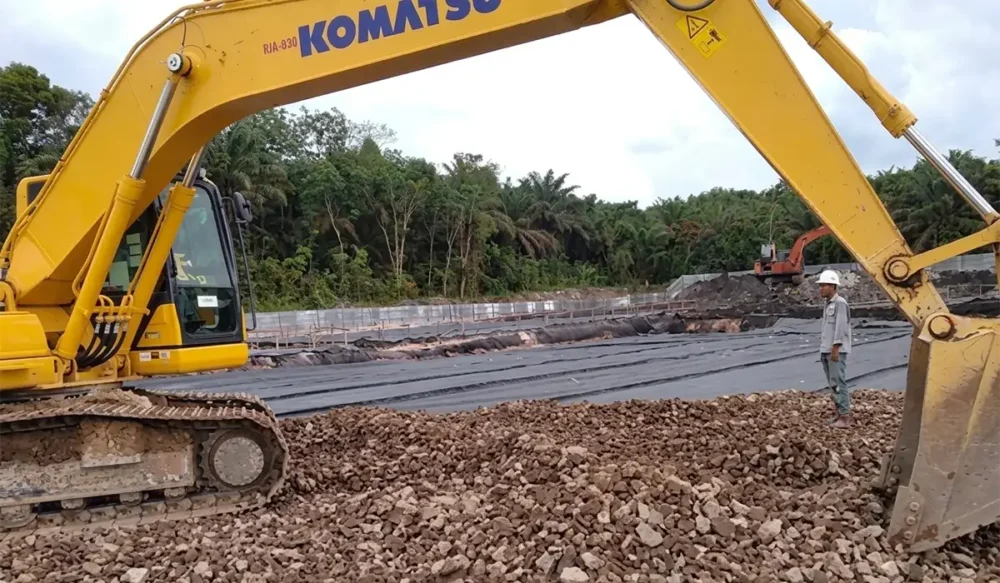
Woven PP Geotextile 200 gsm was installed over 8,000 m² following precise steps to ensure maximum performance:
- Clearing & Subgrade Formation (Subgrade Preparation)
The road area was cleared of large tree roots and sharp objects. Clearing & grubbing was carried out without the need for deep excavation. - Laying the Woven Geotextile (Unrolling & Placement)
Rolls of Woven PP Geotextile 200 gsm were unrolled manually or with heavy equipment, parallel or perpendicular to the road centreline. Adjacent rolls were joined by overlapping to geotechnical standards (at least 30–50 cm depending on how soft the soil is) or by sewing. - Spreading Aggregate (Aggregate Spreading)
Aggregate was spread over the geotextile using the back-dumping method (trucks tip stone from a layer already covered with aggregate) so that truck wheels never run directly on the geotextile sheet. - Compaction (Compaction)
Compaction was carried out in stages with a vibratory roller. The woven geotextile immediately provides confinement to the first compacted stone layer.
Final Results & Long-Term Benefits
Using Woven Polypropylene Geotextile 200 gsm on the Muaro Jambi access road project delivered measurable benefits:
- Aggregate Savings: Aggregate use fell by 20%–30% because no stone was lost into the subgrade.
- Construction Speed: The access road was built much faster because excessive cut and fill or over-filling was eliminated.
- A Rutting-Free Road: The access road operates smoothly for heavy vehicle fleets without deep wheel ruts.
- Operational Cost Savings: Annual road maintenance costs fell drastically, delivering a very high Return on Investment (ROI) for the project owner.
Conclusion
The 8,000 m² road stabilisation project in Muaro Jambi proves that soft soil problems do not always require expensive, complicated solutions. By choosing the right engineered geosynthetic, such as Woven Polypropylene Geotextile 200 gsm, you can get a road foundation that is solid, stable, durable and significantly more cost-effective.
Other Articles

Woven Geotextile Road Reinforcement Case Study
Background Tanjung Batu, in East Kalimantan, is a strategic area undergoing rapid infrastructure and logistics growth. This woven geotextile road reinforcement case study starts there: as an economic artery, the area’s roads must operate 24/7 and withstand the continuous axle load of heavy vehicles. However, like most of Kalimantan, Tanjung Batu has fairly challenging geology. […]
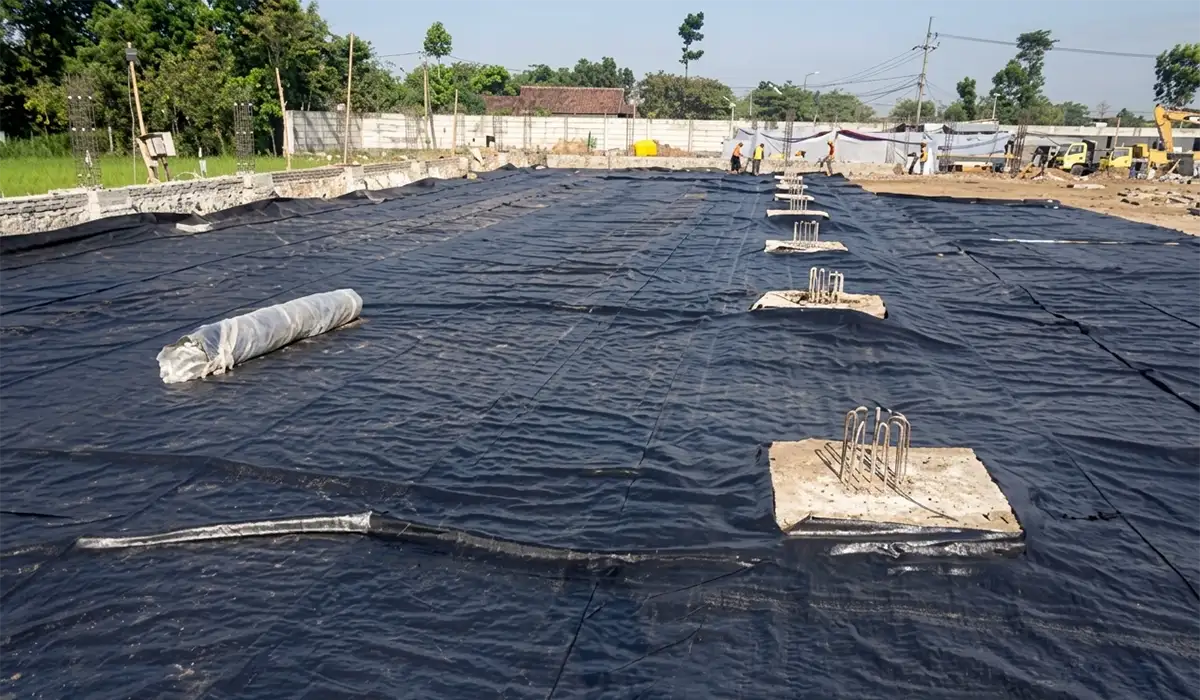
Woven Geotextile for a Settlement-Free Warehouse in Jember
Project Background & Challenges Jember is a fast-growing area with steadily increasing logistics demand. On this woven geotextile warehouse project, the contractor faced an area of 8,400 m² that required very thorough subgrade preparation. The main technical challenge in building a warehouse floor (slab-on-grade) is the extremely high live load and dead load. Fully loaded […]