


HDPE Corrugated Pipe and Spiral Pipe

HDPE Corrugated Pipe
HDPE corrugated pipe is made from high density polyethylene (HDPE) polymer and has a corrugated (spiral) profile. It replaces underground concrete pipes and surface pipes or hoses. This type of material is used instead of concrete because the pipe is lightweight and more flexible, yet its resistance to overhead loads is close to that of concrete pipe, and it avoids cracking because it is more ductile than concrete. For surface use, this is supported by the strength of HDPE polymer compared with ordinary plastic pipes or hoses. HDPE corrugated pipe can withstand loads of ± 60 tons and can save ± 40% in material costs compared with other pipe types. Corrugated pipe is available in both perforated and non-perforated versions to suit the client’s needs and the type of project.

This material comes in 2 types: single wall (SWC) and double wall (DWC) HDPE corrugated pipe. They differ in the inner layer, the diameter range and the jointing method.
Single wall pipe has no additional layer, so the inside of the pipe follows the shape of the outside, while double wall pipe has an additional inner layer, so the inside of the pipe is smooth.
Single wall pipe has an inner diameter range of 100 – 200 mm, while double wall pipe has an inner diameter range of 100 – 600 mm. Single wall pipes are joined simply by cutting one side of the pipe vertically and overlapping it to make a smaller diameter so that it fits into the next pipe.
The double wall type uses a rubber ring, with the male end inserted into the female end.


HDPE Spiral Pipe
At first glance, spiral pipe looks the same as HDPE corrugated pipe. The visible difference is the size of the pipe: HDPE spiral pipe has a smallest inner diameter of 800 mm and a largest inner diameter of 2000 mm. Because HDPE spiral pipe is relatively larger than HDPE corrugated pipe, it is usually used for large projects with heavier loads, with a stiffness range of 2 kN/m2 to 20 kN/m2.

HDPE spiral pipes are joined differently from HDPE corrugated pipes, using electrofusion or fusion welding, which bonds the pipes by melting the polymer at the joint.


HDPE pipe can be used as drainage pipe, protective conduit for power and telecommunication cables, factory wastewater pipe, ventilation pipe for construction and mining areas, and agricultural pipe. These uses help the construction process because the pipe is cost-friendly and offers high durability.
Other Articles

Geocell Road Construction for Stronger Pavements
In geocell road construction, when a load acts on the “subgrade,” the soil does not deform if the shear strength of the subgrade is greater than the applied load. A road pavement system usually consists of 1 or more material layers. These layers reduce the pressure transferred to the subgrade. Granular material can transfer loads to the subgrade because […]

What Is HDPE Geomembrane? Types and Applications
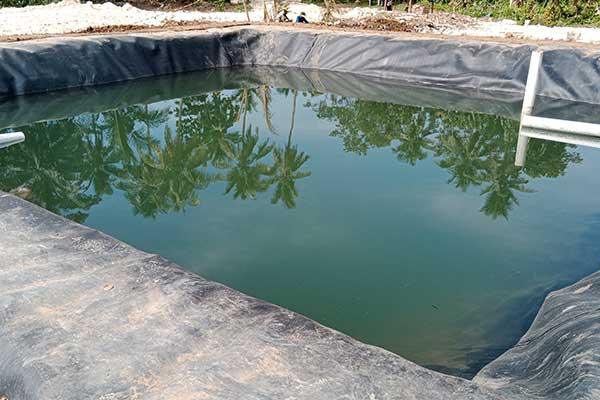
What Is HDPE Geomembrane? HDPE geomembrane is a geosynthetic product made from polyethylene polymer resin. The polyethylene used is high-density, with a density of around 0.94 g /cm3. Geomembrane, also known as HDPE tarpaulin, is impermeable to water and gas. This impermeability is widely used by construction professionals to contain wastewater or raw water as […]